
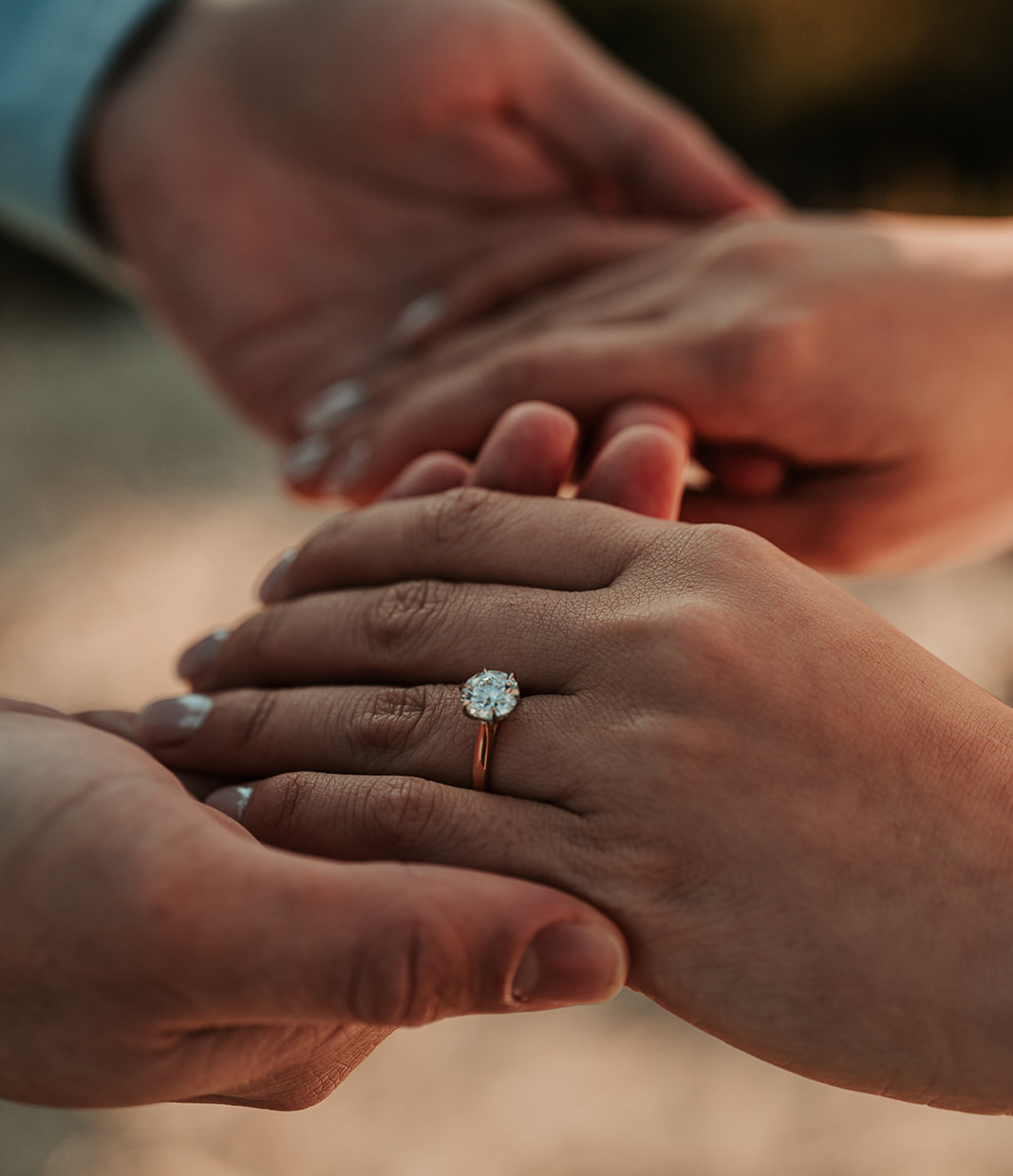
A wedding ring is worn longer than almost any other object you will ever own. It sees every ordinary morning, every quiet evening, and the occasional hospital waiting room. It ages on the finger alongside you. That is worth thinking about before you choose one.
If you have already chosen an engagement ring, the wedding ring decision feels different and normally you are likely doing it together. This is because you know what your partner likes and you have a better sense of how fine jewellery sits in your life than you did the first time round. Wedding rings still carry their own considerations though, and the choices you make now will live on the finger for decades.
This guide walks through how we think about wedding rings at our Mt Hawthorn studio: budget, matching to the engagement ring, styles, metals, widths, finishes, timing around the ceremony, and the small things couples wish they had known before their first consultation. Stelios Palioudakis opened the studio in 2007, a year after being named a finalist in the Australian Jewellery Awards at the tail end of his apprenticeship. The team at the bench alongside him now carries a little over two centuries of combined experience, including master jeweller Paul, who holds two Jewellery Association of Australia Awards of his own.
The following is the same advice we give couples every week across all that accumulated habit.
If you want to skip the guide and browse, our Wedding Bands page covers the range for both partners, with Men’s Wedding Rings and Ladies’ Wedding Rings as the direct links.
Start With A Number, Not A Ring
Most couples sit down in our showroom with a rough sense of what each ring should cost but no agreed total budget for the pair. Getting that number settled early makes every subsequent decision easier. Wedding rings typically cost less than an engagement ring on their own, but two added together can still run into five figures, and it pays to know what you are working with before you fall in love with a platinum full eternity band.
A rough sense of typical Perth wedding ring spend for the pair:
- Plain gold bands for both partners: $2,000 to $4,500.
- One plain band and one half eternity diamond band: $3,500 to $7,500.
- Two half eternity or shared design diamond bands: $5,000 to $12,000.
- Matched platinum with significant diamond detail: $10,000 upward.
If you have set aside a single number, decide early how to split it. Sometimes the split is even. Sometimes one ring takes more because the design asks for it. Both are fine, as long as both partners are comfortable with the result.
Matching Or Complementing The Engagement Ring
For the partner who wears both, the engagement ring and wedding ring share a finger for the rest of life. Every design decision flows from that reality.
A few ways couples approach the pairing:
- Exact match. The wedding band is designed in the same metal and finish as the engagement ring, often with a similar profile. The two rings read as a set from above. Most common.
- Complementary. The wedding band picks up one element of the engagement ring (metal, diamond setting style, or finish) without being a literal match. Useful when the engagement ring is already busy.
- Contoured fitted band. The wedding band is shaped to sit flush against the engagement ring, following its curves or claws exactly. Helpful when the engagement ring has a halo, a raised centre stone, or an unusual profile.
- Worn separately. A handful of couples choose to wear the wedding ring on a different hand or finger. Rare, but not unheard of.
If your engagement ring is still being made, we recommend designing both pieces together from the start. If the engagement ring is already finished, bring it in at the first wedding ring consultation. We trace the profile, measure the gap underneath, and design the band to sit cleanly against it.
Wedding Ring Styles Worth Knowing
The styles we see couples choose from most often, and how they differ in practice.
Plain bands. A flat or rounded gold band with no stones, no engraving. The most timeless option, and the one that holds up to daily wear with the least maintenance.
Half eternity diamond band. Small diamonds set along the top half of the ring. A classic for the partner who also wears the engagement ring, because the stones face up next to the centre stone of the engagement ring.
Full eternity diamond band. Diamonds running all the way around the band. Striking, but cannot be resized conventionally, so finger size needs to be stable.
Channel set diamonds. White diamonds set between two rails of metal along the band. A cleaner alternative to pave with a low profile and fewer points of snag.
Diamond eternity with sapphires or coloured gems. A variation on the eternity theme using alternating stones, or birthstones, or a single coloured stone that picks up a detail from the engagement ring.
Bevelled edges. The inner and outer edges of the band are angled slightly, giving a cleaner profile and a subtly modern feel.
Vintage inspired bands. Milgrain edging, hand engraved patterns, and scalloped settings. Suits an engagement ring in the same vintage family.
Shared design rings. Both partners wear the same design. Most couples scale the same design to different widths so the proportions still suit each finger.
Groom’s bands with texture. Hammered, bark, or brushed finishes that sit comfortably on a man’s hand and hide daily wear better than high polish.
Choosing A Metal
The precious metal decision is usually the biggest style choice in the whole wedding ring process. A short summary of the four most common options, with a note on how each one actually feels on the finger.
- 18-carat yellow gold. Warm, traditional, and the metal most of our clients default to. Has a soft amber glow that flatters most skin tones. Ages well and polishes back to new easily.
- 18-carat white gold. A cooler alternative, rhodium-plated for brightness. Sits closer in tone to silver than platinum. Needs re-plating every three to five years.
- 18-carat rose gold. Yellow gold with added copper for a pink tone. Slightly warmer on the skin than yellow, distinctive, and increasingly requested.
- Platinum. Denser, heavier, naturally white. There is a particular satisfaction to the weight of platinum on the finger, a gentle reminder that the ring is there. Sits at the top of the price range but never needs plating, and develops a soft patina with wear that most clients end up preferring to the mirror polish of a new ring.
Pure gold at 24-carat is too soft for a ring worn daily. 18-carat is the durability sweet spot. 9-carat gold is also available, with a paler yellow and higher hardness, and makes sense for couples on tighter budgets or working trades.
If the engagement ring is already made, most couples match its metal for the wedding band. If both rings are being designed fresh, the metal decision is wide open.
Width, Profile And Finish
Even couples who have settled on style and metal still need to decide on width, profile and finish. These three choices shape how the ring feels on the finger.
Width. Women’s bands typically range from 1.5mm to 4mm. Men’s bands from 4mm to 7mm. Narrow bands feel lighter and sit closer to the engagement ring. A thicker band feels more present.
Profile. A flat profile reads modern. A domed profile is traditional and feels slightly rounder against the finger. A bevelled edge sits between the two. Try on several before committing. It is hard to picture the difference without trying them.
Finish. High polish shows fingerprints and scratches most visibly. A satin finish or matte finish hides both. A hammered or bark finish hides them completely and brings its own texture. Some couples match finishes exactly across both rings; others contrast.
These three choices together account for most of the difference between two otherwise-identical rings, and they are usually the decisions couples find most enjoyable.
One Commission That Brought These Decisions Together
A couple from Floreat came to us last year with an established engagement ring, a vintage-inspired solitaire in 18-carat yellow gold that the bride had inherited from her grandmother and we had reset for her earlier that year. The groom wanted something modern, clean and flat. The bride wanted something that echoed her engagement ring’s hand engraved patterns.
What we built was a matched pair that hid the disagreement well. Both bands were 18-carat yellow gold, 4mm for her and 5mm for him, both with a subtle hand engraved pattern continuing the motif from her engagement ring, but finished differently. Hers was high polish, catching light the way her engagement ring catches light. His was satin, which softened the engraving into something more masculine against the warm gold.
Two months into daily wear, they came back in for a complimentary polish. Her ring looked almost unchanged. His satin finish had softened where his grip meets metal most often, edges quietly smoothing into something closer to brushed, and he preferred the new character to the original. That kind of feedback is the main reason we offer annual check-ups on every wedding ring we sell.
Timing Around The Ceremony
Order the rings earlier than feels necessary. Four to six weeks for a bespoke commission is our usual window, but we recommend a two-month buffer, especially in November and December when the studio is busiest with wedding day work.
A typical timeline:
- Six to eight weeks out. First consultation. Decide on metal, width, style, and any engraving.
- Four to six weeks out. CAD render approved for custom pieces. Casting begins.
- Two to three weeks out. Rings ready for final fitting. Any resizing is handled here.
- One week out. Rings collected, sometimes with a fresh polish before the ceremony.
If either partner travels for work, factor in when both people will be in Perth for fittings. For interstate or overseas couples, we run the wedding ring experience remotely and post prototypes for sizing.
A Few Things We Wish Every Couple Knew
A handful of things that come up enough to be worth saying plainly.
- Have the rings insured from day one. We are a listed partner of Q Report Jewellery Insurance. Wedding rings lost before insurance is arranged are painfully expensive to replace.
- Decide who holds the rings at the ceremony. Most lost wedding rings are lost during the reception, not during daily wear. A best man, maid of honour, or small pouch solves it.
- Avoid resizing close to the ceremony. Rings need a few days to settle after a resize. Do this at the fitting stage, not in the final week.
- Polish annually. Every wedding ring we sell comes with a complimentary annual polish. Most couples do not use it. We would rather they did.
- Consider engraving before the final polish. Engraving added afterward is possible but costs more, and the text sits slightly less cleanly in the metal.
Frequently Asked Questions
A few of the questions we are asked most often about wedding rings.
Should The Engagement Ring And Wedding Ring Match Exactly?
Not necessarily. An exact match reads as a set, but it is not the only good option. Complementary designs, contoured bands, or deliberate contrast can all work. What matters is that the two rings sit well together on the finger over decades of daily wear.
Can Both Partners Have The Same Ring Design?
Yes. Shared design rings are a growing request. Most couples scale the same design to different widths so the proportions still suit each finger.
How Early Should We Order Our Wedding Rings?
Eight weeks before the ceremony for a custom commission. Six weeks for a ready-to-wear piece that needs resizing. Leaving less than a month is risky, particularly if either partner travels for work.
Can A Wedding Ring Be Resized After The Wedding?
Most can, by one size up or down. Full eternity bands cannot be resized conventionally. Tantalum and titanium bands cannot be resized at all.
Do You Offer Lab Grown Diamonds In Wedding Rings?
Yes. Many of our diamond-set wedding rings use lab grown stones, which deliver the same look and grade as mined diamonds at a lower price point.
How Much Should We Spend On Wedding Rings?
Most of our clients spend $3,000 to $6,000 total for the pair. Plain gold bands on both sides sit at the lower end. Matched platinum with significant diamond detail sits at the higher end. Spend what fits the rest of your wedding budget without strain.
Can We Design The Wedding Bands Together At The Same Consultation?
Yes, and most couples do. A single consultation covers both rings, and designing them together usually produces more cohesive results than separately.
Come And Have The Conversation
Wedding rings are easier to choose in person, with rings on the hand and options side by side. Come in to our Mt Hawthorn studio on Scarborough Beach Road, a short walk from Spritz Spizzicheria and the cluster of local delis and cafes that make the village a good morning stop before a consultation. We will walk you through metals, widths, profiles and finishes. Bring your engagement ring if you have one, your partner, and a rough budget. We work out the rest together.
If you are based outside Perth, we run the same consultation over video and post sample bands so you can feel the metals before committing.
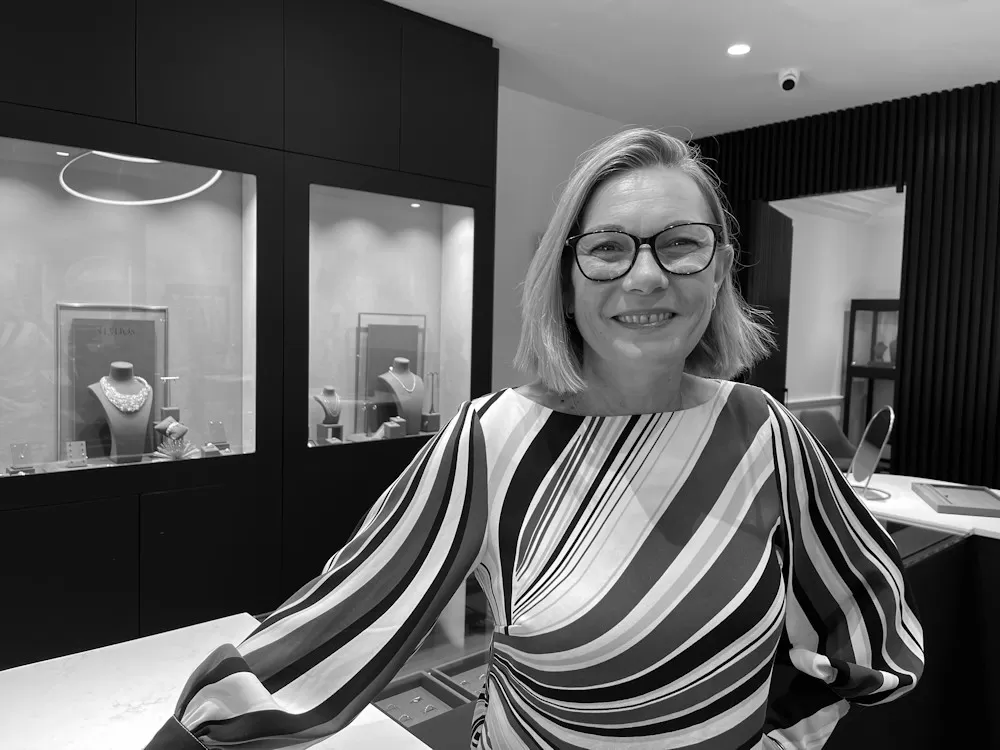
Isabelle Pontis, lead designer at Stelios Jewellers, brings 27 years of experience and a renowned eye for detail. Her bespoke designs blend technical mastery with artistic vision, shaping the signature style and quality of Stelios Jewellers.



Social Media