

The cushion cut diamond is one of the most asked-about shapes at our Mt Hawthorn store, and it is easy to see why. Sometimes called the pillow cut for its softly squared profile and rounded corners, the cushion sits at the perfect blend of vintage inspired designs and modern brilliance. It carries a softness that round brilliant diamonds and princess cuts simply cannot match, while still throwing real fire under the lights. For couples drawn to engagement rings with a romantic, slightly old-world character, a cushion cut diamond ring is often where the conversation lands.
This guide walks through the history of the cushion cut, the two main faceting styles you will encounter, the difference between square and elongated cushions, and how we shape settings around each variation in our workshop.
The Vintage Origins And Modern Revival
The cushion cut traces back more than two centuries to the old mine cut, the dominant diamond shape through the 1700s and 1800s before round brilliants took over. Old mine cushions had a high crown, a small table, large facets, and a deep pavilion designed for candlelight rather than electric light. The shape fell out of fashion as cutting technology refined the round brilliant, but the cushion never fully disappeared.
The modern cushion cut emerged in the late twentieth century as cutters revisited the old mine profile and updated the faceting for contemporary lighting. Today’s cushion cut diamond delivers a softer silhouette with full modern brilliance, which is why it has become one of the most popular diamond shapes for engagement rings over the past two decades. The shape carries genuine vintage character without feeling dated, which is the quality couples respond to most strongly.
Two Faceting Patterns: Crushed Ice And Modern Brilliance
Cushion cut diamonds come in two distinct faceting styles, and the visual difference between them is significant. The first is the modern brilliance pattern, sometimes called the cushion brilliant, which uses larger facets arranged like a round brilliant and produces strong, defined flashes of light. The second is the crushed ice pattern, which uses smaller facets and an extra row of pavilion facets to produce a finer, glittery sparkle that reads as a continuous shimmer rather than discrete flashes.
Both styles are beautiful. Modern brilliance suits buyers who want stronger, more dramatic fire and clearer light pattern through the table. Crushed ice suits buyers who want a softer, more dispersed sparkle that almost seems to move under the light. We always lay both styles on the bench when a client is undecided, because the difference is hard to describe and obvious in person.
A third style, the hybrid cushion, sits between the two with mid-sized facets and balanced light return. This is the version we set most often because it carries the best of both approaches.
Square Versus Elongated Cushions
The cushion cut comes in two main proportions: a near-square shape with a length-to-width ratio close to 1.00 to 1.05, and an elongated cushion cut diamond with ratios from 1.10 to 1.30 or higher. The square cushion sits at the pillow profile most people picture when they hear the term, while the elongated cushion stretches the silhouette toward a soft rectangle.
The square shape suits classic vintage inspired designs and pairs naturally with halo settings or three stone designs. The elongated cushion produces a flattering lengthening effect on the finger, similar to an oval, and reads slightly larger across the surface at the same carat weight. Slender fingers tend to suit the elongated proportions, while broader hands often suit the square shape that sits compactly on the finger.
We will run the dimensions for any client weighing two cushions of different ratios, because how the stone sits on the wearer’s hand matters more than what the certificate says.
Carat Weight And Face-Up Size
Cushion cut diamonds typically have more depth than round or oval cuts, which means a 1 carat cushion can read slightly smaller from above than a 1 carat round of the same colour and cut grade. The trade-off is that the cushion’s deeper pavilion produces stronger fire under directional lighting. For buyers prioritising face-up presence at one carat, an elongated cushion or an oval shape often delivers more visible scale than a square cushion.
That said, cushion cuts at larger carat weights (above 1.5 carats) read beautifully because the larger surface area showcases the unique faceting pattern. Many of the cushion cut engagement rings we build sit in the 1.5 to 2.5 carat range, which is where the shape truly comes into its own.
Choosing Colour And Clarity For A Cushion Cut
Cushion cuts handle inclusions and colour reasonably well thanks to their faceting, especially the crushed ice version which scatters light enough to mask minor imperfections. We typically recommend SI1 to VS2 clarity for cushion cuts in white metals, with VS1 preferred for crushed ice patterns above 2 carats where any inclusion in the table area becomes more noticeable to the naked eye.
For colour, G to I sits in the value sweet spot for white gold and platinum settings, while yellow gold and rose gold settings can comfortably accommodate J colour without any warmth showing. Both lab grown diamonds and natural diamonds work well as cushion cuts, with lab grown options offering exceptional value for buyers wanting more carat weight at the same budget.
Setting And Metal Pairings
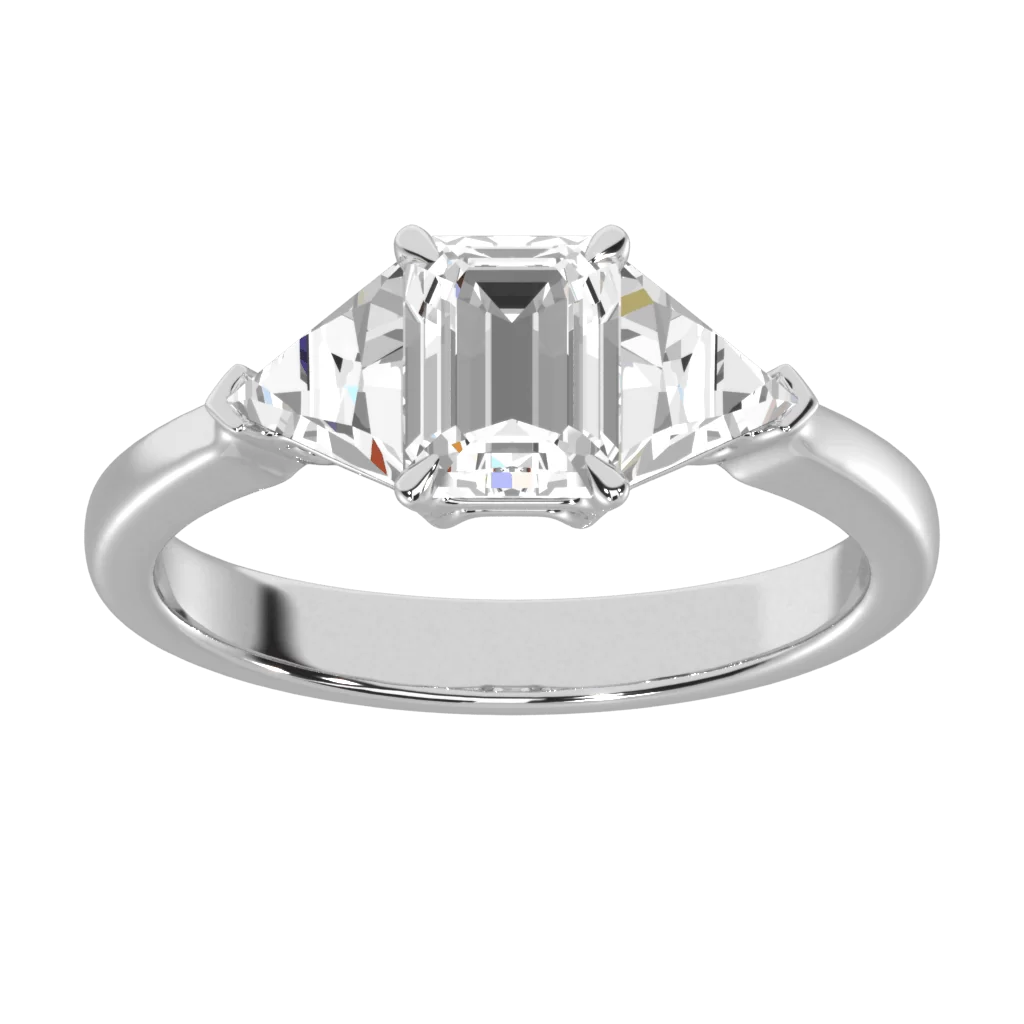
The cushion cut’s softer silhouette opens up a wider range of setting styles than most other shapes. Halo settings are particularly popular because the rounded edges of a cushion sit naturally inside a surrounding circle of pavé diamonds, with the halo amplifying the cushion’s already substantial face-up scale. Three stone designs flanking the cushion with tapered baguettes or smaller round diamonds create classic vintage inspired engagement rings with strong presence.
Solitaire settings work beautifully on cushion cuts, particularly with double claw prongs at each corner that protect the rounded edges while keeping the stone open on all sides. Hidden halo settings, where a circle of small diamonds sits beneath the centre stone visible only from the side, add a layer of detail that most viewers never see.
For metal, rose gold has become particularly popular with cushion cuts in the past decade because the warm pink tones complement the soft, romantic character of the shape. Yellow gold leans the design more vintage, while white gold and platinum keep the look cleaner and more contemporary. All four precious metals are excellent choices depending on personal style.
Cushion Versus Round Brilliant Versus Princess
The three shapes are often weighed against each other in the showroom, and each has its place. Round brilliants throw the most concentrated sparkle and remain the safest classic look. Princess cuts deliver crisp square shapes with sharp angles and modern styling. Cushion cuts sit between them, with the rounded corners of a soft square or rectangular shape, modern brilliance through the pavilion, and a versatile shape that accommodates almost any setting style.
For couples who want round brilliant sparkle with vintage character, the cushion is often the right answer. For couples who want a definitively square shape with sharper geometry, the princess is closer to the brief. We routinely lay all three on the bench for clients still deciding, because the differences become obvious in person and almost invisible in photographs.
Frequently Asked Questions
A few of the cushion cut diamond questions we are asked most often.
Is A Cushion Cut Less Sparkly Than A Round Brilliant?
Differently rather than less. A modern brilliance cushion produces strong, defined flashes of light comparable to a round, while a crushed ice cushion produces a softer, continuous sparkle. Both deliver real fire and visual interest, just in different patterns.
Are Cushion Cuts Cheaper Than Round Brilliants?
Yes, typically. At the same carat weight, colour and clarity, cushion cuts cost around 15 to 25 per cent less than round brilliants. The savings reflect cutting yield from the rough rather than any difference in beauty or quality.
What Is The Best Setting For A Cushion Cut?
Halo settings amplify the cushion’s vintage character and increase face-up size. Solitaire settings with double claw prongs let the stone speak for itself. Three stone designs with baguettes or rounds add classic detail. The right choice depends on the wearer’s personal style.
Can A Cushion Cut Be Set In Rose Gold?
Yes, and it suits beautifully. Rose gold complements the soft silhouette of a cushion cut and creates a particularly romantic finish that has become popular over the past decade.
Is A Cushion Cut Durable Enough For Everyday Wear?
Absolutely. The rounded corners are less vulnerable than the sharp corners of a princess cut, and a properly set cushion cut diamond performs reliably across a lifetime of daily wear. We recommend annual professional cleaning and inspection like we do for any engagement ring.
Try A Cushion Cut Diamond At Our Shop
The cushion cut rewards in-person comparison more than almost any other shape, because the differences between modern brilliance, crushed ice and hybrid faceting are hard to read from photographs but obvious under good light. We keep loose cushion cut diamonds across both faceting styles and a range of length-to-width ratios specifically so clients can find the version that suits their dream ring before any design decisions are locked in.
If you are weighing a cushion cut for an engagement ring, we welcome you to spend an hour with us at the bench. We will pull stones to suit your brief, walk through faceting patterns under proper lighting, and shape a setting around the wearer’s hand and style. Spend An Hour At The Bench at our Mt Hawthorn studio, or look through the diamond engagement rings we have built recently to see how the shape translates into finished work.

Andy McGee, Manager and Master Jeweller at Stelios Jewellers, brings over 38 years of experience from London and Perth. Known for his precision craftsmanship and eye for detail, he oversees the creation of bespoke pieces to the highest standards. A career highlight includes leading the production of the Miss Universe crowns, and he continues to craft standout designs for prestigious jewellery competitions.



Social Media