
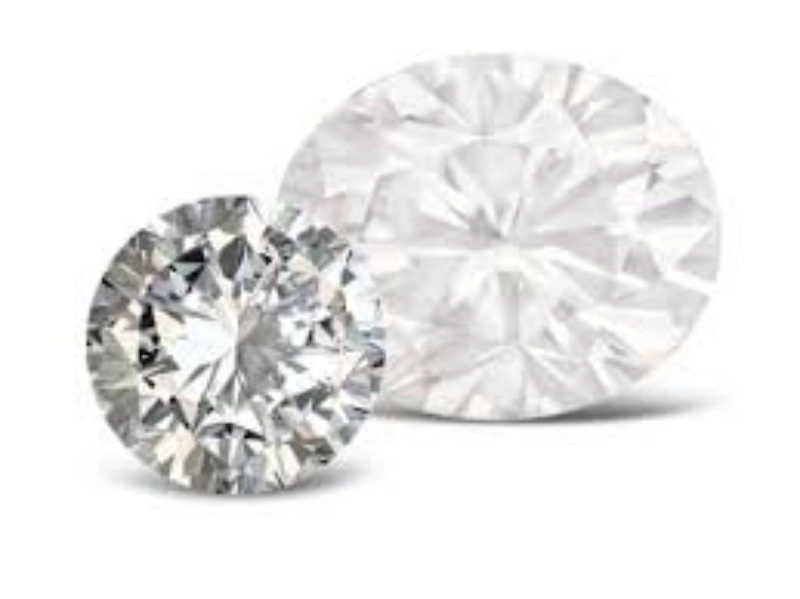
The moissanite vs diamond conversation has become one of the most common we have at our Mt Hawthorn bench, and it is the right conversation to be having. Both are durable gemstones used in fine jewellery. Both can carry a centre stone in an engagement ring beautifully. But they are different materials with different physical properties, different price points, and different reasons for choosing one over the other. After almost two decades cutting, setting and polishing both, we wanted to put together an honest comparison that goes beyond marketing copy.
This guide walks through the chemical composition of each stone, how they behave under light, how they hold up to daily wear, what each costs, and what the ethical considerations look like. By the end you will have a clearer view of which precious stone suits the ring you are designing.
Chemical Composition And Origin
The first place a moissanite diamond comparison breaks down is at the molecule. A diamond is pure carbon arranged in a cubic crystal lattice, formed deep in the earth’s mantle under extreme pressure and heat over billions of years. Moissanite is silicon carbide, a different mineral entirely, with a hexagonal crystal structure. The two stones share none of the same chemistry.
Natural moissanite is incredibly rare. The original silicon carbide crystals were discovered in 1893 by Henri Moissan in fragments of a meteorite crater in Arizona, which is why natural moissanite is sometimes described as a stone that began its life in space. Naturally occurring mineral deposits of silicon carbide are so extremely rare on Earth that no commercial supply exists. Every moissanite ring on the market today, including the moissanite stones we set in our workshop, is grown using advanced technology in a controlled laboratory.
Diamonds, by contrast, can be either mined diamonds pulled from kimberlite pipes around the world, or lab grown diamonds produced through HPHT or CVD processes. Lab grown diamonds offer the same chemical composition as a mined diamond, just grown in a different setting. Moissanite is not a lab grown diamond; it is a different stone altogether, created through its own production methods.
Optical Properties And Light Reflection
How each stone handles light is where the visible difference lives. Moissanite has a higher refractive index than a diamond (around 2.65 against 2.42), which means light bends more sharply when it enters the stone. Combined with significantly higher dispersion, the property that splits white light into spectral colour, this gives moissanite greater fire than a diamond. Side by side under bright light, a moissanite ring throws more rainbow flashes, while a diamond produces more white-on-white sparkle.
Moissanite is also a double refractive gemstone. Light entering the stone splits into two rays as it travels through the crystal, while a diamond is singly refractive. To an untrained eye, this is invisible at normal viewing angles. To a trained jeweller looking through the table at the right tilt, you can sometimes see a faint doubling at faceted girdles or pavilion edges that simply does not appear in a real diamond. Cutters orient the rough to hide this from the top view, which is why most clients never notice it.
The practical effect of these unique optical properties is a stone that reads as more sparkly than a diamond in some lighting and reads almost identically in others. Some clients fall for the extra fire immediately. Others find it too active and prefer the quieter brilliance of a diamond. Neither response is wrong; it is a question of taste, and the only way to make the call honestly is to look at both stones in the same light, side by side, before you commit.
Hardness And Durability
The Mohs hardness scale measures a mineral’s resistance to scratching, on a scale of one to ten. Diamond sits at ten and remains the hardest material we work with. Moissanite sits at 9.25, second only to diamond. Sapphire, by comparison, sits at nine. Cubic zirconia, often grouped together with these stones in marketing copy but worlds apart in practice, sits at around 8 to 8.5.
For everyday wear, both diamond and moissanite perform exceptionally well. Both will resist the surface wear that comes from kitchen benches, gym equipment, car keys and the rest of normal life. The very small hardness gap between the two stones rarely makes a visible difference over a lifetime of wear.
There is a separate question of toughness, which is a stone’s resistance to chipping or fracturing under impact. Diamond is harder but more brittle along certain crystal planes. Moissanite is slightly tougher in some respects. In real life, both stones will hold up beautifully if the setting is built to protect them, which is something we pay close attention to at the bench.
Carat Weight And Visible Size
A diamond and a moissanite of the same carat weight are not always the same physical size. Moissanite is slightly less dense than a diamond, which means a one carat moissanite reads marginally larger on the finger than a one carat diamond at the same shape and cut. The difference is small but visible to a careful eye.
For larger carat weights, this matters more. A two carat moissanite engagement ring will read about the same size as a 2.2 to 2.3 carat diamond. For clients who want presence on the finger, this is part of the value moissanite offers, and we sometimes design with stones priced by physical millimetre dimensions rather than weight to keep the comparison honest.
Cost And Value
The price gap is the largest practical difference between moissanite and diamond. A high quality moissanite of one carat costs a small fraction of a one carat diamond of comparable visual quality, whether that diamond is mined or lab grown. The setting, the metal and the workmanship cost what they cost, but the centre stone itself sits at a different price point entirely.
That gap creates exceptional value at the moissanite end of the conversation. A budget that buys a small diamond solitaire will buy a much larger moissanite ring, often with a more elaborate setting and a matched wedding band built into the same outlay. We have built moissanite rings for couples who wanted scale, fire and a bespoke handcrafted setting at a price that simply would not have stretched to a diamond.
There is also a long-term value question that runs the other way. Diamonds, especially certified natural diamonds with strong provenance, hold value differently on the secondary market than moissanite does. A diamond ring is more easily resold, revalued or traded into a future piece. Moissanite is bought to be worn rather than banked, which is a fair trade for many buyers but worth understanding before you make the call.
Ethical Considerations And Environmental Impact
Lab created moissanite is grown in a controlled environment, which means it carries no diamond mining footprint, no risk of conflict zone supply, and a transparent chain of custody. The Kimberley Process governs the natural diamond trade and works well, but moissanite sidesteps the question entirely. For couples who feel strongly about the ethics of their gemstone, this clarity matters.
Natural diamonds carry their own answers. Australian diamonds, including the famous pink and champagne stones from the Kimberley region of Western Australia, have well documented chains of custody. Lab grown diamonds bypass mining altogether and are produced under controlled environmental conditions, though they still consume significant energy in the growth process.
No gemstone is impact free. The honest position is that moissanite, lab grown diamonds, and ethically sourced natural diamonds all have defensible answers to ethical questions, and the choice depends on which trade-offs matter most to you. We are happy to walk through certification paperwork for any stone we sell, and we encourage clients to ask.
Reading The Two Stones Side By Side
In our showroom we keep loose stones in matched shapes and sizes specifically so clients can see moissanite and diamond next to each other under the same lighting. The differences are real but more subtle than online comparisons sometimes suggest.
Under bright daylight or strong overhead light, the stones look closer to identical than most people expect. Under dimmer light, the moissanite’s higher refractive index and dispersion show up as more fire, particularly through the table. Under a strong jeweller’s lamp at the bench, the differences are most visible. Most clients cannot reliably tell moissanite from diamond at conversational distance, which is why moissanite sometimes gets grouped with diamond simulants in marketing language, even though it stands on its own as a precious stone in its own right.
Cubic zirconia, by contrast, looks different to both. CZ throws a glassier, less crisp sparkle and dulls noticeably over a few years of wear. Putting moissanite alongside cubic zirconia is the fastest way to see why moissanite belongs in the fine jewellery conversation and CZ does not.
Setting Choice Changes The Comparison
A point worth making before any decision: the setting changes how either stone reads on the finger. Moissanite’s extra fire is amplified by busy halo settings and pavé shoulders, sometimes to the point where the centre stone competes with the surrounding accents. Cleaner architectural settings (a four claw solitaire, a low bezel, a simple three stone) let moissanite carry itself without the design fighting it.
Diamond is more forgiving in elaborate settings because its quieter sparkle blends with surrounding accents rather than competing. This is part of why diamond halo and pavé designs work so consistently. When we design around either stone, we tune the setting to the gemstone, not the other way around.
A Recent Sorrento Commission
A couple from Sorrento came to us with a clear question: they wanted an engagement ring that would read substantial on the finger, and they were torn between a 0.7 carat lab grown diamond and a 1.5 carat moissanite at roughly the same total budget. We sat them down at the bench with both stones loose, set side by side under matched light. The 0.7 diamond was beautifully white and crisp. The 1.5 moissanite read significantly larger on the hand and threw more fire under the bench lamp.
They went with the moissanite. We designed a low-set yellow gold solitaire with a flat band and a hand-finished satin polish, sized the setting around the oval cut so the points were protected, and matched a thin yellow gold wedding band to sit flush against it. Build time was nine weeks from first consultation to hand over. The proposal happened on the foreshore at North Sorrento, and the ring photographed exactly as they had hoped under late afternoon sun. They have spoken about resetting the moissanite into a pendant later and replacing the centre stone with a diamond on a milestone anniversary, which is a path our settings are built to allow.
Which Stone Suits Which Brief
Moissanite is the right answer when scale on the finger matters at a controlled budget, when ethics and traceability matter, when the wearer enjoys the extra fire moissanite produces, and when the ring is being treated as a piece to be worn rather than a long-term store of value.
Diamond is the right answer when the brief specifically calls for a diamond, when long-term resale and revaluation matter, when the wearer prefers a quieter, whiter sparkle, or when the ring is part of a broader investment piece (such as a heirloom-grade natural diamond with strong certification). For couples who want the diamond chemistry without the mining footprint, lab grown diamonds occupy a useful middle ground at a price point between mined diamonds and moissanite.
Neither stone is universally better. Both are durable, both look beautiful, and both deserve a setting that does justice to the gemstone you have chosen.
Caring For Either Ring
The care routine is broadly the same. A weekly clean in warm water with a drop of mild detergent and a soft toothbrush keeps the stone bright. Annual professional cleaning and inspection, which we provide on every ring we make, picks up early signs of wear at the claws, restores the polish on the metal, and steam cleans the stone properly. Both moissanite and diamond will last a lifetime under this kind of care.
Diamond Faqs And Common Questions
A few of the moissanite vs diamond and diamond faqs questions we are asked most often.
Can The Naked Eye Tell Moissanite From Diamond?
The short answer is mostly no. To an untrained eye, a near-colourless moissanite of good quality reads as a diamond at conversational distance. A trained jeweller looking closely with a loupe can pick the differences in dispersion and double refraction.
Is Moissanite Considered A Real Diamond?
No. Moissanite is a different mineral with its own chemistry. It is not a real diamond. It is, however, a real gemstone with its own physical properties, recognised on the Mohs scale and used in fine jewellery in its own right.
Are Moissanites As Durable As Diamonds For Daily Wear?
Yes. Moissanite at 9.25 on the Mohs hardness scale is hard enough for everyday wear in an engagement ring centre stone, and the durability of a well set moissanite ring is comparable to that of a diamond ring across decades of use.
Can I Insure A Moissanite Engagement Ring?
Yes. Moissanite jewellery can be valued and insured the same way a diamond ring is. We provide a full valuation document with every ring we make, which most insurers accept directly.
Can I Replace A Moissanite With A Diamond Later?
Yes. We design our settings so the centre stone can be swapped without rebuilding the ring. The original moissanite is often reset into a pendant, a stacking band, or earrings as part of the upgrade.
Where To Go From Here
The honest answer to moissanite vs diamond is that the right stone depends on what you want the ring to do. If you want presence on the finger at a budget that leaves room for a richer setting and a matched band, moissanite earns its place. If the brief calls for the chemistry of carbon and the long arc of value that a certified diamond carries, that is a different ring with a different story behind it. Neither path is a compromise. They are two different answers to two slightly different questions.
The fastest way to settle the question is to put both stones on a piece of dark velvet, in front of a window, with the metals you are leaning toward laid out alongside them. We do this with every couple who walks into our showroom undecided, because comparing photographs online and comparing stones in your own hand are not the same exercise. Within twenty minutes most people know which way they are leaning, and from there the design conversation can actually begin.
If you are at that point in the process, we would welcome you in. Bring photographs of jewellery you already own and love, an honest sense of your budget, and any heirloom stones you might want to bring forward into the new ring. Our showroom is open by appointment for in person sessions, and we run video consultations for clients across Australia and overseas.
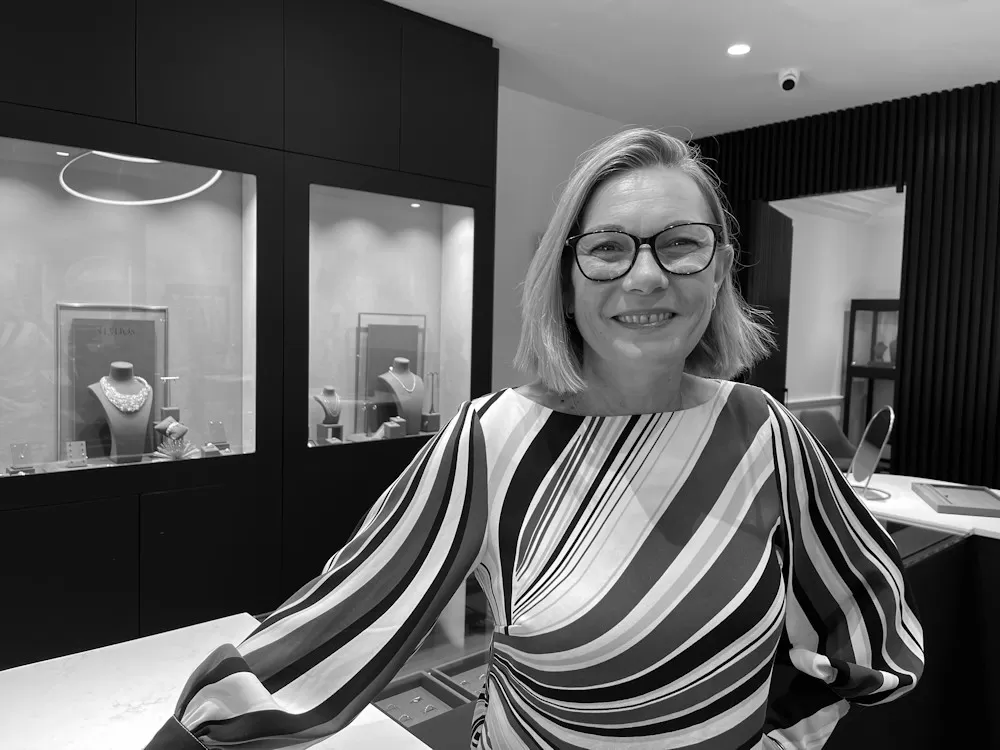
Isabelle Pontis, lead designer at Stelios Jewellers, brings 27 years of experience and a renowned eye for detail. Her bespoke designs blend technical mastery with artistic vision, shaping the signature style and quality of Stelios Jewellers.



Social Media