
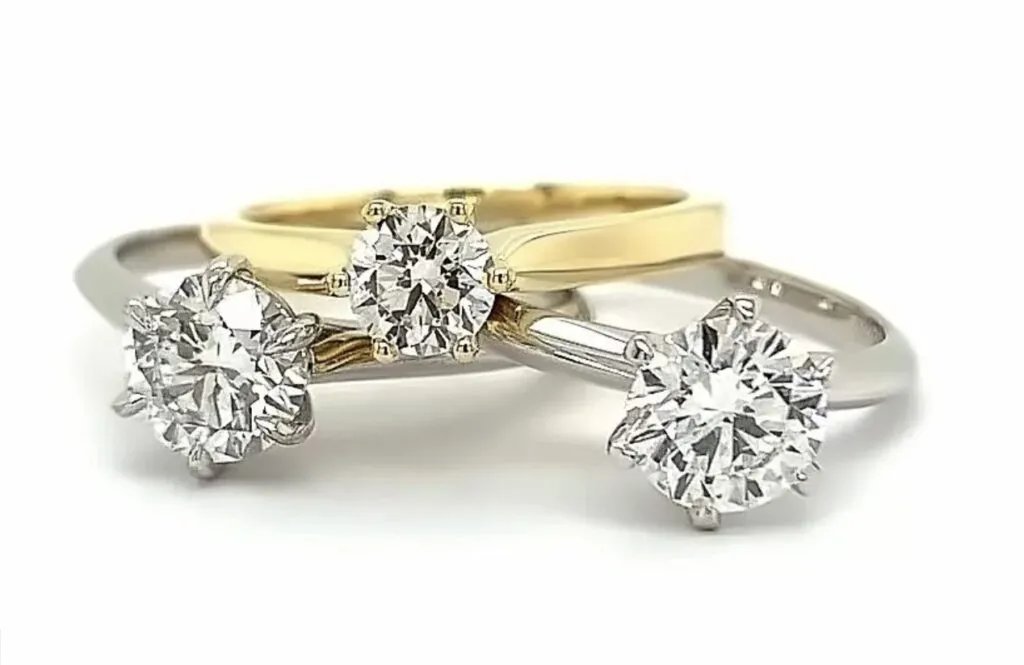
The lab grown diamond price question has changed significantly over the last few years, and it keeps changing month to month. Couples walking into our Mt Hawthorn workshop today are paying a fraction of what they would have paid for the same lab grown diamond in 2020, and the gap between lab grown and natural diamonds has widened to the point where it changes how we design rings around budget. This guide covers what lab grown diamonds actually cost in Australia today, what drives the price up and down, and where the value sits when you compare lab grown to mined diamonds at the bench.
What Drives The Price Of A Lab Grown Diamond
Lab grown diamonds are produced through one of two laboratory processes: HPHT (high pressure, high temperature) or CVD (chemical vapour deposition). Both start from a small diamond seed and build a larger crystal over weeks of controlled growth. The finished material is chemically identical to a mined diamond, with the same optical properties, the same hardness and the same physical structure. Trained gemologists need specialist tools to tell a lab grown diamond from a natural diamond once it is faceted and polished.
Because the rough is grown rather than mined, the supply chain is shorter and more predictable. As production technology has improved and more growers have entered the world market, prices have fallen sharply. A one carat lab grown diamond that cost six or seven thousand Australian dollars wholesale in 2018 now sits at a fraction of that, and the price keeps adjusting downward as larger diamonds become more accessible to grow.
The four traditional grading factors still drive value: carat weight, colour, clarity and cut. A D colour, internally flawless, excellent cut lab grown diamond will cost more than a G colour, SI1, very good cut stone of the same size. Inclusions, fluorescence, and table width all factor in too. The grading standards used for lab grown diamonds mirror the standards used for natural ones, and we work with stones graded by IGI or GIA so the comparison is honest.
Lab Grown Diamond Price Table
The table below shows broad price ranges we are seeing in Australia in 2026 for high quality, IGI or GIA graded lab grown diamonds in popular shapes. These are loose stone prices in Australian dollars, before setting, metal and workmanship. Actual quotes vary by individual stone.
| Shape | 0.5 ct | 1 ct | 1.5 ct | 2 ct | 3 ct |
|---|---|---|---|---|---|
| Round Brilliant | $800 to $1,500 | $1,800 to $3,800 | $3,200 to $6,500 | $5,500 to $11,000 | $11,000 to $22,000 |
| Oval | $700 to $1,300 | $1,500 to $3,200 | $2,800 to $5,800 | $4,800 to $9,500 | $9,500 to $18,500 |
| Emerald | $650 to $1,200 | $1,300 to $3,000 | $2,500 to $5,500 | $4,500 to $9,000 | $9,000 to $17,500 |
| Cushion | $700 to $1,300 | $1,500 to $3,200 | $2,800 to $5,800 | $4,800 to $9,500 | $9,500 to $18,500 |
| Pear | $650 to $1,200 | $1,400 to $3,100 | $2,600 to $5,600 | $4,600 to $9,200 | $9,200 to $17,800 |
| Princess | $650 to $1,200 | $1,400 to $3,000 | $2,600 to $5,500 | $4,500 to $9,000 | $9,000 to $17,500 |
These ranges sit well below comparable natural diamond rings of the same grade. A one carat round natural diamond in the same colour and clarity range typically runs three to five times the lab grown price, and the gap widens at larger carat weights.
How Lab Grown Compares To Mined Diamonds On Price
The only difference between a lab created diamond and a mined diamond, at the molecular level, is where the carbon atoms came from. The visual difference is invisible to the naked eye, even to most jewellers without specialist equipment. The price difference is significant.
For many buyers, that gap is the point. A budget that buys a 0.7 carat natural diamond solitaire will buy a 1.5 to 2 carat lab grown diamond ring at comparable colour and clarity, with budget left over for a richer setting or a matched wedding band. We have built lab diamond engagement rings with bespoke handcrafted settings, hand-set diamond accents and matched bands for couples whose budget would have stretched only to a small natural diamond ring.
There is a value question that runs the other way. Natural diamond rings hold their secondary market value differently to lab grown diamond jewellery. Lab grown diamonds are a manufactured product, and as growing capacity has expanded, prices have fallen. A natural diamond is a finite resource pulled out of the earth, which gives it different long-term behaviour as an asset. Whether that matters comes down to how you are thinking about the ring: a piece to wear, or a piece to hold value across decades.
What The Setting And Metal Add To The Cost
Loose stone prices are only half of the lab grown diamond price story. The setting, the metal and the workmanship round out the total. A simple 18 carat white gold solitaire setting starts in the low thousands of Australian dollars, with metal weight, finish complexity and any side stones moving the figure up. Platinum runs higher than gold because of the metal cost and the time required to work it. Yellow and rose gold settings sit in a similar range to white gold.
A bespoke handcrafted setting costs more than a stock setting because of the design and bench time involved. Hand-set diamond shoulders, milgrain detail, custom basket work and engraved bands all factor in. We quote each setting based on the actual time at the bench and the metal weight, which keeps the pricing transparent rather than rolled into a fixed retail markup.
For most lab grown diamond engagement rings we deliver, the centre stone accounts for somewhere between 30 and 60 per cent of the total ring cost, depending on the size of the diamond and the complexity of the setting. The remainder is the band, the side stones if any, and the workmanship.
Why Prices Vary Between Australian Jewellers
Lab grown diamond prices vary widely across the Australian jewellers market. Some businesses sell lab grown stones at margins comparable to natural diamonds, which puts retail prices well above the wholesale cost. Others, including independent workshops like ours, work to a clearer pricing structure where the stone, the metal and the workmanship are quoted separately.
When you shop online for a lab grown diamond ring, the price often reflects volume buying, lower overheads and a less personalised process. When you work with a local jeweller in person, you are paying for the consultation, the design time, the bench work and the aftercare. Both approaches can deliver beautiful rings. The right answer depends on whether you want a stock piece or a piece designed around the partner you are buying it for.
We are members of the Jewellers Association of Australia and our director Stelios Palioudakis has led the workshop since 2007. The bench team carries roughly two centuries of combined experience, and every ring leaves the studio after final inspection by a senior jeweller. We will be upfront about what your budget achieves at our prices, including when a different jeweller might be a better fit for your brief.
Coloured Lab Grown Diamonds And Fancy Shapes
White lab grown diamonds dominate the market, but coloured lab grown diamonds are becoming more available. Blue, pink, yellow and green lab grown diamonds are produced through doping during the growth process, and prices vary widely based on saturation, hue and supply. Yellow tends to be the most affordable. Pink and blue command higher prices because the consistency required to grow a strong colour is harder to achieve. Green is rarer still in the lab grown category.
For couples drawn to coloured stones, lab grown diamonds offer a lower cost path into a hue that would be extraordinarily expensive in a natural diamond. A natural pink of meaningful size sits at investment territory for most buyers, while a comparable lab grown pink can sit at a fraction of that figure. We work with both and walk through the trade-offs honestly with each client.
Fancy shapes (radiant, marquise, heart, asscher, baguette and others) sit at similar prices to the more common shapes when produced in lab grown rough. The shape of the rough crystal affects yield and therefore price, but the lab grown supply chain levels these differences out compared to natural diamond mining.
A Recent Mandurah Commission
A couple from Mandurah came to us last spring with a clear budget and a clear preference: they wanted a noticeable diamond engagement ring under twelve thousand Australian dollars, and they were open to either lab grown or natural depending on what the budget could deliver. We sat them down with three loose lab grown stones in the 1.8 to 2.2 carat range, all G colour, VS clarity, excellent cut, alongside a 0.85 carat natural diamond at the same price point.
The 2 carat lab grown oval won. We designed a hand-finished platinum solitaire with a knife-edge band, a low-set basket, and a tiny hand-set diamond accent on the gallery as a private detail only the wearer would see. Build time was seven weeks from first consultation to final polish. Total ring cost came in just under their budget, which left room for a matched platinum wedding band ordered in the same job.
The proposal happened on the foreshore at Mandurah Estuary at sunrise, and the photographs from that morning ended up on their wedding stationery six months later. We see them back twice a year now for the annual clean and inspection that comes with every ring we make.
Frequently Asked Questions
A few of the questions we hear most often before a lab grown diamond consultation.
Are Lab Grown Diamonds Real Diamonds?
Yes. Lab grown diamonds are real diamonds with the same chemical composition, optical properties and physical structure as mined diamonds. The only difference is origin. Both are pure carbon arranged in the same crystal lattice, both grade on the same scale, and both are recognised as diamonds by the major laboratories.
Will Lab Grown Diamond Prices Keep Falling?
Prices have fallen significantly over the past five years and may continue to ease as growing technology improves and more producers enter the market. The rate of decline has slowed compared to earlier years, but it would be reasonable to expect modest further softening in the short term. We quote on the day rather than locking in long-range pricing for that reason.
Can A Lab Grown Diamond Ring Be Insured?
Yes. We provide a full valuation document with every ring we make, which most insurers accept directly. Q Report Jewellery Insurance is one we recommend because they understand fine jewellery in detail, but any reputable jewellery insurer will cover a lab grown diamond engagement ring properly.
How Do I Know A Lab Grown Diamond Is Graded Honestly?
Reputable lab grown diamonds come with grading reports from IGI, GIA, or GCAL. We only stock and source stones with independent certification, and we will share the report with you before any purchase. The reports detail carat weight, colour, clarity, cut and any fluorescence or treatments.
Can I Replace A Lab Grown Diamond With A Natural One Later?
Yes. We design our settings so the centre stone can be swapped without rebuilding the ring. A few of our clients start with lab grown for a larger ring on day one and move to a natural diamond on a milestone anniversary, with the original lab grown stone reset into a pendant or a stacking band.
Where To Go From Here
Lab grown diamond prices in Australia have settled into a place where it is now possible to design a substantial diamond engagement ring at a budget that would once have stretched only to something modest. The right path through the price question depends on what you want the ring to do: how much size you want on the finger, how much weight you place on the long-term value of the stone, and what you would rather spend the saved budget on (a richer setting, a matched band, or simply keeping the difference back for the wedding).
The most useful conversation we have with clients at this stage is a side-by-side look at three or four loose stones at different sizes and grades, with the metals and setting style they are leaning toward laid out alongside. Twenty minutes of comparison work at the bench saves weeks of online second-guessing, and it gives you a real sense of what your budget is buying before any design decisions are locked in.
We invite you in to do exactly that. Bring a sense of your budget, photographs of jewellery your partner already wears, and any questions you have about the lab grown versus natural diamond comparison. Make An Appointment at our Mt Hawthorn studio, or get a head start through our Bespoke Ring Builder before we meet.

Andy McGee, Manager and Master Jeweller at Stelios Jewellers, brings over 38 years of experience from London and Perth. Known for his precision craftsmanship and eye for detail, he oversees the creation of bespoke pieces to the highest standards. A career highlight includes leading the production of the Miss Universe crowns, and he continues to craft standout designs for prestigious jewellery competitions.



Social Media