
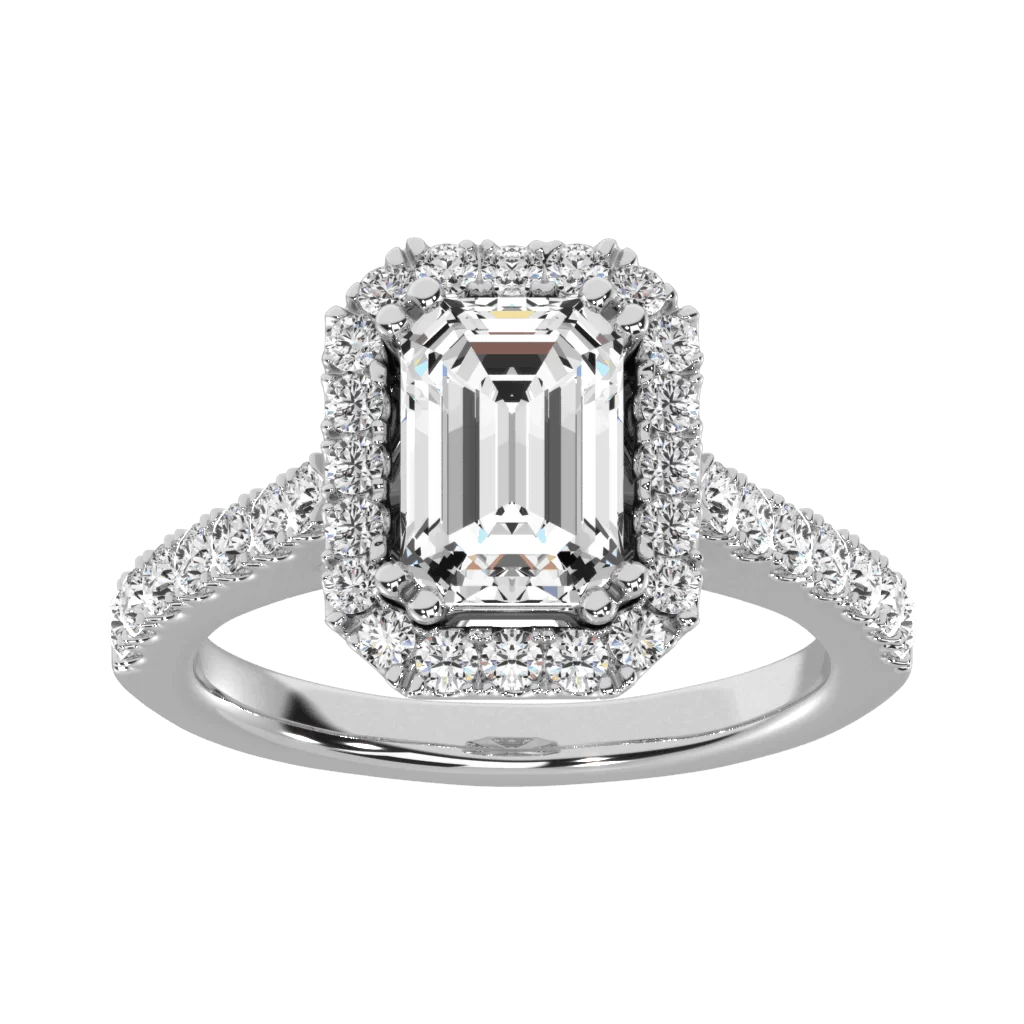
The emerald cut diamond is the quietest of the popular shapes and one of the most assured. Its elongated rectangular shape, cropped corners and step cut facets produce a calm, glassy light play that reads more architectural than the rapid scintillation of round brilliant diamonds. Couples who choose an emerald cut diamond ring are usually looking for something with clean lines, understated elegance and a strong nod to the art deco era. We set a steady stream of emerald engagement rings each year at our Mt Hawthorn workshop, and the conversation tends to be the most considered of any cut we work with.
The Art Deco Origins
The emerald cut takes its name from the way emeralds were traditionally cut to reduce stress on the more brittle gemstone, and the same step faceting was applied to diamonds when art deco design swept through fine jewellery in the 1920s. The geometric profile, parallel facets and rectangular shape became defining visual marks of the era. A modern emerald cut engagement ring still carries that vintage inspired character while sitting comfortably alongside contemporary designs, which is part of why the shape has held its place across a century.
Step Cut Facets And Light Performance
Emerald cuts use long, parallel step cut facets running through the pavilion rather than the triangular facets of a brilliant cut. Light entering the stone bounces in flat planes and exits in broad, glassy flashes through the table, sometimes called the hall-of-mirrors effect. The result is less of the small fast sparkle a round brilliant produces and more of a steady, sleek brightness that suits buyers drawn to elegance over showiness.
This light behaviour also means an emerald cut shows colour and clarity more honestly than brilliant cuts. Inclusions and tints that would be hidden by faceting in a round are visible to the naked eye through the open facets of an emerald.
Choosing Clarity And Colour For An Emerald Cut
Because of the open faceting, we recommend pushing clarity grades higher on emerald cuts than on brilliant cut diamonds. VS1 or higher is our usual starting point, with VVS2 preferable on stones above 1.5 carats where the table becomes large enough to reveal almost any inclusion. For colour, emerald cuts in white gold or platinum benefit from G or higher to keep the personal clarity of the stone reading bright. In yellow gold or rose gold settings, slightly lower colour grades read clean because the warm metal absorbs any faint tint.
This is one of the rare shapes where chasing higher grades genuinely changes the overall appearance, so the budget conversation tilts differently for an emerald cut diamond engagement ring than for a round.
Length-To-Width Ratio And Shape
The proportions of an emerald cut affect how it reads on the finger. A length-to-width ratio of around 1.40 produces a balanced rectangle, while ratios closer to 1.50 or 1.60 produce a more elongated silhouette. Square emerald cuts (sometimes called asscher cuts) sit at a 1.00 to 1.05 ratio. Slender fingers tend to suit the longer ratios because the elongated shape lengthens the hand visually, while broader hands often suit the more squared rectangle engagement ring profile. We will run the dimensions for any client choosing between two emerald cuts so the proportions are matched to the wearer rather than the certificate.
Setting And Metal Choices
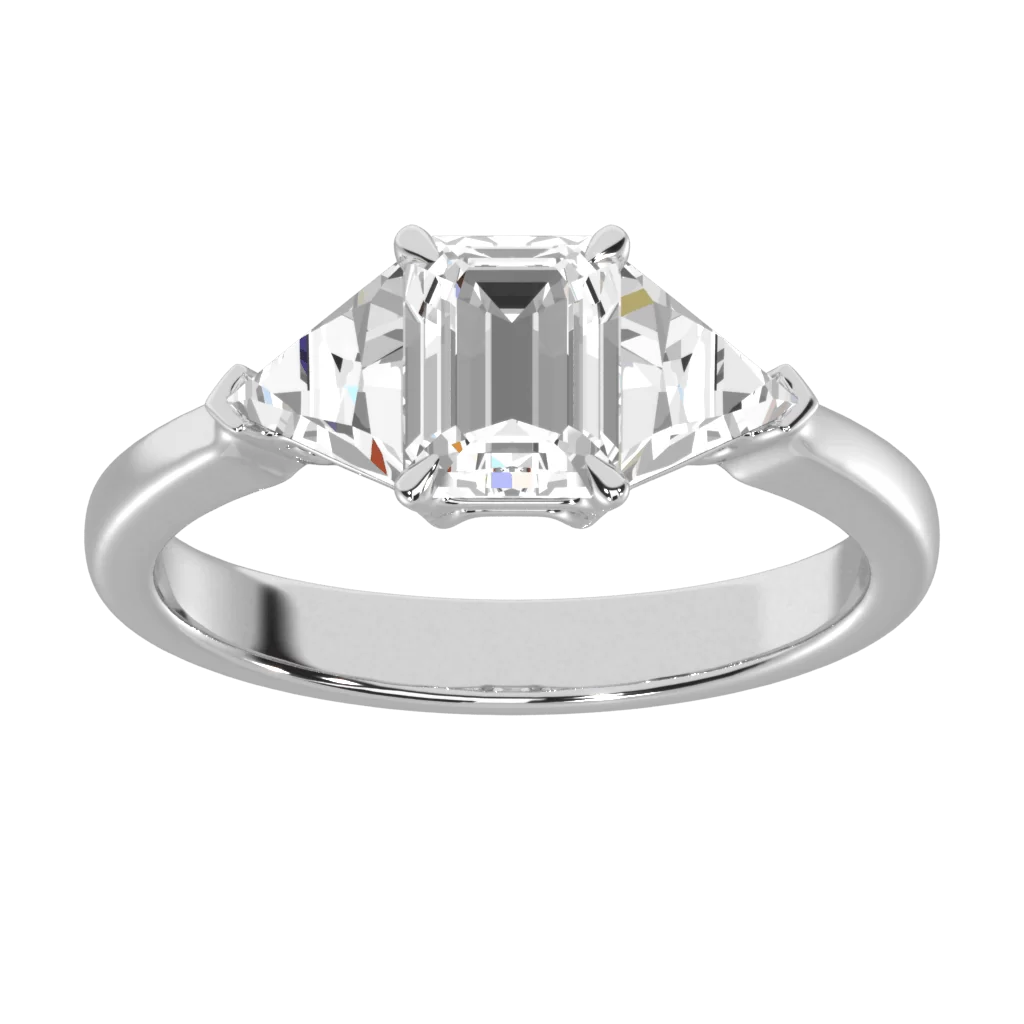
The clean lines of an emerald cut suit settings that respect its geometry. Classic solitaires with four corner prongs let the stone speak for itself. Bezel settings frame the rectangular shape and protect the edges. Three stone designs flanked by smaller emerald cuts or baguette diamonds create a strong art deco silhouette that pairs particularly well with a matched wedding ring. Halo designs work too, though we typically keep the halo subtle so it does not compete with the stone’s own architecture.
For metal, platinum and white gold suit the cool clarity of an emerald cut. Yellow gold and rose gold soften the look and lean the design more vintage. Both are excellent choices depending on personal style.
Emerald Cut Versus Round Brilliant
The two cuts are different propositions. Round brilliant diamonds throw maximum sparkle and remain the safe choice for buyers who want classic engagement rings. Emerald cuts deliver timeless elegance and a more measured light play, with cleaner lines and a unique character that suits buyers drawn to art deco aesthetics. Emerald cuts also typically cost less per carat than rounds at the same colour and clarity, because the shape preserves more of the rough crystal during cutting.
Frequently Asked Questions
Are Emerald Cuts Less Sparkly Than Round Brilliants?
Yes, in the sense that they produce different light flashes. Round brilliants throw rapid scintillation; emerald cuts produce slower, broader flashes through the table. Neither is less beautiful; they are different aesthetics.
Are Emerald Cuts Durable For Everyday Wear?
Yes. Emerald cuts are extremely durable when set in a protective design. The cropped corners reduce vulnerability compared to true rectangle engagement rings with sharp angles, and the step cut faceting holds up well across decades.
Why Are Emerald Cuts Cheaper Per Carat?
The rectangular shape preserves more rough during cutting than a round brilliant, which lowers the price per carat at the same grades. The savings can be reinvested into higher clarity, which emerald cuts genuinely benefit from.
Can I Set An Emerald Cut Diamond In Yellow Gold?
Absolutely. Yellow gold complements emerald cuts beautifully, particularly in vintage inspired or three stone designs. We have set many emerald cut engagement rings in 18 carat yellow gold across the years.
Begin An Emerald Cut Design Conversation
The emerald cut rewards careful selection more than almost any other shape. The right stone, the right ratio and the right setting come together to produce a ring with a quiet authority that lasts a lifetime. We are happy to work through this in person with loose stones at the bench, where the open facets and proportions reveal themselves clearly under proper lighting. Begin your design conversation at our Mt Hawthorn studio, or look through our diamond engagement rings to see how we shape them around each commission.

Andy McGee, Manager and Master Jeweller at Stelios Jewellers, brings over 38 years of experience from London and Perth. Known for his precision craftsmanship and eye for detail, he oversees the creation of bespoke pieces to the highest standards. A career highlight includes leading the production of the Miss Universe crowns, and he continues to craft standout designs for prestigious jewellery competitions.



Social Media