
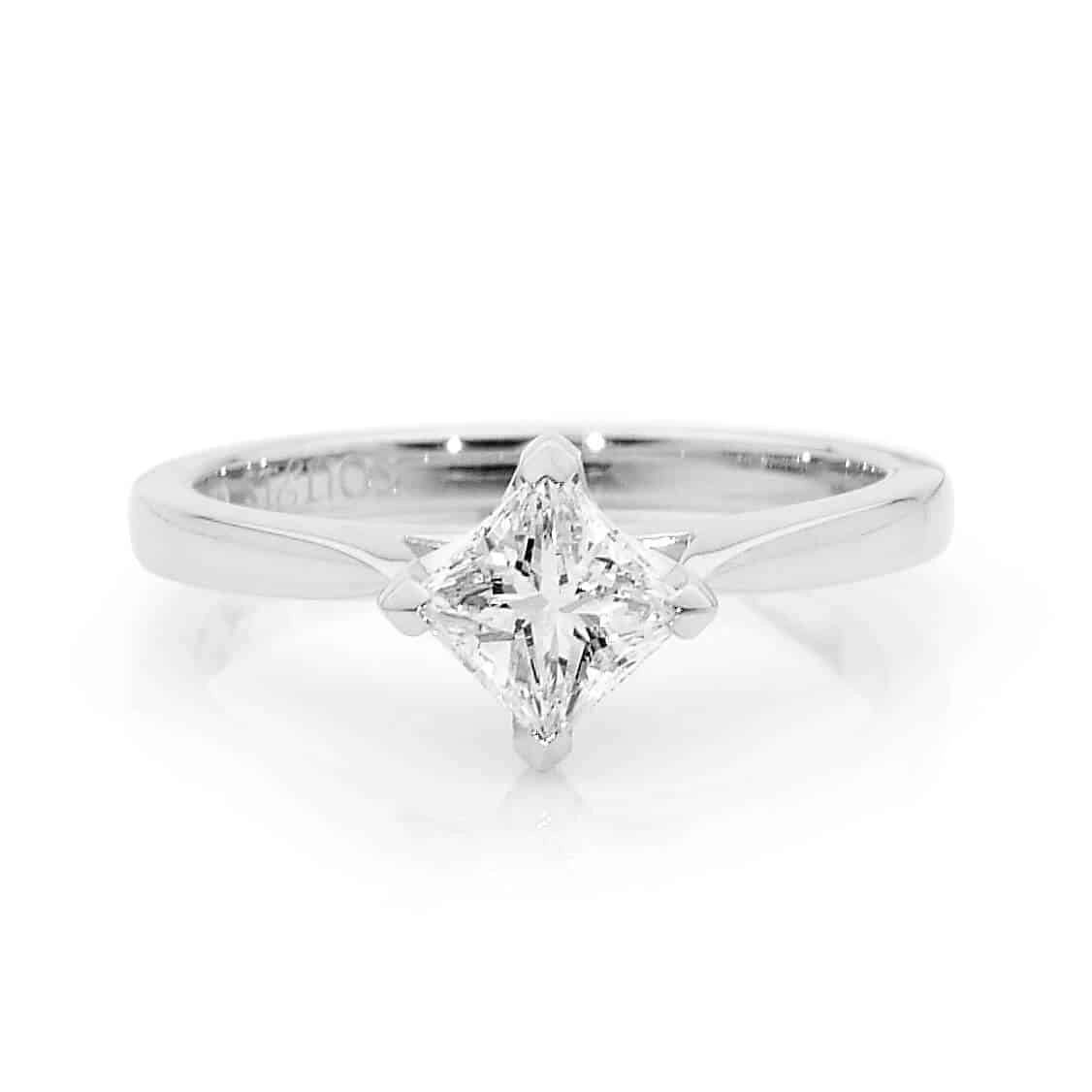
Choosing between a princess cut diamond and a round brilliant cut is one of the more common decisions we work through with clients, and the right answer depends as much on personal style as it does on the stone itself. Both are beautiful, both have a strong place in fine jewellery, and both make excellent centre stones for an engagement ring. The differences lie in the silhouette, the way each shape handles light, and how the cut shapes the design conversation around it.
This guide walks through what each cut is, how they perform on the finger, and where each one earns its place in a princess cut engagement ring or a round brilliant solitaire.
The Princess Cut Explained
The princess cut diamond is a square shape with sharp corners, a flat table, and an inverted pyramid pavilion that gives the stone its distinctive sparkle. Cutters developed the modern princess cut in the 1980s as a way to retain more of the original rough crystal than a round brilliant could capture, which is part of why a princess cut diamond engagement ring often costs less per carat than a round brilliant of the same grade.
The square cut profile produces clean lines and sharp angles, which suits buyers drawn to chic, modern aesthetics. The brilliant faceting through the pavilion delivers strong sparkle through the table, with flashes of light that read crisper and more architectural than the softer scintillation of a round. A princess cut ring sits well in solitaire settings, three stone designs flanked by smaller princess cut side stones or sapphires, and halo styles where the surrounding accents follow the square outline.
The Round Brilliant Cut Explained
The round brilliant cut diamond has been the most popular diamond shape for engagement rings for almost a century. Its 57 or 58 facets are mathematically optimised for maximum light return, which produces the brilliance and timeless appeal that round brilliants are known for. Round brilliant cut diamonds suit almost every setting style, from a single claw solitaire to an elaborate halo to a vintage three stone.
Because the round shape uses more of the rough crystal during cutting, round brilliants typically command a premium over fancy shapes at the same carat weight. That premium reflects both the cutting yield and the popularity of the shape on the world market. A round brilliant cut diamond engagement ring is the safest choice for buyers who want a shape that reads consistently across decades and across changes in personal style.
Light Performance And Sparkle
The two cuts handle light differently. A round brilliant returns light evenly across the entire face of the stone, producing the small, fast flashes that read as continuous sparkle to the eye. A princess cut concentrates light through the inverted pyramid pavilion and out through the table, producing larger, more discrete flashes that read more like fire than scintillation.
Side by side under the same lighting, a well cut round brilliant typically reads brighter and more even, while a well cut princess reads sharper and more dramatic. Neither is inherently better. Some clients prefer the calm continuous brilliance of a round; others fall for the architectural light play of a princess. We routinely lay both stones on the bench at the same carat weight, so the comparison happens in person rather than on paper.
Carat Weight And Face-Up Size
A round brilliant and a princess cut at the same carat weight read slightly differently on the finger. Princess cuts have a marginally larger face up area at the same weight because the square shape covers more surface than a round profile of the same carat size. A 1 carat princess cut typically measures around 5.5 mm across, while a 1 carat round brilliant measures around 6.4 mm in diameter; the round looks taller, the princess looks wider.
This matters when budget is tight. A princess cut delivers visible square scale on the finger at a lower price per carat than a round, which is part of why princess engagement rings are popular with buyers who want presence at a controlled cost. We will run the dimensions for any client weighing the two cuts, so the choice happens with real numbers rather than impressions.
Setting And Protection
The princess cut’s sharp corners are its most beautiful feature and its most vulnerable point. The four corners of a princess cut diamond are the thinnest points of the stone, and a sharp knock at the wrong angle can chip them. For this reason we always recommend a setting that protects the corners with v-shaped prongs, basket prongs that wrap around each corner, or a bezel that encloses them entirely. A well designed princess cut engagement ring is as durable as any round brilliant; a poorly protected one can give problems over a lifetime of wear.
Round brilliants have no corners to protect, which is part of their reputation as a low-maintenance everyday choice. A four or six prong setting is standard, and the stone sits comfortably in almost any classic or modern design. For active wearers, this is one of the practical reasons a round brilliant remains the popular choice.
Metal Choice For Each Cut
Both cuts work well across white gold, yellow gold, rose gold and platinum, but the conversation tilts slightly with each metal. Platinum and white gold throw a cool tone that emphasises the crisp lines of a princess cut and the bright sparkle of a round brilliant. Yellow gold warms both stones, and a princess cut in yellow gold reads particularly elegant when paired with knife-edge band detail. Rose gold flatters round brilliants with a soft warmth and works on princess cuts when the design leans modern rather than vintage.
For coloured fancy yellow diamonds, both cuts perform beautifully, with princess cuts reading slightly more saturated because of the way the inverted pyramid concentrates colour through the table. Sapphires set as side stones around either cut can also shift the character of the ring entirely, particularly in halo or three stone designs.
Frequently Asked Questions
A few of the princess cut versus round brilliant questions we are asked most often.
Is A Princess Cut Cheaper Than A Round Brilliant?
Yes, typically. At the same carat weight, colour and clarity, a princess cut diamond costs around 20 to 30 per cent less than a round brilliant. The savings reflect the higher cutting yield from rough rather than any difference in quality.
Does A Princess Cut Sparkle As Much As A Round?
Differently rather than less. A round brilliant produces continuous fine sparkle, while a princess produces larger, sharper flashes of light. Both are beautiful; the choice comes down to which style of brilliance suits the wearer.
Are Princess Cut Diamonds Out Of Style?
No. Princess cut engagement rings have been a popular choice since the 1980s and have a strong following today, particularly with buyers drawn to clean lines, modern silhouettes, and architectural styling. They sit alongside round brilliants as a perennial staple in fine jewellery.
Can A Princess Cut Be Set With Side Stones?
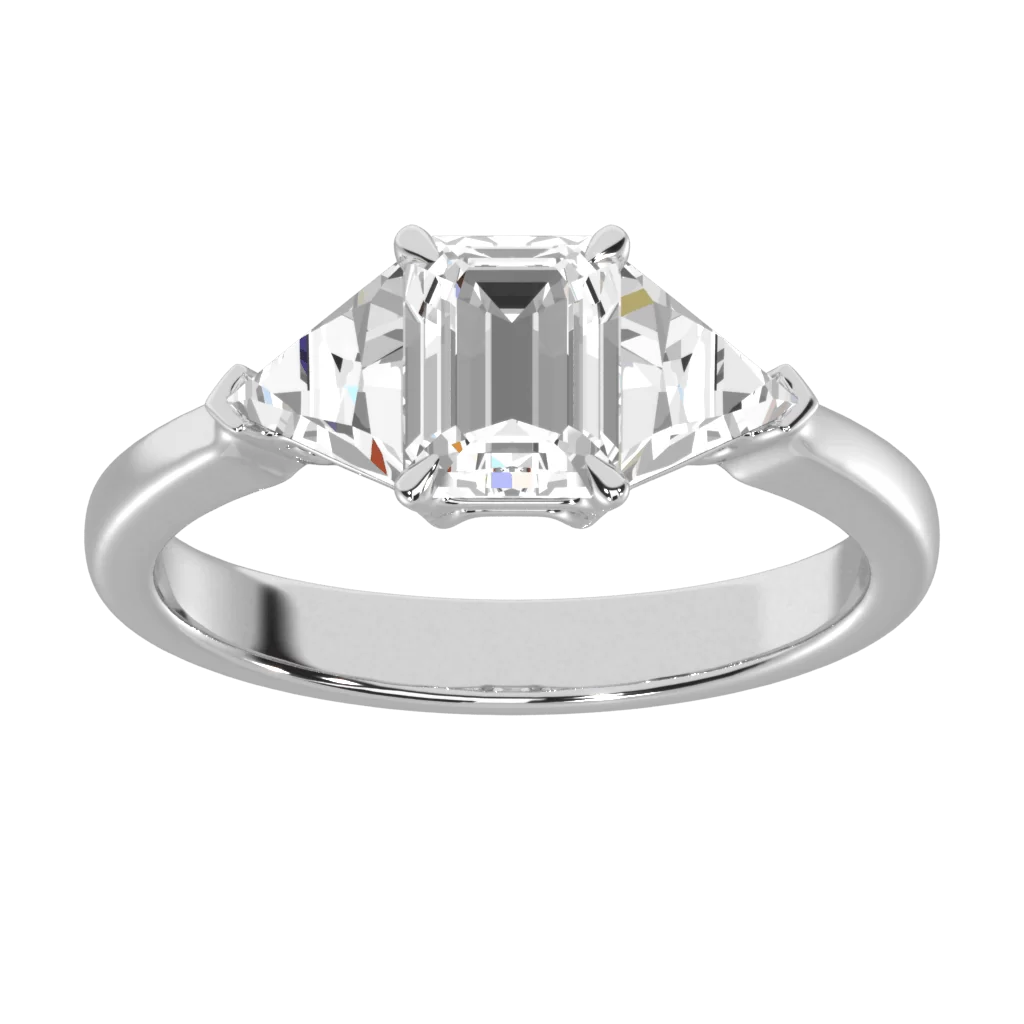
Yes. Princess cut diamond engagement rings work well in three stone designs with smaller princess cut side stones, baguette accents, or matched sapphires. The square shape pairs naturally with rectangular side stones for clean lines through the gallery.
Do Princess Cuts Need Special Care?
The corners need protective settings, and a regular professional clean and inspection is recommended once a year for any engagement ring. With v-prongs or basket prongs in place, a princess cut ring will perform beautifully across a lifetime of wear.
Hold Both Stones On The Bench
The princess cut versus round brilliant question is the kind of decision that resolves itself in twenty minutes at the bench with both shapes in your hand. Photographs flatten the differences. Loose stones under good light reveal them quickly: the way each shape catches sparkle, how each reads on the finger, and which one suits the wearer’s style at a glance. Most couples walk in undecided and walk out with a clear preference once the comparison is done in person.
If you are weighing a princess cut against a round brilliant for an diamond engagement ring, we welcome you in for a side by side session.
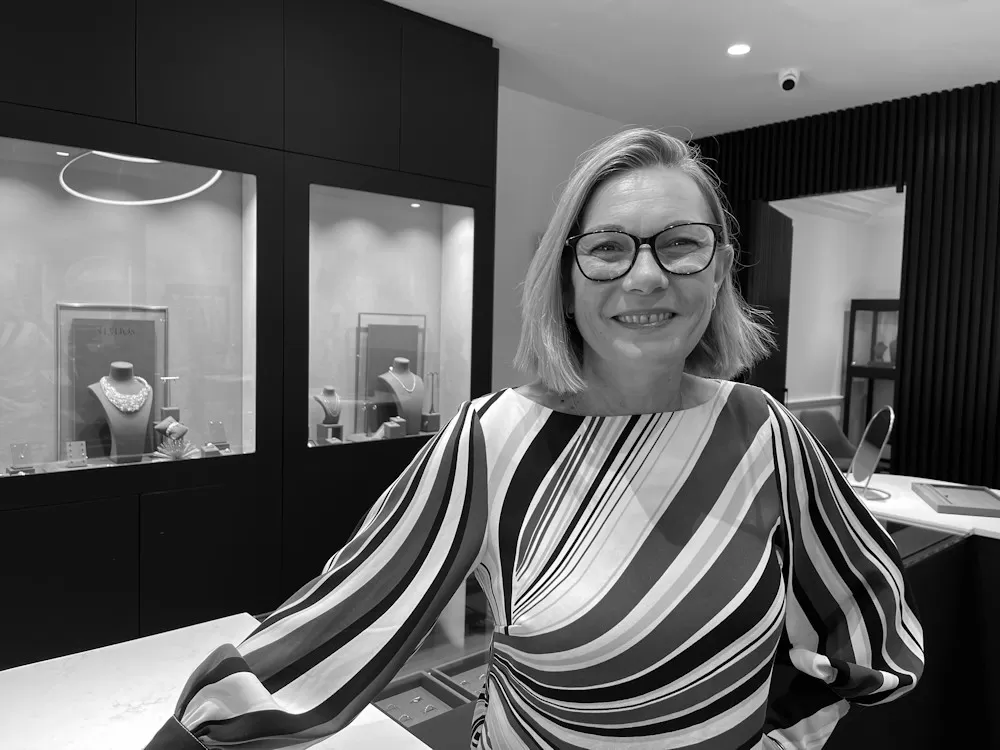
Isabelle Pontis, lead designer at Stelios Jewellers, brings 27 years of experience and a renowned eye for detail. Her bespoke designs blend technical mastery with artistic vision, shaping the signature style and quality of Stelios Jewellers.



Social Media