
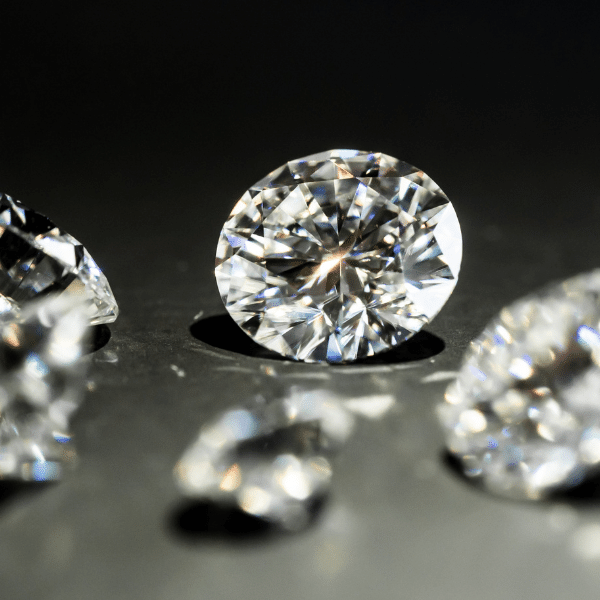
A Moissanite is a gemstone made of silicon carbide, and it has become one of the most asked-about stones at our Mt Hawthorn bench. Couples come in wanting to know what moissanite actually is, how it compares to a diamond, and whether it earns its place in fine jewellery.
The short answer is that moissanite is a real, durable gem with its own optical character, and at the right budget it can be the right call for an engagement ring.
The Origin Story
Moissanite was discovered in 1893 by the French chemist Henri Moissan, the Nobel Prize winning chemist who was sifting through fragments of a meteorite crater in Arizona. The silicon carbide crystals he found were so rare in their natural form that the gemstone was named in his honour. Naturally occurring moissanite is almost never available, so every moissanite ring we set today uses a lab created stone grown in a controlled environment, often through advanced technology developed at facilities like Research Triangle Park in North Carolina by Charles and Colvard, the company that first brought it to market.
Moissanite Vs Diamond
A diamond is pure carbon arranged in a cubic structure. Moissanite is silicon carbide arranged in a hexagonal structure. That difference shows up in how each stone handles light. Moissanite has a higher refractive index than a diamond (around 2.65 against 2.42) and significantly more dispersion, which means moissanite throws more fire and rainbow flashes. Some clients love that brilliance. Others prefer the white-on-white sparkle of a diamond.
Moissanite is also doubly refractive, where light entering the stone splits into two rays. A diamond is singly refractive. To the naked eye it reads as a diamond, but a trained jeweler can spot the difference at the right angle. Modern moissanite is grown to a near-colourless quality with excellent clarity and very few inclusions, which is one of the practical advantages of a laboratory grown gemstone.
Moissanite Vs Cubic Zirconia
Moissanite is sometimes confused with cubic zirconia, but the two are not the same. Cubic zirconia sits at around 8 to 8.5 on the Mohs hardness scale and tends to scratch and cloud after a few years of everyday wear. Moissanite sits at 9.25 on the Mohs scale, second only to diamond at 10. That hardness, combined with its toughness, is why moissanite remains a sound option for an engagement ring centre stone where cubic zirconia is not.
Why Hardness Matters
The Mohs scale measures a mineral’s resistance to scratching. For an engagement ring you wear every day, hardness matters. A stone below seven loses polish quickly. A stone at nine or above resists almost everything you encounter in normal life. Moissanite at 9.25 is one of the hardest gems we set, which means moissanite jewellery, including earrings and rings, holds its sparkle and durability for decades when looked after properly.
The Price Difference And Why It Matters
The reason most couples first ask about moissanite is the cost. A one carat round brilliant moissanite, set in 18 carat white gold or platinum, can deliver the same scale on the finger as a one carat diamond ring at a fraction of the centre stone price. That gap opens two real options: buying a larger stone than would otherwise be possible, or freeing up budget for the setting and a matched wedding band. We have built moissanite engagement rings with bespoke handcrafted settings for the same overall outlay as a far smaller diamond solitaire.
Ethics And Environmental Impact
Lab grown moissanite is produced in a laboratory, which means minimal environmental impact compared to mined stones, no mining footprint, and a transparent supply chain. The Kimberley Process governs natural diamonds well, but moissanite sidesteps the question entirely because the silicon carbide crystals are grown rather than dug out of the earth. For couples who feel strongly about the ethics behind their gemstone, that traceability matters.
Setting Moissanite In Our Workshop
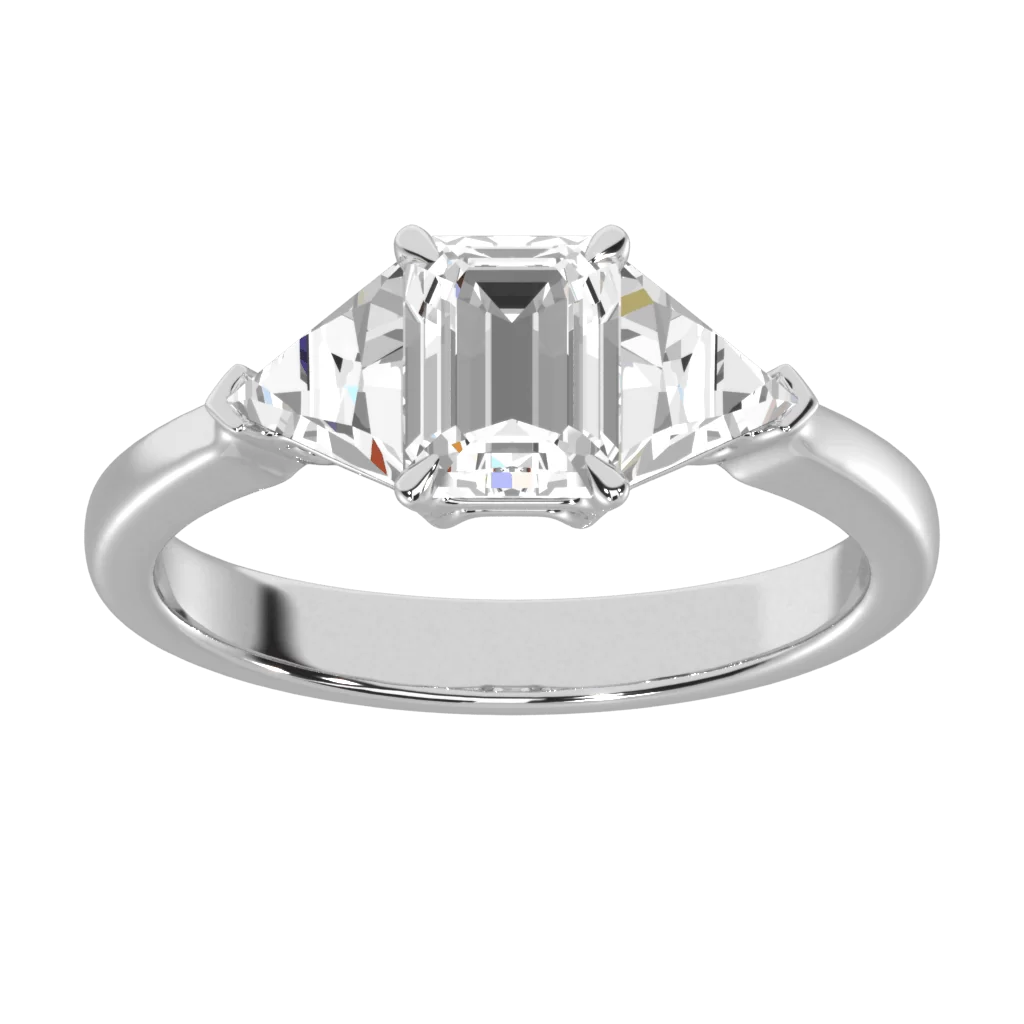
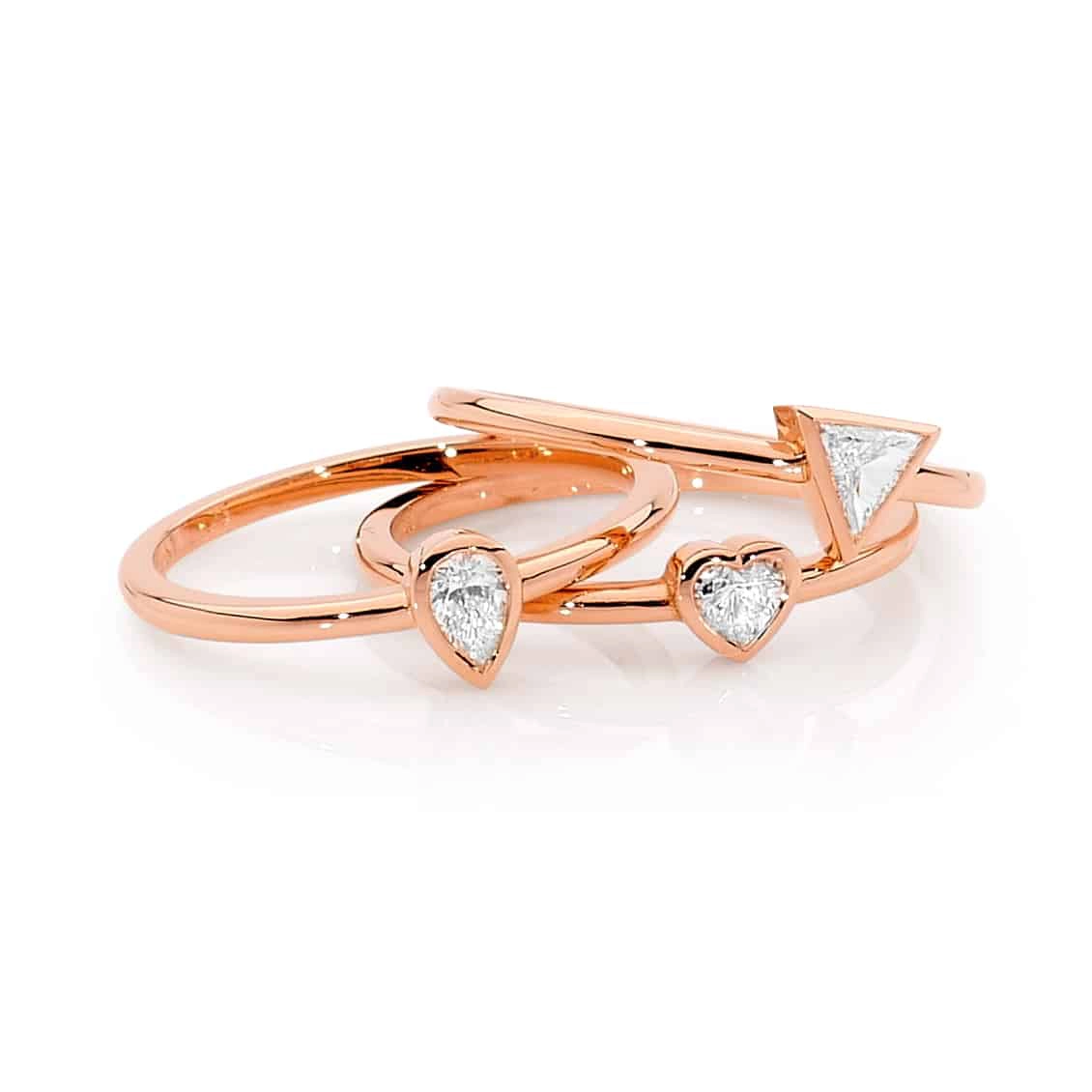
A well cut moissanite deserves a setting that lets the stone do its own work. Because moissanite throws more fire than a diamond, very busy halo or pavé settings can compete with the centre stone. We often recommend cleaner, more architectural designs (a four claw solitaire, a low bezel, or a clean three stone) where the gemstone carries the visual weight. Yellow gold reads warmly against moissanite, rose gold throws a soft pink tone into the stone, and white gold or platinum keeps the centre reading cold and white. Each metal has its place, and we walk through the options with the actual stone in hand.
We also pair moissanite with coloured gemstones on request, including ruby, emerald and sapphire side stones, which can shift the character of the ring entirely. Shape matters too: round brilliants throw the most light, ovals and pears stretch the look of carat weight on the finger, and emerald cuts read more architectural and quiet.
A Recent Hillarys Commission
A couple from Hillarys came to us last year with a tight brief and a careful budget. They wanted an engagement ring that would read big and bright in evening light, but they were not ready to spend diamond money on a first ring. We sat down with three loose moissanites in different sizes and looked at each under natural light, evening light and the bench lamp. The 1.5 carat oval won the day. We designed a low-set platinum solitaire with a tapered band, sized the setting to protect the points of the stone, and finished the ring in a warm satin polish. From first consultation to hand over the build took eight weeks, and the ring photographed beautifully under the fairy lights at the Hillarys Boat Harbour proposal. They may upgrade the centre stone to a diamond on a milestone anniversary, which is a path moissanite gives buyers who want to start somewhere and grow into the next stone.
When Moissanite Is The Right Call
Moissanite is the right gemstone when the brief calls for visible carat weight at a controlled cost, when ethics and traceability matter, and when the wearer enjoys the extra fire moissanite produces. It is also a strong choice for a travel ring or a second setting where the wearer wants something beautiful but not anxious-making to wear daily. Moissanite is not the right choice for a buyer who specifically wants a diamond, or who is treating the ring as a long-term store of value. Mined stones and certified natural diamonds behave differently on the secondary market, so if rarity and resale matter, the conversation shifts.
Caring For Your Moissanite Ring
Moissanite is straightforward to live with. A weekly clean in warm water with a drop of mild detergent and a soft toothbrush keeps the stone polished. We recommend a professional clean and inspection once a year, which we offer on every ring we make. The setting is checked for wear at the claws, the polish is restored, and the stone is steam cleaned to lift anything the home wash missed. Looked after this way, a moissanite ring keeps its beauty and brilliance for life.
Frequently Asked Questions
A few of the questions we hear most often before a moissanite consultation.
Will A Moissanite Ring Pass As A Diamond?
To most people, yes. Side by side, a trained jeweler can usually tell the two apart because of the dispersion and the slight double refraction. To anyone else, a near-colourless moissanite reads as a diamond on the finger.
Is Moissanite A Real Gemstone?
Yes. Moissanite is a naturally occurring mineral first discovered in a meteorite, though the gem-quality stones used in jewellery today are lab created. The material is a real gemstone with a hardness of 9.25 on the Mohs hardness scale.
How Long Does A Moissanite Ring Last?
A moissanite ring lasts a lifetime when it is cared for. The stone itself does not cloud, dull or lose its polish in everyday wear. The setting may need occasional maintenance the same way any fine ring does.
Can I Upgrade From Moissanite To A Diamond Later?
Yes. We design our settings so the centre stone can be changed without rebuilding the ring. The original moissanite often gets reset into a pendant or stacking band on its own right.
Book A Consultation
If you are weighing moissanite against a diamond, or you have already decided a diamond is the right call, we would like to meet you as we don’t deal in fake stones. We will sit down with stones in hand, walk through the options, and design a ring built around the gemstone, the setting and the partner you are buying it for. Visit our Mt Hawthorn studio, or arrange a virtual consultation from anywhere in Australia.

Stelios Palioudakis, founder of Stelios Jewellers, has been crafting bespoke pieces since 2007. Recognised early as a finalist in the Australian Jewellery Awards, Stelios has built a brand renowned for exceptional design, quality, and loyal clientele.



Social Media