
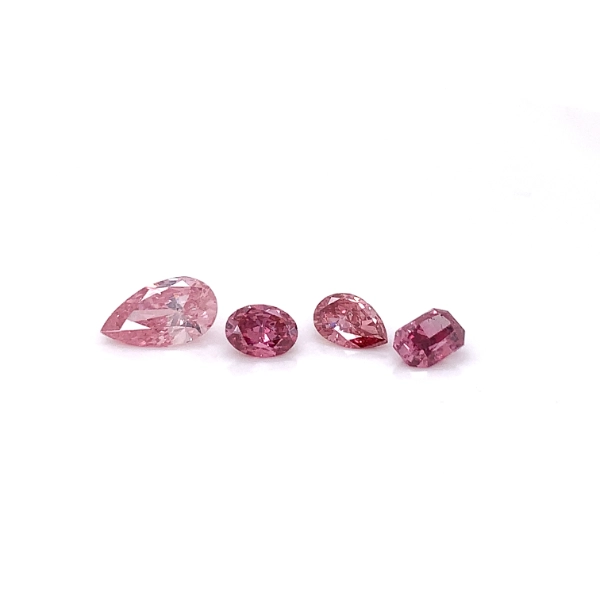
Australian pink diamonds are the rarest gemstones the modern jewellery industry has ever traded at commercial scale. The story of how they came to exist, how they were found, how they were sold, and why supply has now stopped is worth understanding for anyone buying a pink diamond for its beauty or as a personal investment. This article tells that story in the order it actually happened, from the geological events billions of years ago to the November 2020 closure of the mine that produced almost all of them.
We have worked with Australian pink diamonds at our Mt Hawthorn studio since Stelios Palioudakis opened the studio in 2007. The business is family owned, and our stance on pink diamonds has been the same across those years: treat them as rare, finite, and appreciating, and buy them from someone who has held the stones in hand before selling them.
The Geology: Why Pink Diamonds Formed Where They Did
A pink diamond is a natural diamond whose crystal lattice has been distorted by enormous geological pressure. Unlike other coloured diamonds such as yellow, blue or green, which draw their colour from chemical impurities, pink diamonds contain no colouring agent. Their colour comes from a physical process called plastic deformation, where the carbon lattice is bent by the pressure of formation. The bending alters how the stone absorbs light, and the eye reads the result as pink.
The conditions required to produce this deformation without fracturing the stone are exceptionally narrow. Too much pressure and the diamond shatters into commercial-grade rough. Too little and no colour develops. Across billions of years of diamond formation, only a handful of locations on earth have ever met those conditions reliably.
The East Kimberley region of Western Australia was one of them. Geological activity underneath what is now WA’s far north-east produced a volcanic pipe about 1.6 billion years ago that carried pressure-formed crystals to within mining reach of the surface. The pipe, known as a lamproite rather than the more common kimberlite, was unique in its combination of diamond-bearing rock and the specific pressure history that produced pink stones. Nowhere else on earth has produced pink diamonds in the same concentration or quality from the same location.
The Kimberley Region: Geography And Timing
The Kimberley is a remote part of northern Western Australia, roughly the size of Germany and California combined, with a population below 40,000 people. Its climate is dry, hot, and difficult. Its geology has been attracting exploration since the early twentieth century, but the specific lamproite pipe that produced the world’s supply of natural pink diamonds was not confirmed until 1979.
Commercial mining began in 1983, run by Rio Tinto through a series of joint ventures. At peak production in the 1990s and early 2000s, the mine processed tens of millions of carats of rough diamond per year. Roughly 90 percent of the output was brown and champagne diamonds, sold as commercial stones. A very small fraction (well under one percent) were pinks, and of those, only a handful per year met the top colour grades that would define the global benchmark for pink diamond pricing.
The remoteness of the region had a practical consequence for the trade. Stones mined in the Kimberley were flown to Perth for grading, then usually on to Antwerp, Sydney, or the United States of America for cutting and polishing. Most pink diamonds sold in Australia today passed through Perth at some point, which is part of why Western Australia, and Perth in particular, has a long-standing role in the global pink diamond trade.
The Mine That Found Them
The mine that produced the world’s supply of natural pink diamonds operated for 37 years. During that time it delivered roughly 865 million carats of total rough diamond production, of which the pinks made the commercial reputation that still shapes market pricing today.
Output varied across the mine’s lifetime. Early production was predominantly brown and champagne diamonds sold commercially. By the mid-1990s, pink production had become the mine’s signature category, with specific pits and layers producing better pink yield than others. In its final decade, pink production trailed off as the accessible layers reached depletion, and by 2019 the mine was producing only a small fraction of its peak pink yield.
Every pink diamond with certified Western Australian origin in circulation today came from this single operation. No other mine anywhere in the world has produced natural pink diamonds at comparable volume or consistency, which is what gives Australian pink diamonds their distinctive place in the diamond industry.
The Tender System That Made Them Famous
The finest pink diamonds from each year’s production were sold through a dedicated annual tender rather than the general diamond trade. The tender was a sealed-bid auction where only invited participants could bid, typically including major jewellery houses, diamond brokers, and private collectors from Japan, China, South Africa, across Europe, and across America.
A typical tender contained between 50 and 65 stones per year. Each stone was individually named, numbered, and photographed, with comprehensive detail on colour, clarity, and carat weight. Every tender piece was accompanied by independent grading reports from laboratories such as the Gemological Institute of America (GIA). The GIA, one of the world’s foremost authorities on coloured diamond grading, grades each stone for colour intensity, clarity, and carat weight before tender documentation is assembled.
The tender stones represented the highest quality pink diamonds produced that year. They set pricing benchmarks for the entire secondary market. A Fancy Vivid or Fancy Intense stone that went to tender might sell for five to ten times the price of an untendered pink of similar size and grade from the same production run.
Tender-grade stones continue to command a premium today, both because of their grading and because of the provenance paperwork that followed each one. A pink diamond with documented tender lineage carries both a certificate of authenticity and a record of the year it was mined, a level of documentation white diamonds rarely carry.
What Happened In November 2020
The mine reached the end of its commercial viability in late 2020. The accessible diamond-bearing rock had been mined, and deeper exploration was not economically justified given falling pink yield and rising extraction costs. The final blast took place in early November 2020. The mine closed permanently shortly after.
The closure had immediate market consequences. Tender prices for the final years of production reached record highs. Certified pink diamonds at all grades accelerated in appreciation through 2021 and 2022, and prices have continued to rise at the top colour grades since. Australian Diamond Analytics and similar industry trackers report that Fancy Vivid and Fancy Intense pinks have averaged 10 to 15 percent annual appreciation since closure, roughly double the rate in the decade before.
Supply, once closed, has been left unchanged. What exists, exists. No new commercial source has opened, and none is expected. This is the structural reason why pink diamonds now occupy a permanent category of finite, documented, appreciating stones.
What Stones Still Exist, And Where They Are
The existing inventory of natural Australian pink diamonds sits in three general categories.
Private collections and vaults. A significant portion of the finest tender stones went directly into private collections, museum exhibitions, or long-term holdings by specialist dealers. These rarely trade, and when they do, they usually move through international auctions in New York, Geneva, or Hong Kong.
Working trade inventory. Jewellers with long-standing industry relationships, including our own studio, maintain small reserves of loose pink diamonds purchased during the mine’s operating years. These stones are hand selected for colour, clarity, and cut, and sold into bespoke commissions as clients request them.
Finished jewellery. Thousands of pieces of pink diamond jewellery sit in Australian and international homes. Engagement rings, pendants, earrings, and other fine jewellery circulate through secondary markets and occasionally return to the trade via private resale or estate sales.
Every natural pink we sell comes with independent laboratory certification, usually from the Gemological Institute of America, and documented colour origin. For higher-value pieces, we recommend a supplementary valuation from an Australian registered valuer accredited through the National Council of Jewellery Valuers or the Gemmological Association of Australia, both of which hold accreditations that the insurance and estate-planning trade recognises.
A Recent Client With A Kimberley Connection
A retired geologist from City Beach came to us last year with a specific request. He had spent part of his career surveying mining projects across northern Western Australia, including several years in the East Kimberley during the mid-1990s. He had never owned a pink diamond, but he wanted one now as a piece of personal history.
We sourced a 0.38 carat Fancy Pink/6p , round brilliant cut, with documented origin papers from GIA and Argyle. We crafted the stone into an 18ct yellow gold bezel pendant on a short chain, a simple style that let the colour stand without competition from other detail.
The piece cost $86,000, modest by pink diamond standards but significant for a single pendant. The geologist told us that for him, the value was not the stone’s potential appreciation but the fact that he was now wearing a piece of the landscape he had spent two decades studying. Both reasons are legitimate, and both are common among the clients who choose to own one.
Frequently Asked Questions
Why Are Australian Pink Diamonds Rarer Than Pink Diamonds From Other Countries?
Because the specific geological conditions in the East Kimberley produced a concentration and quality of pink stones no other location has matched. Pinks from Russia, Brazil, Canada, and India exist but at lower volumes and generally lower colour intensity. Australian pinks have historically set the global benchmark for quality and pricing.
What Is The Difference Between An Australian Pink And A Pink Diamond From Elsewhere?
Provenance documentation and, usually, colour. Australian pinks from the Kimberley mine have documented origin paperwork tied to their tender year. Pinks from other countries rarely carry the same provenance infrastructure. Colour intensity varies but Australian pinks typically present more vivid saturation per carat.
Can I Still Buy A New Australian Pink Diamond?
No new stones are being produced. What you buy today is a stone that was mined before November 2020 and has either been in trade inventory, a private collection, or finished jewellery since. We source through our own reserve and trusted trade contacts across the industry. The final allocation of stones are coming out in 2026.
How Do I Know A Pink Diamond Is Genuinely Australian?
Independent grading with origin notation. The Gemological Institute of America includes origin information on coloured diamond reports where documented, Also a Delta certificate can source the origin of the diamond if it does not have an original Argyle certifictae from the mine release,and additional provenance paperwork from the original tender system is sometimes available. We verify all origin claims before any purchase.
Do You Deliver To All Australian States?
Yes. We serve clients across Western Australia AU, Victoria AU, New South Wales AU, Queensland AU, South Australia AU, Tasmania AU, Northern Territory AU, and the Australian Capital Territory AU, with remote consultations over video and secure dispatch for any stone or setting.
Are There Still Pink Diamonds Being Found Anywhere?
In very small volumes, yes. Russia and Brazil produce a small number per year, and occasional finds occur in Canada and India. None at the scale of the Kimberley source, and none with the same provenance infrastructure that Australian pinks carry.
Come And See A Natural Australian Pink Diamond
If you want to see a piece of Kimberley history in person, come in to our Mt Hawthorn studio. We will show you what is currently in our reserve, walk you through the origin paperwork for any given stone, and explain how the current market is pricing these exquisite gems. For clients interested in adding one to a personal or investment portfolio, we can help plan the acquisition with expert advice and appropriate valuation support.
Book A Pink Diamond Consultation or browse our Pink Diamond Jewellery collection.

Stelios Palioudakis, founder of Stelios Jewellers, has been crafting bespoke pieces since 2007. Recognised early as a finalist in the Australian Jewellery Awards, Stelios has built a brand renowned for exceptional design, quality, and loyal clientele.



Social Media