

The short answer: the wedding band goes on first, sitting at the base of the finger, with the engagement ring stacked above it. The convention comes from the idea that the wedding band, given during the ceremony itself, should sit closest to the heart, with the engagement ring positioned on the outside as the marker of the promise that preceded the marriage.
That is the traditional answer, and it remains the most common way Perth couples wear their wedding and engagement rings. The longer answer involves personal preference, cultural variations, the physical engineering of the ring stack, and the modern choice some couples make to combine both rings into one piece entirely. We work through this conversation at our Mt Hawthorn studio every week with brides preparing for weddings across Western Australia and clients commissioning matched wedding ring sets.
Traditional Order Of Wearing Rings
In most Western cultures, the engagement ring and the wedding band are worn together on the fourth finger of the left hand, traditionally called the left ring finger. The wedding band closest to the base of the finger, with the engagement ring on top, is the traditional order.
The visible logic is that the wedding band, exchanged at the wedding ceremony, represents the moment of marriage itself. Placing it closest to the heart at the base of the finger reflects that order of events. The engagement ring, given earlier as a promise of the marriage to come, sits above as the visible marker that announces the relationship’s status.
The practical sequence on the wedding day usually runs like this: the bride slides her engagement ring across to her right hand or onto a different finger before the ceremony. At the altar, the wedding band goes on first, in the position closest to the base of the finger. After the ceremony, the engagement ring returns to its position above the wedding band, and the two rings stay stacked together from that point on.
The History Behind The Order
The tradition of wearing rings to symbolise commitment goes back at least four thousand years. Ancient Egyptians wore braided wire bands on the left ring finger because they associated the circular shape with eternity. Romans believed a vein called the vena amoris ran from the fourth finger of the left hand directly to the heart, which is where the modern Western convention of wearing the engagement ring and wedding band on that finger originated.
The custom of wearing two separate rings (an engagement ring followed by a wedding band at the ceremony) developed across European aristocracy in the medieval and Renaissance periods, with diamond rings entering the engagement tradition through Archduke Maximilian’s gift to Mary of Burgundy in 1477. Queen Victoria’s nineteenth-century preference for diamond jewellery helped normalise diamond engagement rings, and the modern stacking convention settled across the twentieth century as both rings became standard expressions of the engagement and marriage sequence.

Combined Engagement And Wedding Rings
Some couples choose to combine the engagement ring and wedding band into a single piece rather than wear two rings on the same finger. Combined rings are designed as one piece from the start, with the centre stone of the engagement ring incorporated into a band that includes the wedding ring elements (often a row of pavé diamonds, milgrain detail, or matched metalwork).
The format suits clients who want simplicity in daily wear, who prefer not to deal with the engineering of stacking two rings against each other, or who want a one-piece silhouette that reads cleaner on the hand. We design combined rings at the studio for couples who decide on this direction during the original engagement ring commission. The piece is then presented at the proposal as the engagement ring, with the wedding ceremony marking a symbolic exchange rather than a second piece of jewellery.

Cultural Variations Around The World
Different cultures wear engagement and wedding rings differently. The Western Australian convention is one tradition among many.
In India, engagement rings are often worn on the right hand and frequently incorporate vibrant gemstones rather than diamonds.
In Brazil, both partners wear simple bands on their right hands during the engagement period, then move them across to the left ring finger after the wedding ceremony to signify the transition into marriage.
In Eastern Europe (including Russia, Poland and Ukraine), the engagement ring and the wedding band are often worn on the right hand rather than the left, following Orthodox Christian tradition.
In Chile, both partners wear an engagement ring throughout the engagement, and at the wedding the rings are swapped to the other hand as a marker of the marriage itself.
In many Middle Eastern countries, gold is the preferred metal for wedding rings, with associations of prosperity and protection rather than the diamond focus of Western traditions.
Japanese engagement rings tend toward refined simplicity in design, with smaller centre stones and quieter settings than the larger pieces common in American and Australian traditions.

Incorporating Eternity Rings
The eternity ring is the third piece in the wedding ring set for many couples. Given to mark a milestone wedding anniversary, the birth of a first child, or another significant moment, the eternity ring stacks above the engagement ring as the outermost piece in the stack.
The traditional sequence from the base of the finger outward is: wedding band closest to the base, then the engagement ring, then the eternity ring on top. This places the wedding band in the most meaningful position and arranges the other rings in their order of acquisition.
Half eternity rings (with stones across the front-facing portion only) are often easier to wear in the stack than full eternity rings because the plain back of the band sits cleanly against the back of the finger. We recommend half eternity designs for daily-wear pieces and full eternities for occasion pieces that get worn less constantly.
Practical Considerations For Daily Wear
Wearing two rings (or three) on the same finger involves more engineering than most couples expect. A few practical considerations from our studio:
Contoured wedding bands shaped to nest against the engagement ring sit cleaner than straight bands when the engagement ring has a halo, three stone configuration or pronounced gallery work. We design wedding bands against the actual engagement ring at the studio for accurate fit.
Top-heavy engagement rings often benefit from two wedding bands rather than one, with the bands flanking the engagement ring on either side. The lateral support stops the engagement ring from rotating on the finger.
Matched metal alloys matter. A platinum wedding band against a 9 carat gold engagement ring will eventually wear marks into the softer gold. Where possible we recommend matching the metal of the wedding band to the engagement ring.
For active lifestyles (sport, manual work, swimming), some clients leave the engagement ring at home and wear only the wedding band day to day, reuniting the stack for evenings, weekends and special occasions.
For lost rings, free resizing within twelve months on every ring we make at the studio plus full valuation documentation for insurance gives peace of mind.
Frequently Asked Questions
Is There A Correct Way To Wear Engagement And Wedding Rings?
The traditional order in Western cultures is wedding band first (closest to the base of the finger), then the engagement ring on top. There is no rule against reversing the order or wearing them on separate hands; personal preference and comfort take priority.
Can I Wear My Engagement Ring On A Different Finger?
Yes. Some wearers keep the engagement ring on the right hand to leave the left ring finger for the wedding band alone. Others move the engagement ring to a different finger entirely for active periods of life. There is no incorrect approach.
What If My Engagement Ring And Wedding Band Do Not Sit Flush?
This is solvable through a contoured wedding band designed to nest against the engagement ring. Bring both rings into the studio and we will design the band against the engagement ring directly.
Should I Take My Rings Off For Sport Or Manual Work?
Yes, generally. Sport, weight training, manual work and gardening all carry impact and abrasion risks that wear rings down faster than daily life. Most clients remove their rings before these activities and reunite the stack afterwards.
Design Your Ring Set With Us
If you are preparing for a wedding day and need a wedding band shaped against an existing engagement ring, planning a combined engagement-and-wedding piece from scratch, or thinking ahead to an eternity ring for a future anniversary, we welcome the conversation in person at our Mt Hawthorn studio.
Design Your Ring Set With Us at 145 Scarborough Beach Road, Mt Hawthorn, or call us on (08) 9481 0548 to arrange a private appointment to discuss your engagement ring, wedding band or eternity ring stack.
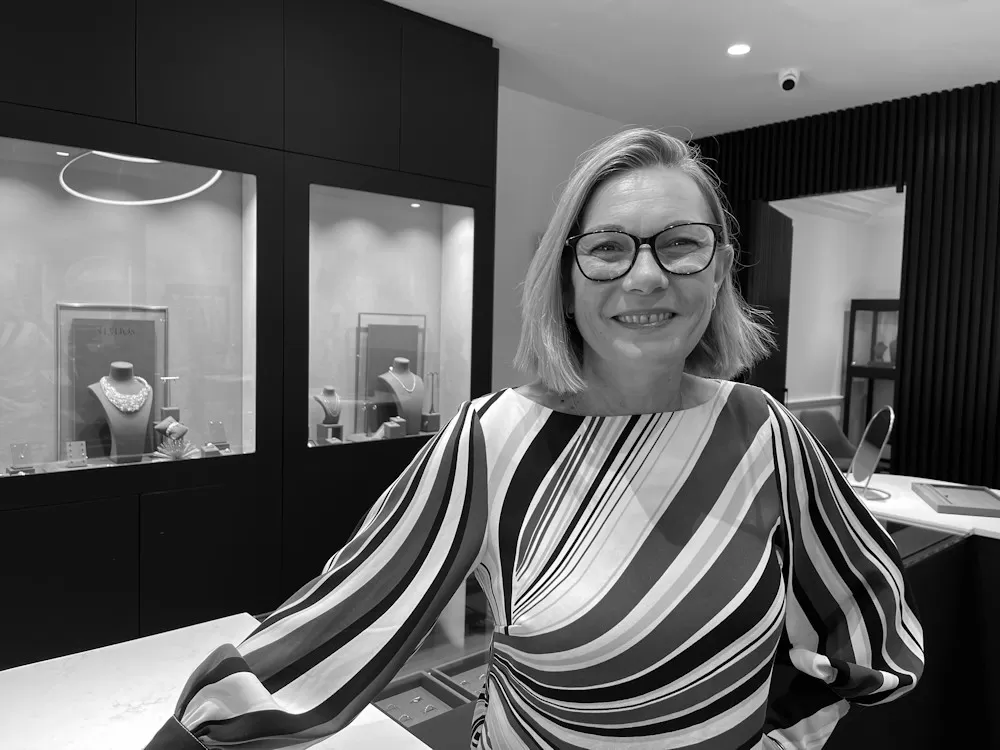
Isabelle Pontis, lead designer at Stelios Jewellers, brings 27 years of experience and a renowned eye for detail. Her bespoke designs blend technical mastery with artistic vision, shaping the signature style and quality of Stelios Jewellers.



Social Media