
A simple explanation of engagement ring vs wedding band is an engagement ring marks the decision to marry, a wedding band marks the marriage itself.
That is the difference in two sentences, and it is where most articles stop. The part that actually costs people money is what happens next, because these two rings have to live on the same finger for the next fifty years, and most couples buy them eighteen months apart without ever discussing the second one.
This guide covers what each ring is for, when each is given, how they differ in design, and how to make them work together. We design and make both at our Mt Hawthorn studio, and we have been shaping bands to fit existing rings since Stelios Palioudakis took over in 2007.
The Short Answer: What Each Ring Is For
The engagement ring is given at the proposal. It is a public declaration of intent to marry, it almost always carries a centre stone, and it is the more elaborate of the two. The tradition traces back to the fifteenth century, when Archduke Maximilian of Austria proposed to Mary of Burgundy with a diamond ring in 1477.
The wedding band is exchanged during the wedding ceremony as the vows are exchanged. It is usually simpler, often a plain metal band, and traditionally sits closest to the heart, meaning below the engagement ring on the finger.
Both are normally worn on the fourth finger of the left hand in Australia, though that varies by culture and by preference. Our guide on what hand the wedding ring goes on covers the exceptions properly, and which order you wear them answers the stacking question in detail.
When Each Ring Is Given
The engagement ring comes first, at the proposal, and is worn alone through the engagement period. In Australia that period now averages somewhere between eighteen months and two years, which is worth knowing because it is long enough for a ring to reveal every design flaw it has.
The wedding band arrives on the wedding day. Many couples order it in the three to four months beforehand, which in Perth creates a genuine bottleneck. Weddings here cluster heavily in the cooler months, so our bench runs hardest from about January through March making bands for autumn ceremonies. A bespoke band takes four to six weeks and a fitted one takes longer. Ordering in the same month as the wedding is how people end up with a stock band they did not really want.
Men’s bands follow the same timeline and are ordered far later than they should be, almost without exception.
How They Look Different
The two rings do different jobs, and their design reflects that.
The Engagement Ring
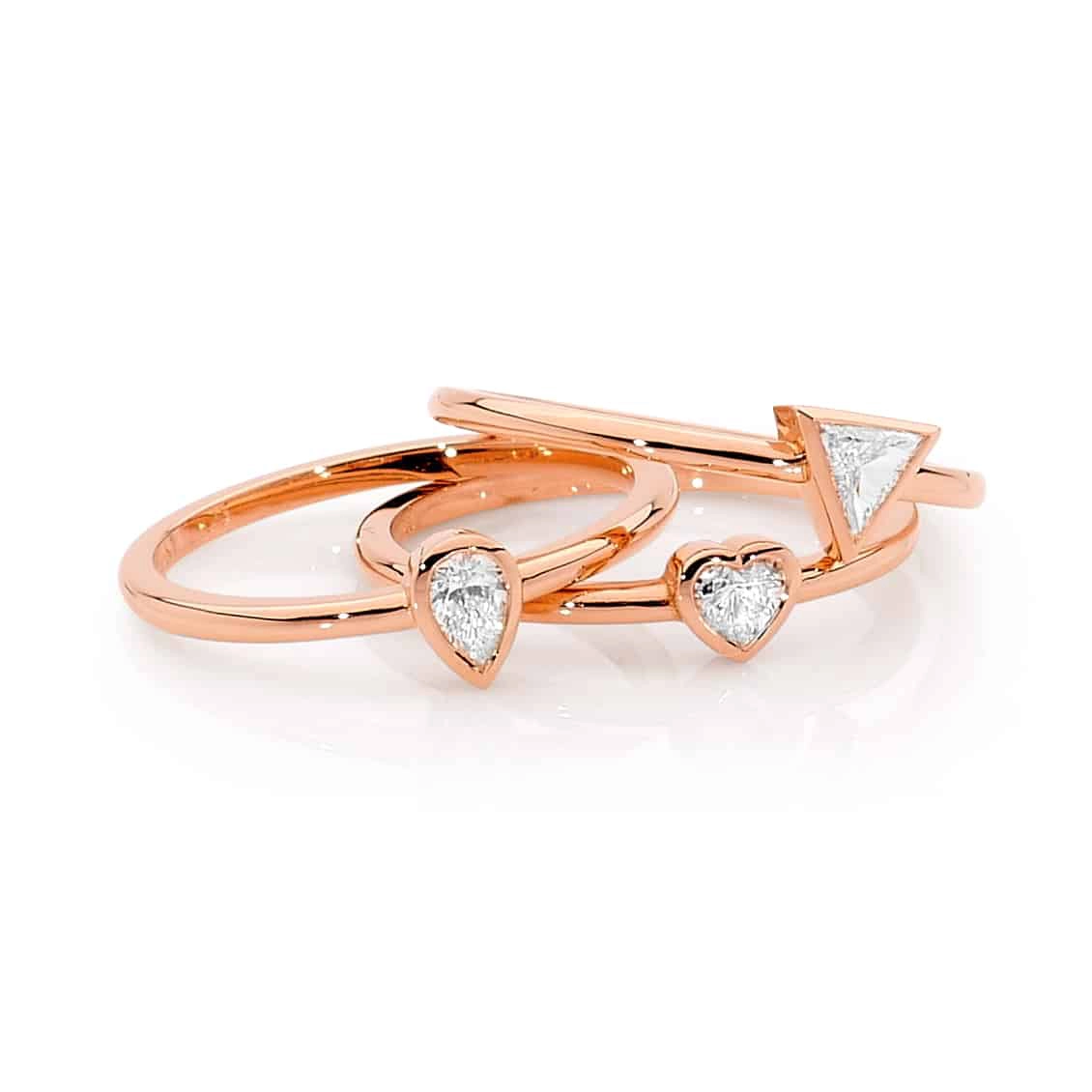
Built around a centre stone. A diamond most often, though sapphires, emeralds and other gemstones appear regularly in our bespoke work. The setting exists to hold and present that stone, which is why engagement rings sit higher, carry more metalwork and cost more.
Because it is the statement piece, it can afford detail. Halos, cathedral shoulders, hidden halos, pavé along the band.
The Wedding Band
Built for wearing. A wedding band has no centre stone to protect, so it can be lower, simpler and more comfortable, which matters for a ring that never comes off.
The profile is the part nobody mentions. A court profile is rounded inside and out and is the most comfortable for continuous wear. A D-shape is flat inside and curved outside. A flat band is more contemporary and slightly less forgiving. Ask to try all three before deciding, because the difference is obvious on a finger and invisible in a photograph.
Engagement Ring Styles
Most engagement rings fall into a handful of recognisable families.
- Solitaire. A single centre stone. The most requested design we build, and the easiest to pair with a band later.
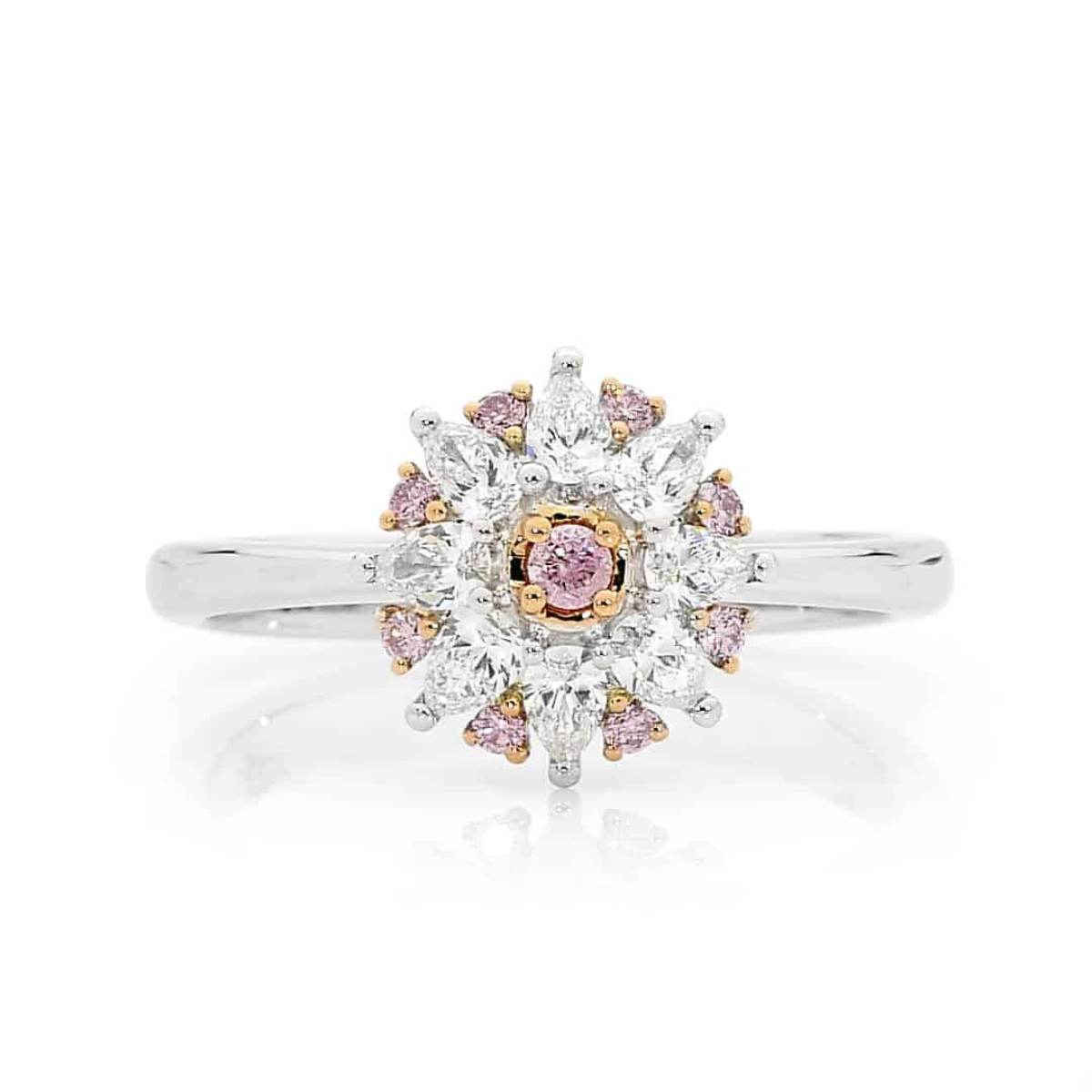
- Halo. Smaller diamonds ringing the centre stone, making it read visibly larger.
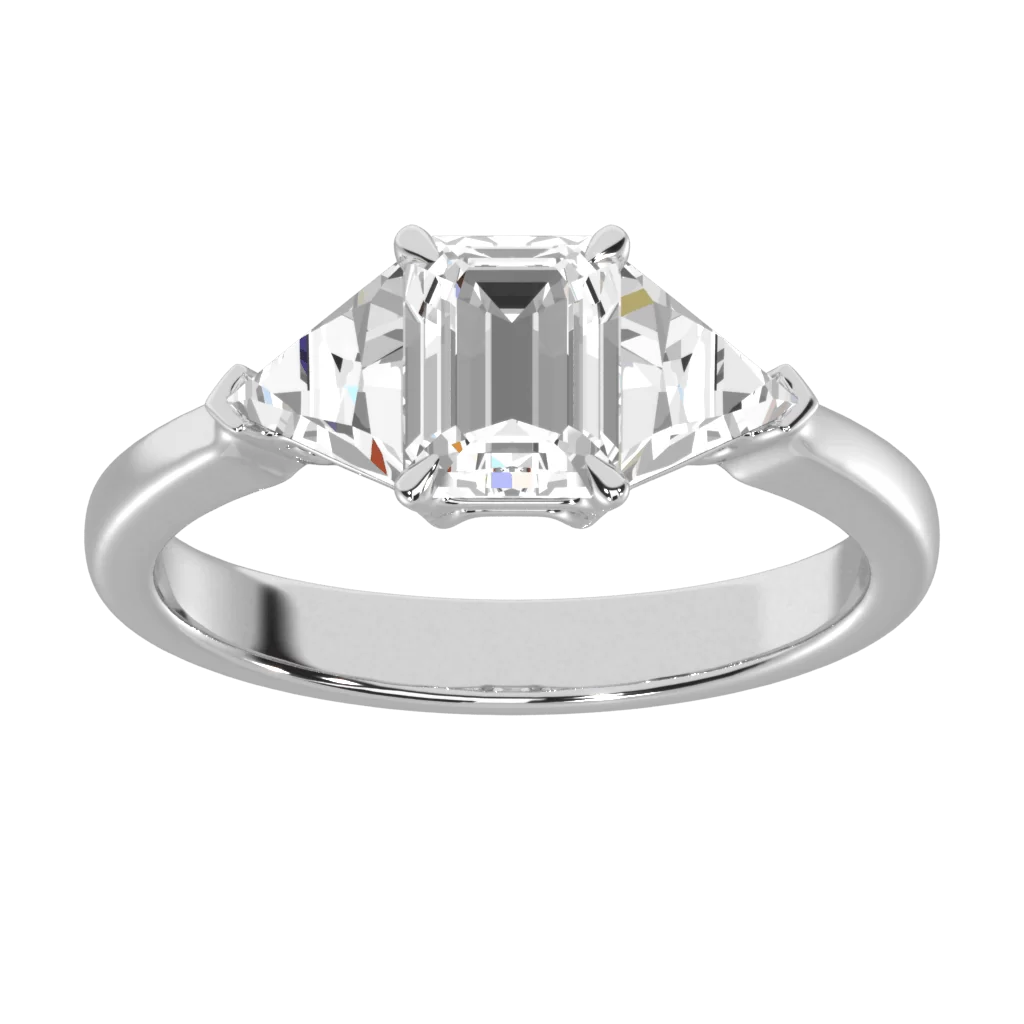
- Trilogy or three stone. A centre with two flanking stones, often read as past, present and future.
- Vintage inspired. Milgrain, filigree and hand engraving, drawing on Edwardian and art deco design.
- Coloured gemstone. Sapphire, emerald, spinel or a Western Australian pink diamond in place of a white centre.
Our engagement ring styles guide goes further into where each of these sits between classic and modern.
Wedding Band Styles
Bands have more variety than people expect, and the choice affects how the pair works together.
- Plain metal band. The traditional choice. Nothing to catch, nothing to wear out, and it flatters almost any engagement ring.
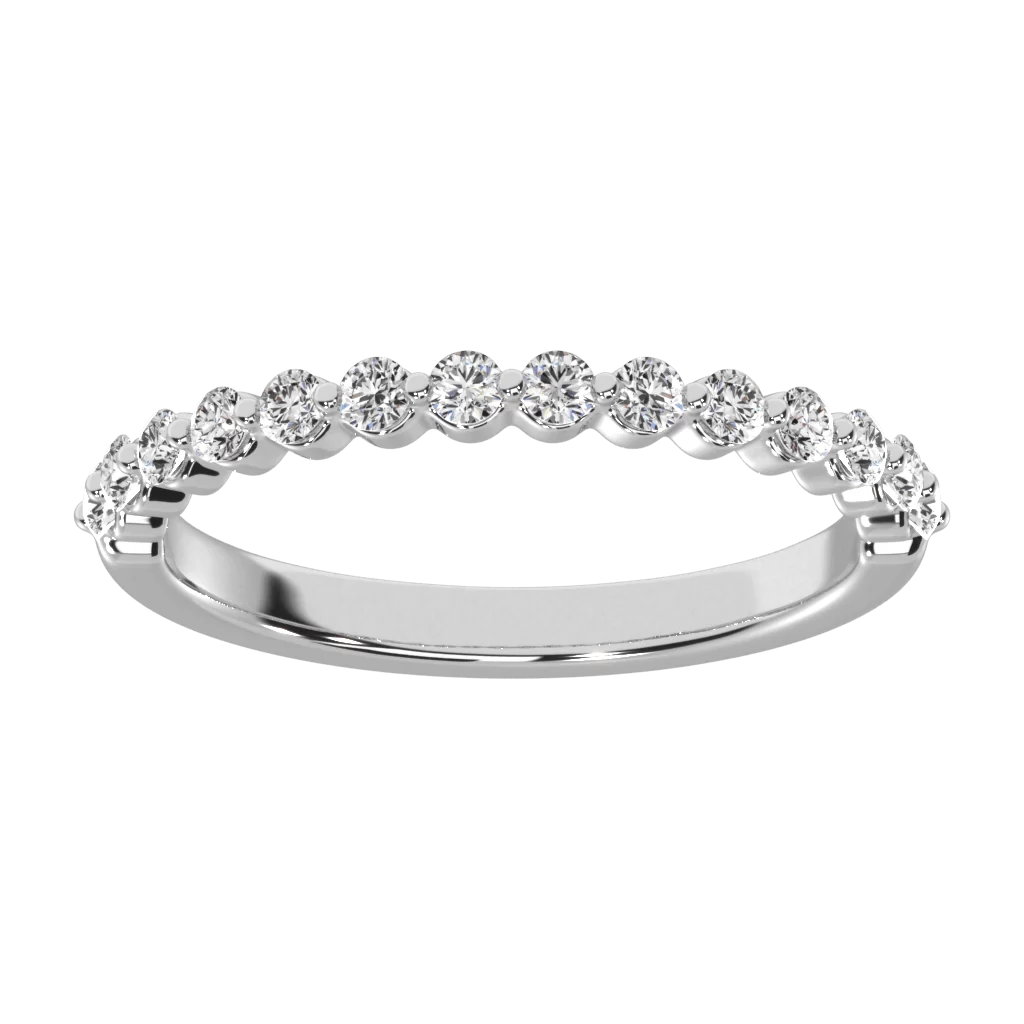
- Diamond set band. Small stones along part of the band. Adds sparkle without competing with the centre stone.
- Eternity band. A continuous line of diamonds all the way around. Beautiful, and it cannot be resized conventionally, which matters across a lifetime.
- Fitted or contoured band. Shaped to nest against the engagement ring’s specific profile. Essential where the ring has a low gallery or an unusual outline.
- Textured band. Hammered, brushed or matte finishes, more common in men’s bands and increasingly requested by both partners.
- Engraved band. Initials, a date or a phrase inside the shank. We cut these in house rather than sending them out.
How The Two Rings Sit Together
This is the section that matters most, and it is the one most couples skip.
Two rings sharing a finger have to physically agree with each other. If the engagement ring has a raised setting, a tall centre stone or an unusual gallery, a straight band will leave a visible gap beneath it. The answer is a fitted band shaped to the ring, which we cut to the individual piece rather than to a template.
The far more common problem is the one we see every week. A couple buys the engagement ring from somewhere else, comes to us a year and a half later for a band, and there is no straight band in existence that will sit flush against it. We can always solve it, and solving it afterwards costs more and limits the options. Designing the pair together costs nothing extra at the design stage.
Width matters too. The band is generally matched to the engagement ring shank or sits about 1mm narrower. A band noticeably wider than the shank overpowers the ring it is meant to support.
And there is a metallurgical point worth knowing. If the two rings are different metals, the harder one wins. Platinum worn against 9-carat gold will slowly wear a groove into the gold over decades of contact. It is not a reason to avoid mixing, but it is a reason to have the pair checked annually.
Metals: Matching Or Mixing
Most couples match the band metal to the engagement ring, and it is the safe answer.
Matching keeps the pair reading as one piece and avoids the wear problem above. White gold, yellow gold, rose gold and platinum all work, though white gold needs rhodium re-plating every twelve to twenty four months, and if only one of the two rings gets re-plated they will drift apart in colour.
Deliberate contrast works too, and it has become considerably more common. A yellow gold band beneath a white gold engagement ring, or the reverse. The rule we apply is that the contrast has to look chosen. Two metals reads as intentional. Three usually reads as accumulated.
Do You Need Both?
No, and it is worth saying plainly because almost nothing written on this subject does.
Some people wear only a wedding band, by preference or by culture or because a centre stone does not suit their work. Some wear only the engagement ring and skip the band entirely. Plenty of couples buy one ring that serves both purposes, which we build as a single ring with a stone and a substantial band.
We also make two bands for a fair number of Western Australian couples, which has nothing to do with tradition. If one partner works a fly in fly out roster, most sites will not permit rings on the tools, so a plain hard-wearing band for site and the good one for home is simply practical. Nobody should feel they have bought the wrong thing.
The rings mark different moments. Whether you want an object for each moment is a personal decision, not a requirement.
Designing Them As A Set
A bridal set means the engagement ring and band are designed together from the start so they nest exactly.
It is what we recommend to anyone buying both, and it costs nothing extra to plan. Every commission moves from conversation to 3D rendering to a silver prototype you can wear before anything is cast, so you can see how the pair sits on the actual hand before a gram of gold is committed. Interstate clients get the prototype posted out.
If the engagement ring is a surprise and you cannot design both together, there is a middle path we use often. Design the engagement ring with a straight, simple shank so that almost any band will sit flush against it later. That single decision at the proposal stage preserves every option for the band, and it costs nothing.
Frequently Asked Questions
The seven we field most often across the counter.
What Is The Difference Between An Engagement Ring And A Wedding Band?
The engagement ring is given at the proposal and carries a centre stone. The wedding band is exchanged at the ceremony and is usually simpler. One marks the intention to marry, the other marks the marriage.
Which Ring Goes On First?
Traditionally the wedding band, so it sits closest to the heart, with the engagement ring above it. Either order is fine in practice, and our guide on what goes first covers it fully.
Do The Two Rings Have To Match?
No, though matching metals avoids uneven wear where a harder metal sits against a softer one. Deliberate contrast works well when it looks chosen rather than accidental.
Can I Wear Just One Ring?
Yes. Plenty of people do, whether for comfort, work, culture or preference. Some couples buy a single ring that serves both purposes.
What Is A Fitted Wedding Band?
A band shaped to nest against a specific engagement ring, cut to that ring rather than to a template. Necessary when the engagement ring has a raised setting or an unusual profile that a straight band cannot sit flush against.
Should I Buy Both At The Same Time?
If you can, yes. Designing the pair together guarantees they fit and costs nothing extra at the design stage. If the proposal is a surprise, ask for a straight simple shank so the band options stay open.
How Much Should The Wedding Band Cost?
Far less than the engagement ring in most cases. A plain band sits well below a diamond set one, and an eternity band can approach engagement ring money. Our guide to what an engagement ring costs puts both in context.
Come And See Them Together
Two rings that look right individually can look wrong stacked, and there is no way to establish that from photographs.
Come to our Mt Hawthorn studio and bring the engagement ring if you already have one. We will put band profiles against it on your actual hand, show you where a straight band will and will not sit flush, and tell you honestly whether a fitted band is necessary or whether we are just selling you one. The bench behind the counter carries close to two centuries of combined experience, and master jeweller Paul holds two Jewellery Association of Australia Awards.
If you are buying both, come early. The couples who leave happiest are the ones who designed the pair in a single conversation rather than in two conversations a year and a half apart.
Browse our wedding bands and engagement rings, or start shaping something with the bespoke ring builder.
Book a consultation and bring photographs of anything she already wears.
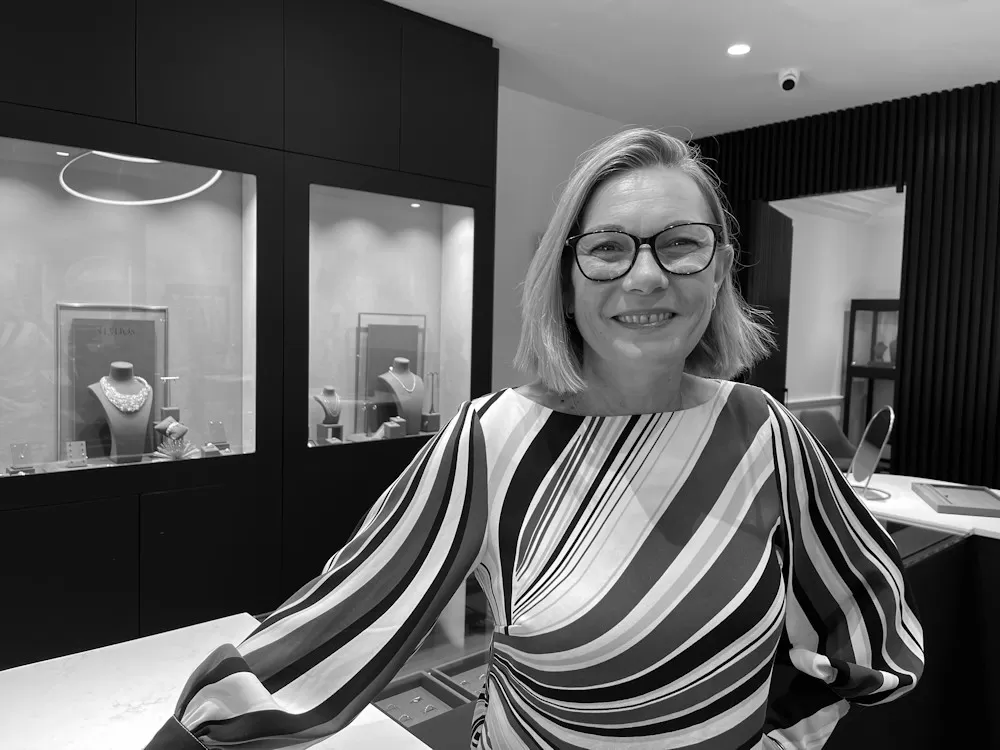
Isabelle Pontis, lead designer at Stelios Jewellers, brings 27 years of experience and a renowned eye for detail. Her bespoke designs blend technical mastery with artistic vision, shaping the signature style and quality of Stelios Jewellers.



Social Media