

There is no single right answer, which is a problem if you are the one holding the credit card. What follows is what we actually see Australian couples spend on an engagement ring, what moves the number up or down, and where you can save without losing quality.
Spring through early autumn is our busiest window, and most of the Perth couples we work with are planning around Kings Park at sunset, a walk along Cottesloe Beach, or a quiet weekend down in Margaret River.
Since Stelios Palioudakis opened the studio in 2007, we have fitted rings for thousands of those proposals, and the honest answer we give every buyer is the same: the right engagement ring cost is the one you can pay without resenting it five years later.

What Australians Spend On An Engagement Ring
The average engagement ring cost in Australia sits between $5,000 and $10,000, depending on the source. At our studio we see couples spend as little as $2,500 for a modest solitaire ring with a lab grown centre stone, and $50,000 or more for investment-grade natural pink and champagne diamonds. Both ends are common.
A more useful question than “what is the average” is this: what is the average amount people like you spend? Younger couples tend to sit below $5,000. Couples in their late twenties through mid-thirties cluster around $7,000 to $15,000. Above $20,000 usually signals significant stone size, natural coloured diamonds, or a bespoke design with real volume.
One widely quoted figure worth ignoring: the claim that Australians spend an average of $6,500 on an engagement ring. It comes from surveys skewed toward cheaper online purchases and does not reflect what walks out of a specialist fine jewellery studio.

Why “Three Months’ Salary” Is A Myth
If you have searched engagement ring budgets online, you have seen the two or three months’ salary rule. It is not a rule. It began as a De Beers advertising campaign in the 1930s and 1940s, designed to grow diamond sales during the Great Depression and after the Second World War. The figure has no basis in cost, quality, or tradition, and nobody in the industry treats it as a benchmark today.
We mention this because clients still walk in apologising for spending “only” a month’s salary, and others feel anxious they are underspending at $15,000. Both worries are the leftover of an eighty-year-old ad campaign.
The only number that matters: what can you afford without stress? A ring bought with borrowed anxiety will never wear as well as one bought within your means.

What Drives The Cost Of An Engagement Ring
Four things set the final price. The rest is margin and marketing.
- The diamond. Usually 60 to 80 percent of the total. Size, origin (natural or lab grown), and the 4 Cs are the biggest movers.
- The metal. Platinum costs the most, followed by 18-carat gold, then 14 and 9-carat. Differences run $500 to $2,000 on the same design.
- The setting and design. A simple solitaire takes less bench time than a halo or pave setting. Intricate designs add hours and cost.
- Where you buy. Online-only retailers run leaner overheads. Specialist jewellers charge more for showroom time, design hours, and aftercare. Neither is wrong. It depends on what you want alongside the ring itself.
If someone charges a “certificate fee” or a “design fee” on a ready-to-wear piece, ask what it covers. In most cases it is already built into the sticker price everywhere else.

How The 4 Cs Change The Price
A diamond’s price comes down to cut, colour, clarity and carat weight. The jumps between grades do not follow a straight line, which is where most buyers overspend.
Carat is the biggest cost multiplier. A one-carat diamond is not twice the price of a half-carat; it is closer to four or five times, because larger stones are rarer. If you want visual impact without the carat premium, look at 0.8 to 0.9 carat stones. They read visually similar to a one-carat and often cost 20 to 30 percent less.
Cut is what you should prioritise. A well-cut diamond sparkles. A poorly cut one of the same size and clarity looks dull. Pay for an excellent or ideal cut before you pay for anything else, because cut drives a diamond’s beauty more than any other factor.
Colour moves on a smooth curve, but price does not. G and H diamonds cost significantly less than D or E and look identical once set. The difference is invisible to the naked eye in most ring sizes.
Clarity is the most oversold. VS1 and VS2 stones have inclusions invisible without a loupe and cost a fraction of IF or VVS stones. For almost every buyer, VS2 is the sweet spot.
Best value combination: a well-cut G to H colour, VS1 to VS2 clarity stone around 0.8 to 1.2 carats.

Natural Diamonds vs Lab Grown: The Cost Gap
This is the largest cost lever most buyers have available.
Natural diamonds are mined, finite, and priced accordingly. A one-carat, G colour, VS2 clarity, excellent cut natural round brilliant cut in our studio typically runs $8,000 to $12,000.
Lab grown diamonds are chemically identical, produced in a laboratory in weeks. A one-carat equivalent runs $2,500 to $4,500. Same visual impact. Same 4 Cs grading. Same ethical sourcing standards, often with tighter supply chain transparency. Significantly cheaper per carat.
The trade-off is resale. Natural diamonds hold their value better over decades. Lab grown prices soften year by year as production capacity grows, so what you buy today will likely sell for less in fifteen years. If you view the ring as an investment, buy natural. If you view it as a symbol you wear daily and do not plan to resell, lab grown delivers significant savings at the same visual quality.
Our Lab Grown Diamonds page covers how these stones are made, graded, and priced in more detail.

Metal And Setting Costs
- Platinum adds $1,500 to $3,000 over 18-carat white gold on the same design, because it is denser and more expensive per gram.
- 18-carat yellow gold and rose gold sit in the same bracket as 18-carat white gold.
- 14-carat and 9-carat gold save money per gram but are not standard for Australian engagement rings. Most of our clients choose 18-carat for the balance of durability and value.
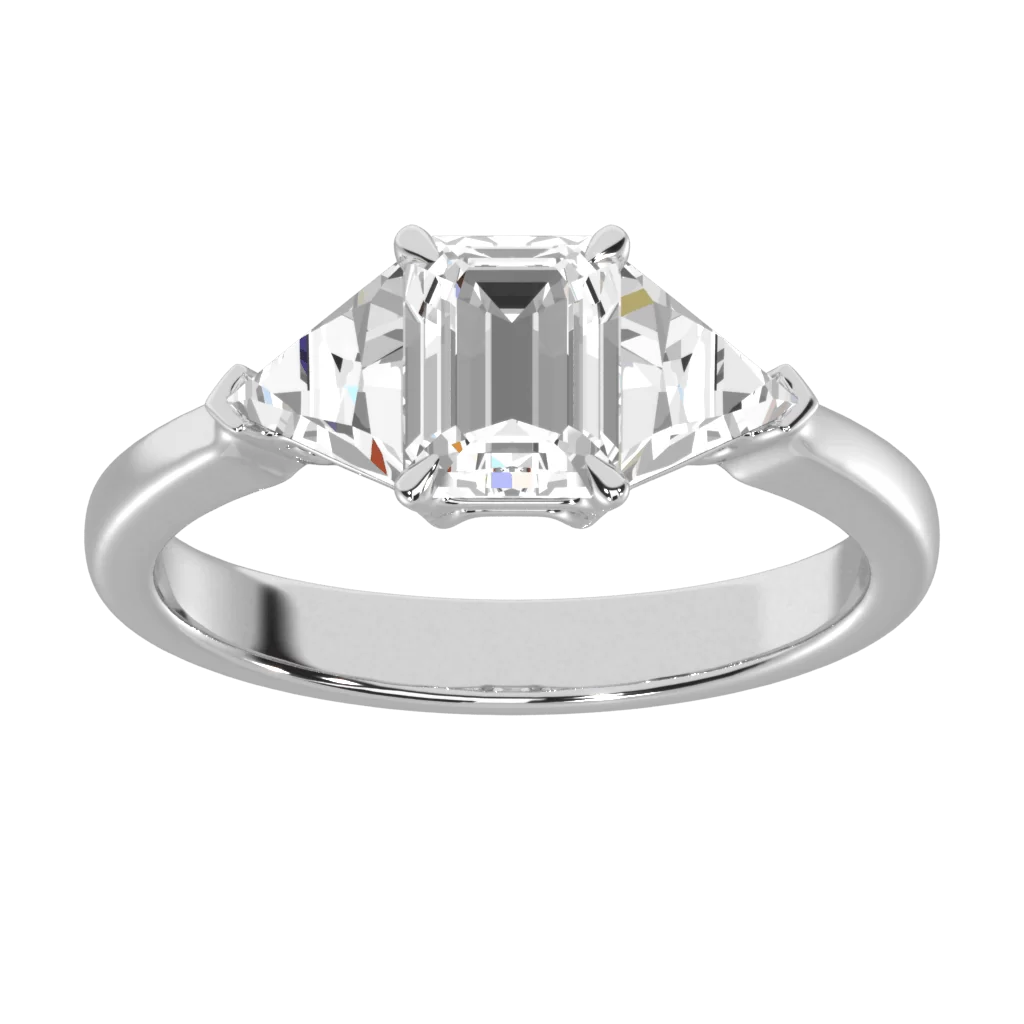
Setting complexity compounds quickly. A simple four-claw solitaire takes a few hours of bench work. A halo setting with smaller diamonds around the centre stone typically adds $1,000 to $3,000 on top of the same stone in plain claws. Heavily intricate vintage or art deco designs with pave, milgrain, or engraving can add $3,000 to $8,000 of labour alone.
Practical tip: if budget is the constraint, put the saved money into a larger stone rather than a fancier setting. A stone can be reset into something more ornate in ten years. You cannot upgrade the stone later without essentially paying for a new ring.

Ways To Get More Ring For Your Money
Honest ways to stretch a budget without cutting corners:
- Go with a just-under carat stone. A 0.95-carat diamond reads identical to a one-carat and often costs 15 to 25 percent less. Same principle at 1.85 vs 2.00 carats.
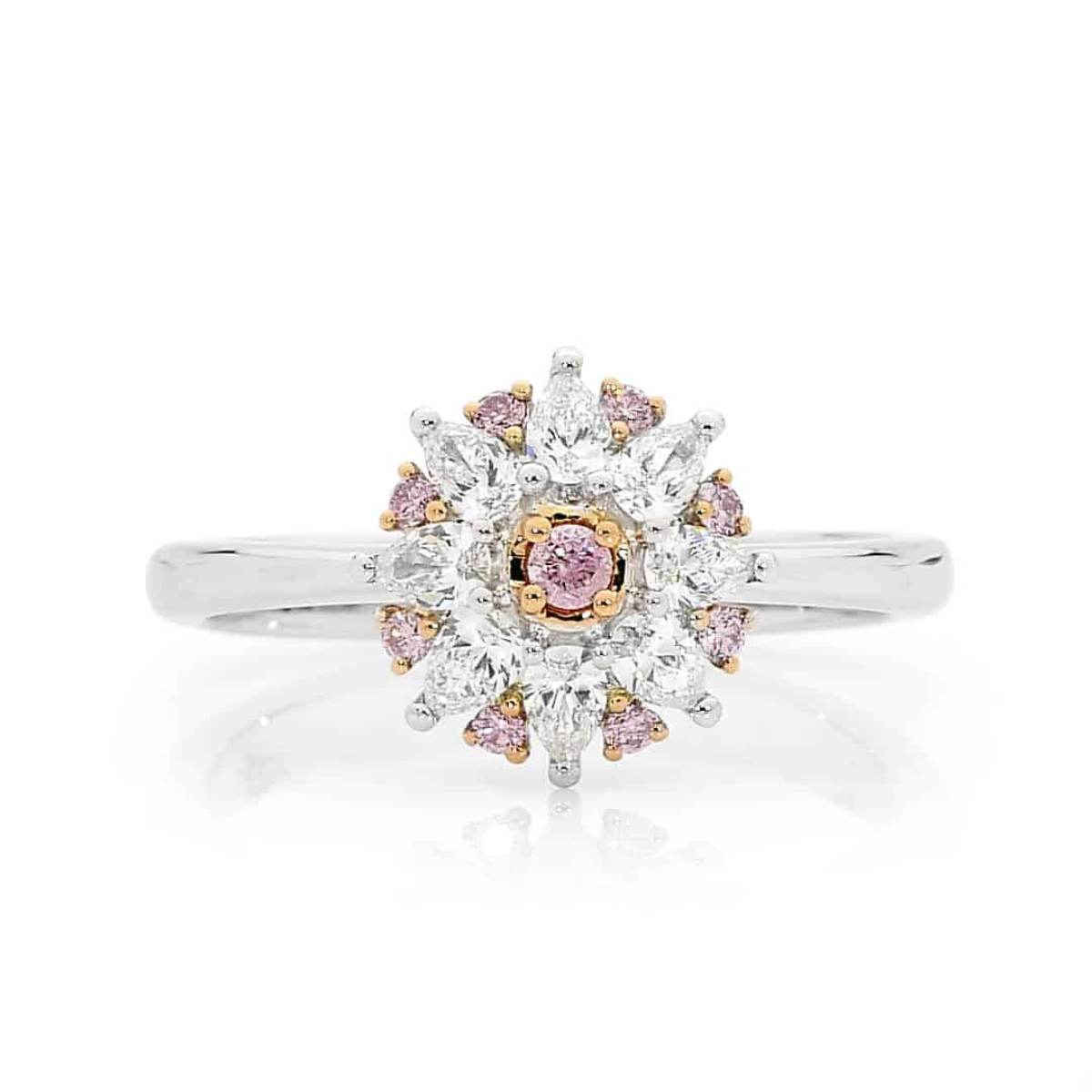
- Choose a halo setting. A smaller centre stone ringed by accent diamonds reads bigger than a single diamond at the same price.
- Pick an underrated shape. Pear, oval and marquise cuts give more visual surface area per carat than a round brilliant, and often cost less per carat.
- Lab grown centre, natural accents. Keeps sparkle and visual impact while lowering the ceiling.
- Reset a family stone. Resetting an heirloom diamond takes the largest cost out of the equation entirely. We do this often.
- Consider Australian-sourced coloured gemstones. A couple from Fremantle came to us last year wanting an engagement ring built around an Australian sapphire rather than a diamond. We sourced a 1.8-carat cornflower blue stone from the Rubyvale sapphire fields in central Queensland and set it into an 18-carat yellow gold band. The finished ring came in just under $4,500. For them the origin was worth more than the extra half-carat a lab grown diamond would have bought at the same price, and the ring reflects that choice every time she wears it.
- Commission a handmade ring. Counter-intuitive, but a custom engagement ring design in our studio often costs the same or less than a branded piece of equivalent stone and metal spec, because you are not paying for a brand premium.

Financing And Payment Options
Most couples fund engagement rings from savings, but for those who cannot, or who want to keep cash aside for the wedding, a few options work.
- Layby. We offer in-house layby on most pieces. Fortnightly or monthly instalments over three to twelve months, no interest. The ring is held until final payment.
- Personal loan. Works if you have a strong credit profile and want fixed monthly repayments. Factor the interest cost into the final price.
- Credit card with a zero-interest period. Useful if you will pay it off within the interest-free window. Dangerous if you will not.
- Afterpay and equivalents. Available on pieces under $2,000, rarely relevant for engagement ring budgets.
*Our honest advice: if layby works for your timeline, take it. No interest, no credit check, and the ring is held for you. If a proposal deadline rules layby out, a personal loan beats credit card debt every time.
Hidden Costs Most Buyers Forget
A few costs that never appear on the sticker but should be in your total budget:
- Insurance. $50 to $150 per $10,000 of value per year. We are a listed partner of Q Report Jewellery Insurance if you want a specialist rather than folding the ring into home contents cover.
- Rhodium re-plating for a white gold band. Every two to four years to keep the ring bright white. $150 to $300 per visit.
- Resizing. Free in the first twelve months with us. $80 to $250 at jewellers who do not offer it complimentary.
- Prong retipping. Over daily wear, claw prongs wear down. Allow $100 to $400 every five to ten years.
Individually small, these add up over a twenty-year life.
Frequently Asked Questions
The cost questions we are asked most often.
Does The Average Engagement Ring Cost Vary Much Between Buyers?
More than most people expect. First-time buyers on a modest budget can find something meaningful under $3,000 with a lab grown centre stone. Couples buying with resale in mind often sit above $20,000. Most of our Perth clients land between those two, with the cluster around $7,000 to $12,000.
Is It Worth Spending More For A Natural Diamond?
If you value long-term resale and geological rarity, yes. If you care about maximising size and sparkle at the same budget, lab grown gets you there faster. Neither choice is wrong.
What Is The Cheapest Engagement Ring Style Worth Buying?
A solitaire ring with a lab grown centre stone set in an 18-carat white gold band or yellow gold. Clean design, minimal wasted labour, and a stone that grades identically to natural on sparkle.
Should I Spend Three Months’ Salary On An Engagement Ring?
No. It is a recycled 1930s De Beers marketing line. Spend what fits your financial situation without straining the wedding budget or your savings goals.
Do You Offer Payment Plans?
Yes. In-house layby, no interest, three to twelve months. For higher-value commissions we tailor the schedule to your cash flow.
How Much More Should I Spend If We Are Buying Both Rings At Once?
A matching wedding band adds 15 to 40 percent on top of the engagement ring cost, depending on whether it is plain or diamond-set.
Come And Have The Conversation
A ring that fits your life, your partner, and your budget will outlast any ring chosen to hit a benchmark. We would rather help you spend $4,000 well than $15,000 anxiously. If the number you have in mind is higher than the first ring you have priced online, we can tell you where that extra money goes. If it is lower, we can tell you honestly what is possible at that figure.
Visit our Mt Hawthorn studio, a short drive from the Perth CBD with parking out the front, or book a virtual consultation from anywhere in Australia.

Andy McGee, Manager and Master Jeweller at Stelios Jewellers, brings over 38 years of experience from London and Perth. Known for his precision craftsmanship and eye for detail, he oversees the creation of bespoke pieces to the highest standards. A career highlight includes leading the production of the Miss Universe crowns, and he continues to craft standout designs for prestigious jewellery competitions.



Social Media