
Buying an engagement ring is usually the first time someone commissions or buys a serious piece of fine jewellery, and almost no one feels properly prepared, which is normal. So where do you start?
This guide is for anyone who is feeling a bit nervous about getting it wrong, confused by the jargon, unsure how much to spend, or trying to shop without tipping anything off.
We have helped thousands of Perth couples find the right diamond engagement ring since Stelios Palioudakis opened the studio in 2007, and what follows is the same information we share with anyone sitting across the counter from us in store for the first time.
We will walk you through budget, your partner’s style preferences, ring size, diamond shapes, the 4 Cs, metals, settings, and how to choose between shopping online, in-store, or commissioning a custom ring.
By the end you should have enough to start shopping with confidence. If you would rather skip the guide and have a conversation, book a consultation at our Mt Hawthorn studio any time.
Start With A Budget
From our extensive experience every honest conversation about an engagement ring begins with a number, but most buyers arrive without one.
Traditional guidelines suggest spending two or three months’ salary, and you will still see that figure quoted.
These guidelines come from a marketing campaign from a 1940s De Beers commercial, not a rule.
In practice, Perth couples spend anywhere from $3,000 for a modest solitaire to well over $30,000 for an investment-grade diamond, with everything in between being perfectly normal.
A better starting point than months-salary is this: what can you comfortably spend without regretting it in six months?
That number depends on many factors: your savings, the wedding you are planning, and whether you want to keep some budget aside for a matching wedding band, which is effectively buying two rings at once.
A practical tip. If your budget is tight, put the money into the diamond rather than the setting. Settings can be upgraded or reset later in life, a small, cloudy stone cannot.
At Stelios, we would rather build you a good-looking solitaire engagement ring around one well-chosen natural diamond than a complicated halo around a stone that will disappoint you in five years.
Understanding Your Partner’s Style
Understanding your partner’s style preferences is the most useful thing you can do before you start shopping, to do this you should look at what they already wear.
For example, someone who lives in simple gold chains and tiny stud earrings will almost always be happy in a minimalist solitaire, however someone who wears bold vintage rings from the op shop probably wants something with more character: a cluster, a cushion cut, or a coloured stone.
Quiet things worth noticing:
- Which metal do they wear most often? Gold, silver (which usually means white gold or platinum for us), or rose?
- Statement pieces, or small daily jewellery?
- Modern lines, or vintage detail?
- Is there a family piece they mention often?
- Do they comment on rings they see on other people?
If you are completely stuck, we can help you interpret their Pinterest or Instagram saves.
The most common mistake we see? Buying for your own personal style rather than your partner’s.
People who have been quietly browsing for years usually have a very specific aesthetic, even if they have never articulated it.
How To Find Their Ring Size Without Them Knowing
Your partner’s ring size is the question most proposers worry about most. It is also the one that is usually easiest to solve.
A few tactics that work:
- Borrow a ring they already wear on their left-hand ring finger and bring it with you on the consultation day so we can size it in under a minute.
- If you cannot borrow without them noticing, trace the inside of the ring on paper, press it into a bar of soap, or photograph it on a ruler, all three methods give us a workable size.
- Ask a close friend or family member. In our experience, this almost never leaks.
- If none of that works, we can use a resizable setting so you have up to a size of flex after the proposal. Final sizing happens after the yes.
Australian ring sizes use letters A through Z. Most women’s ring fingers fall between J and Q; most men’s between R and Z. Their mother or a long-time best friend is usually accurate within half a size if you need to guess.
Diamond Shapes And What They Actually Look Like
Diamond shape is the most visual decision you will make. It determines how the diamond’s facets catch and throw light, and it is what your partner sees first.
Here are the diamond shapes we sell most often, and who they tend to suit:
- Round brilliant cut. The classic. Fifty-eight facets cut to throw light back at every angle, which is why a well-cut round outsparkles every other shape. Works on any hand, any age.
- Oval cut. An elongated round. Flattering on shorter or wider fingers. Currently the most-requested shape in our showroom.
- Cushion cut. Square or rectangular with soft corners. Vintage character. Pairs well with detailed settings and halos.
- Princess cut. Sharp, square, modern. For partners who like clean geometry over softness.
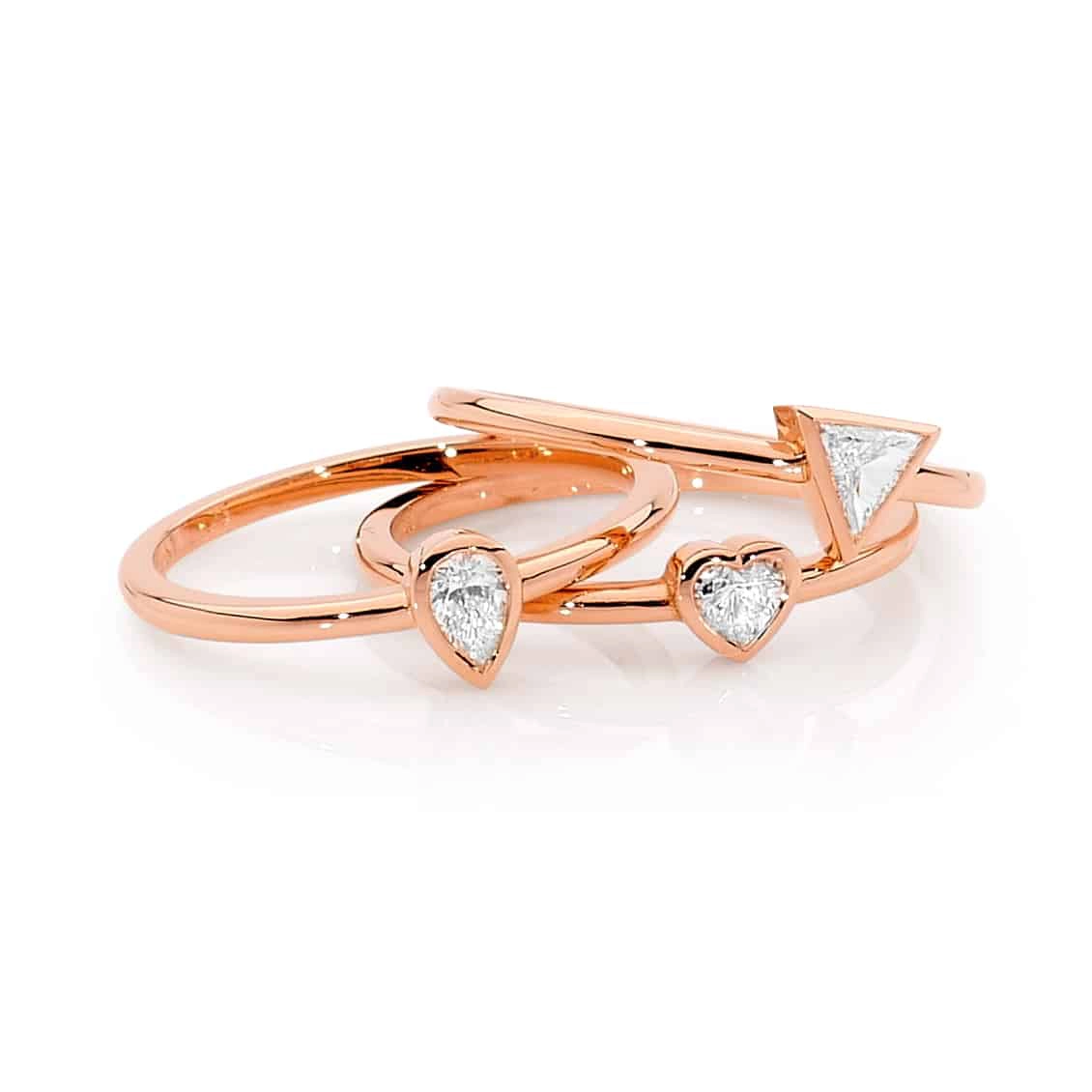
- Pear cut. Teardrop. Elegant and unusual. Worn point-toward-fingertip for the most flattering look.
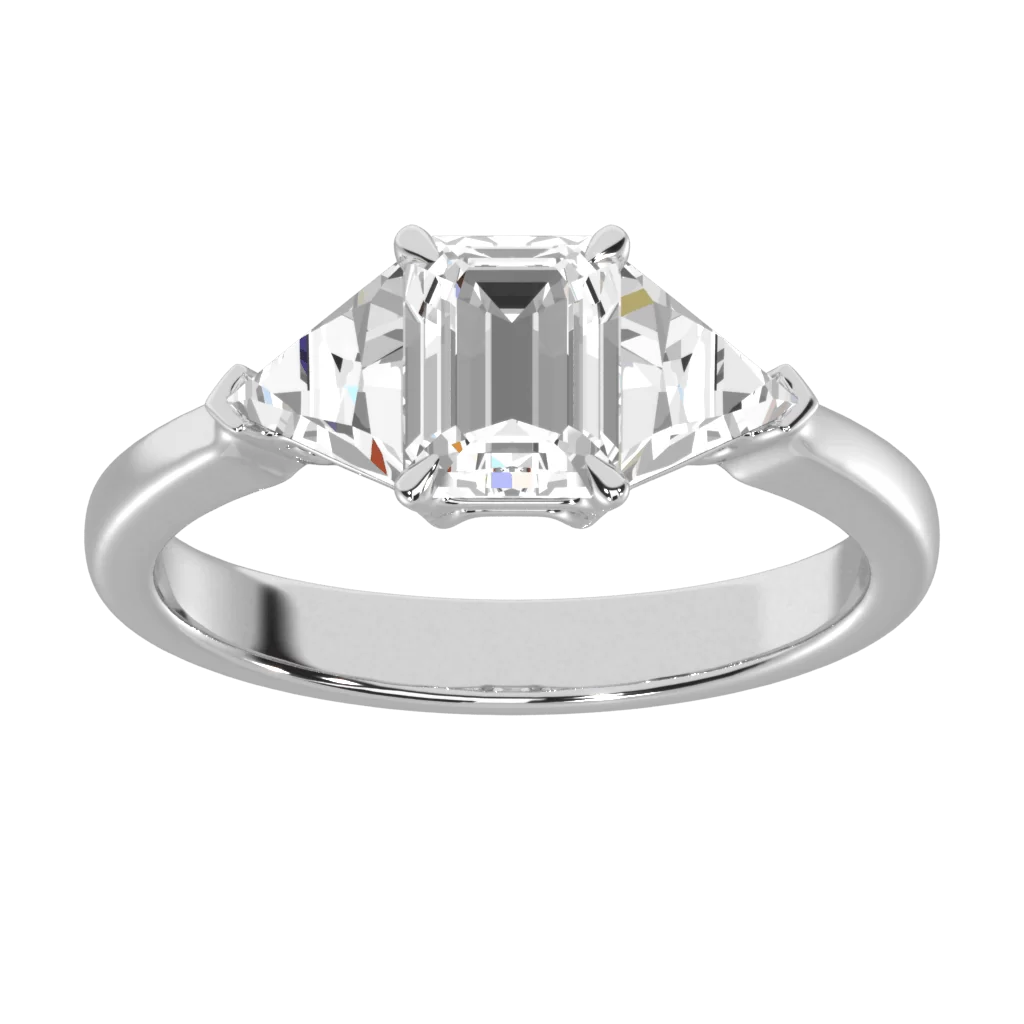
- Emerald cut. Rectangular with stepped facets. Less sparkle, more glass-like elegance. Suits an art deco sensibility.
- Rose cut. Domed and flat-based, with fewer facets. Subtle, romantic, popular with couples looking for something that does not look like a standard engagement ring.
Not sure? The round brilliant is never wrong. If your partner wears vintage pieces, an oval, cushion or rose cut is usually the better call.
The 4 Cs, Without The Jargon
Every diamond is graded on four qualities: cut, colour, clarity and carat. These are the main factors that determine the quality and price of your chosen stone. Understanding them takes five minutes, and using the information well will saves thousands.
Cut is the most important, a well-cut diamond sparkles. A poorly cut stone of the same size and clarity can look flat. Always prioritise cut if the budget forces a trade-off. For rounds, look for an “excellent” or “ideal” cut grade.
Colour runs from D (colourless) to Z (noticeably yellow). Most engagement ring diamonds sit in the G to J range. The difference between G and J is almost invisible once the stone is set in white gold, and undetectable in yellow gold. Spending extra to jump from H to D is rarely worth it unless you are buying for investment.
Clarity measures internal inclusions, running from Flawless down to Included. The sweet spot for value is usually VS1 or VS2, where inclusions are invisible to the naked eye.
Carat measures weight, not size. A one-carat diamond is around 6.5mm across; a two-carat around 8mm. Weight doubles faster than visible size, so a two-carat looks only about 25 percent bigger than a one-carat, not twice as big.
*One non-negotiable: never buy a diamond over 0.3 carats without a GIA certificate, or equivalent independent laboratory certificate, in hand.
Natural, Lab Grown, And Moissanite
You will be asked to choose between three options. They are not equal.
Natural diamonds are mined. These natural stones were formed underground over billions of years, hold their value better over decades, and carry the geological history most buyers think of when they imagine a diamond. They are the most expensive per carat.
Lab grown diamonds are chemically identical to mined diamonds, grown in a laboratory in weeks. They cost roughly 50 to 70 percent less per carat than a comparable natural stone. Resale value is lower because supply is growing yearly. If you want more size and clarity at the same budget, this is where the savings come from. Our Lab Grown Diamonds page covers the detail if you want to read further.
Moissanite is not a diamond at all, but a silicon carbide stone that reads similarly to the naked eye. Significantly cheaper. Harder to scratch than most stones. Holds up well to daily wear. Some couples love it. Others find it too bright next to a real diamond.
The decision making process comes down to what you value most: rarity, resale, size on the finger, or price per carat. Come in and compare all three side by side before you decide.
Choosing A Metal
Your choice of precious metal affects the ring’s colour, durability and price. Metal type matters as much as the stone itself, since it determines how the ring ages and how it sits against your partner’s skin.
- Platinum. The strongest, whitest, densest option. Does not tarnish. Most expensive.
- White gold. Yellow gold mixed with white alloys, then rhodium-plated for brightness. Needs re-plating every few years. Roughly 30 percent cheaper than platinum.
- Yellow gold. Warm and traditional. Pure gold (24-carat) is too soft to hold stones securely, which is why most rings are made in 18-carat, where pure gold is mixed with other metals for strength.
- Rose gold. Yellow gold with added copper for a pink tone. Romantic, popular in vintage-inspired designs. Some skin types react to the copper content.
Match what your partner already wears. Silver jewellery? Choose white gold or platinum. Yellow? Match yellow. Rose? Match rose. Mixed-metal rings are also possible, and increasingly popular.
Setting Styles Worth Knowing
Different settings offer different advantages, and the setting style you choose will shape both the look and the daily feel of the ring. Here are the common setting styles you will encounter:
Solitaire. A single centre stone, usually in a four or six-claw mount. The classic, and still the most common choice in our engagement ring collection.
Halo. A ring of smaller diamonds around the main stone. Makes the centre diamond look larger and adds sparkle without the carat price.
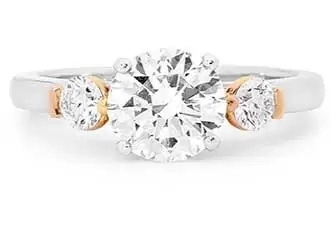
Three-stone ring. A centre stone flanked by two smaller stones, traditionally said to represent past, present and future. Popular for couples who want symbolism built into the ring.
Bezel. The centre stone is held by a metal rim rather than claws. Lower profile, harder to catch on clothing, good for people who work with their hands.
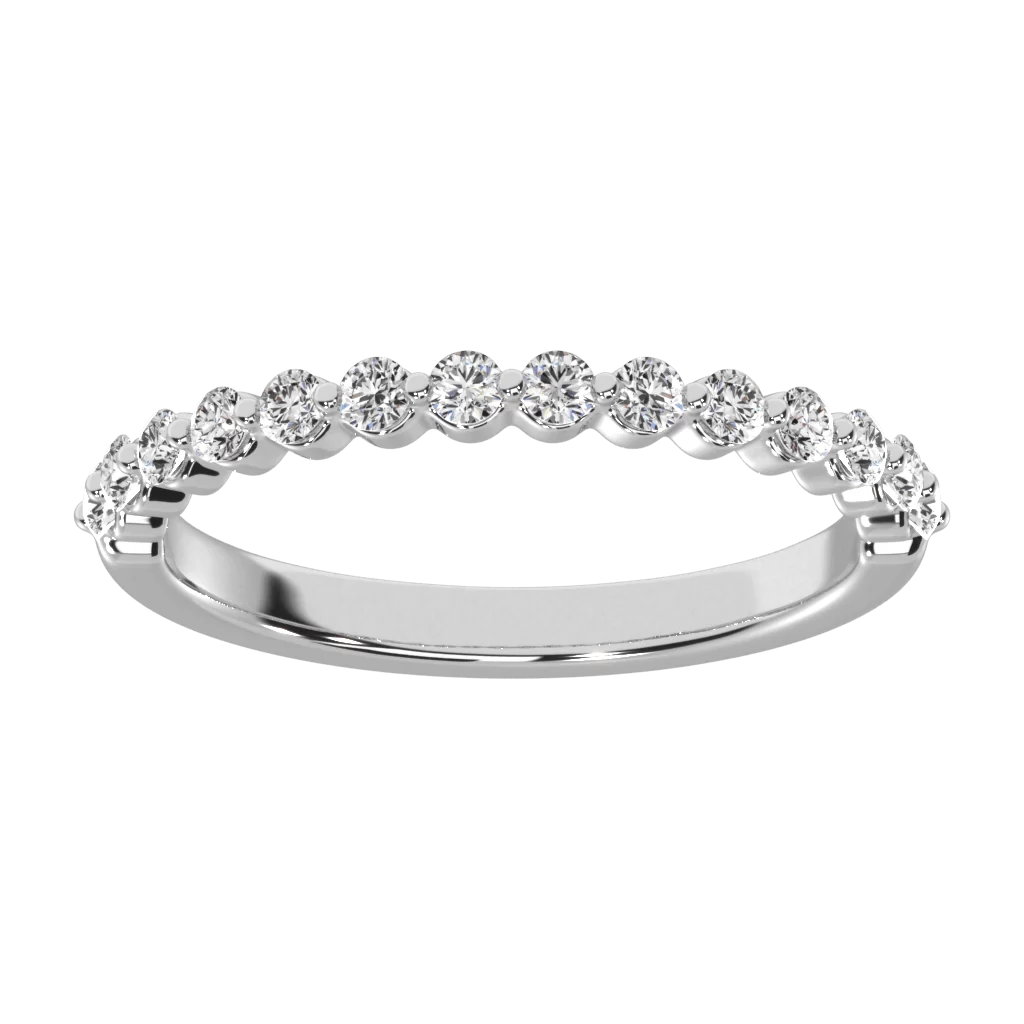
Pave. Tiny accent diamonds set into the band or setting for extra sparkle. Pairs beautifully with a matching pave wedding band.
Vintage or art deco. Detailed metalwork, milgrain edging, engraving, or coloured stone accents. Suits partners drawn to older design language.
Online, In-Store, Or Custom?
Three paths. Each has its place.
Buying an engagement ring online works if you already know exactly what you want, you have a clear diamond certificate in front of you, and the retailer offers a return period.
The downside: you cannot see sparkle through a screen. Two diamonds with identical certificates can look surprisingly different in person.
In-store lets you put the ring on a hand, compare stones side by side, and ask real questions and because of this we recommend a showroom visit, even for clients who later commission a bespoke piece.
Custom design is the right path if nothing off the shelf is quite right, you are using an heirloom stone, or your partner has a very specific style. Every design detail, from claw height to band width, is shaped to them. A unique engagement ring does not have to mean a complicated one.
Some of the most personal rings we have made are simple solitaires with a carefully chosen stone. Our Custom Engagement Rings page walks through how a bespoke ring actually gets made in our Mt Hawthorn workshop, stage by stage.
Rule of thumb we stand by: custom for specific style or heirloom stones; in-store for everything else.
Timing Around The Proposal
Timing catches more buyers out than budget does.
- Ready-to-wear rings from our showroom can be sized and ready within a week, sometimes the same day if the stock ring already fits.
- Custom engagement rings take four to six weeks from the start of the ring making process through to collection.
- Heirloom resets usually run three to four weeks.
- Engagement rings and custom wedding bands together should allow six to eight weeks if both are being designed as a matched set.
- Overseas diamond sourcing adds one to two weeks if we are bringing in a specific stone on request.
If you already have a proposal date, tell us on day one. We plan the timeline backwards from it. If the timeline is tight, we will say so rather than commit to something we cannot deliver well.
Things We Wish Every Buyer Knew
A handful of other details that would save most first-time buyers an anxious week:
- Insurance from day one. We are a listed partner of Q Report Jewellery Insurance, which covers loss, theft and damage from the moment you collect the ring. Do not walk out of any jeweller without insurance arranged.
- Certificates matter. Any diamond over 0.3 carats should come with an independent grading certificate. No certificate, no deal.
- Resizing is almost always possible. If the ring is off on the finger, we can resize up or down at no cost in most cases. Do not panic mid-proposal.
- Clean your ring regularly. A dirty diamond looks half as bright. We clean our clients’ rings for free whenever they are in the showroom.
- Watch setting height. A very high setting looks dramatic but catches on jumpers, hair and gloves. Always see it on a hand in person before committing.
Frequently Asked Questions
The questions first-time buyers ask us most often.
How Much Should I Spend On An Engagement Ring?
Spend what you can afford comfortably. The two or three months’ salary rule is marketing from the 1940s, not a guideline anyone in the industry takes seriously today. Most of our engagement rings sit between $5,000 and $20,000, with plenty of pieces above and below that range.
Can I Design An Engagement Ring Online Before Visiting?
Yes. Our ring builder lets you experiment with shapes, settings and metals before booking a consultation. Most couples use it as a starting point rather than a final decision.
What If I Get The Ring Size Wrong?
We resize at no cost in most cases, and most resizes take a few days. Some settings cannot be resized more than one size in either direction without remaking, so book a proper sizing after the proposal if in doubt.
Are Lab Grown Diamonds Worth Buying?
They are a reasonable choice if you want more size or clarity at the same budget. Natural diamonds retain value better over decades. Neither is wrong. The right answer depends on what you value most.
Do You Offer A Guarantee?
Yes. Every ring we make comes with a lifetime manufacturing warranty, free annual cleaning, and free resizing within the first twelve months.
Should I Propose With A Loose Diamond And Design The Ring Together Afterwards?
Plenty of couples do this, and we support it. Bring the loose diamond in the day after the proposal. The ring is then designed collaboratively, which many partners find more meaningful than a surprise setting they would not have chosen for themselves.
Come In For A Conversation
If you have read this far, you are better prepared than most first-time buyers who walk in cold. The next step is a conversation. Visit our Mt Hawthorn studio, a short drive from the Perth CBD with parking out the front, or book a virtual consultation from anywhere in Australia.
Bring whatever you have: a Pinterest board, a ring size, a budget, an heirloom stone, or nothing at all. We will take it from there.

Stelios Palioudakis, founder of Stelios Jewellers, has been crafting bespoke pieces since 2007. Recognised early as a finalist in the Australian Jewellery Awards, Stelios has built a brand renowned for exceptional design, quality, and loyal clientele.



Social Media