
There is a particular ring that comes back to our bench again and again. A beautiful high-set solitaire, worn by someone who spends nine hours a day using their hands, with one claw worn to a sliver and the wearer entirely unaware how close they came to losing the stone.
Most rings are designed for how they look on a hand at rest. Very few are designed for what that hand does between eight and five. This is a guide to the difference, and it is genuinely one of the most useful conversations we have with clients before a ring is made rather than after.
Start With The Risk, Not The Ring
Before anything about style, there is a safety question that most jewellery writing skips entirely.
Ring avulsion is an injury where a ring catches on something fixed while the hand is moving, and the ring strips the soft tissue from the finger. It is the reason most mine sites, many workshops and a lot of hospitals prohibit rings on the job. Those rules are not fussiness and they are not negotiable.
If your workplace bans rings, that is the end of the conversation about wearing your engagement ring at work, and the rest of this guide is about what you wear instead. If it does not, the risk still exists wherever hands meet machinery, ladders, trolleys or livestock, and it is worth weighing honestly.
Nobody should be choosing between wearing their ring and keeping their hand.
What Makes A Ring Work-Proof
Five design decisions do almost all of the work.
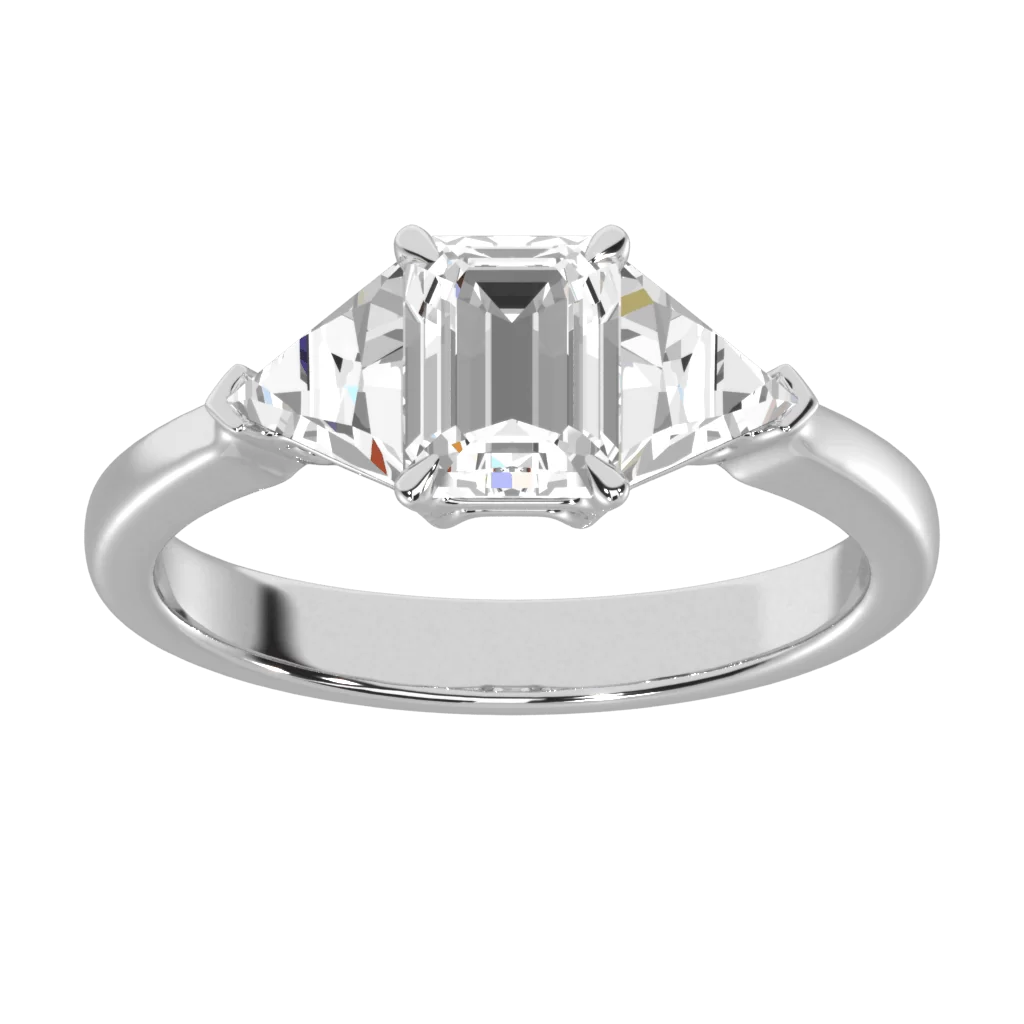
Low profile. The lower the ring sits to the finger, the less it catches. A tall cathedral setting looks superb and snags on gloves, pockets, hair and door handles. A low-set solitaire or a flush design largely disappears into a working day.
Bezel or flush setting. A bezel wraps the girdle of the stone in metal so there is nothing exposed to knock. Flush or gypsy setting goes further, sinking the stone so its table sits level with the band. If you want a diamond and a working hand, flush setting is the answer. Our settings guide covers the mechanics.
Smooth inner surface. Comfort fit means the inside of the band is domed rather than flat, which reduces friction and pressure across long shifts. On anything over 3mm it stops being a nicety.
Sensible width. Most people are comfortable somewhere between 2mm and 5mm. Wider reads substantial and contacts more of the finger, which matters on a twelve hour day.
Plain metal. A plain band with no stones is close to indestructible. It can be polished, resized, retipped and eventually remade. It is the most practical ring there is and it does not have to be boring, since finish, profile and metal colour all carry character.
By Occupation
The right answer changes considerably depending on what the hands are doing.
Healthcare And Aged Care
The most demanding category, and not for the reason people assume.
Claws tear nitrile gloves. A prong that catches even slightly will nick a glove, and in a clinical setting that is a genuine problem rather than an inconvenience. Bezel and flush settings are effectively the only workable options for anyone gloving up repeatedly.
The second issue is moisture. Healthcare workers wash and sanitise their hands constantly, and soap and alcohol get trapped under a band against the skin. That is a common cause of irritation and dermatitis, and it has nothing to do with metal allergy. A slightly looser fit and a proper weekly clean both help, and our guide to cleaning a ring at home covers the method.
Trades, Mining And Fly In Fly Out
Usually the ring comes off entirely, because site rules require it.
This is the most common brief we get from Western Australian couples. The answer that works is two rings: the real one, in a precious metal, worn at home and on days off, and a cheap silicone band for site. Some clients also have us make a plain hard-wearing work band in 9 carat gold, which is harder than 18 carat and cheap enough not to worry about.
If the ring does stay on, it needs to be flush set or plain, with nothing standing proud of the band at all.
Hospitality And Food
Constant water, constant handwashing, and in many kitchens a food safety policy that limits jewellery to a plain band.
Plain is genuinely the answer here, and it should be a metal that will not mind being wet several times an hour. Anything with stones will collect dough, oil and grit in places a cloth cannot reach.
Gym, Personal Training And Sport
Barbells and grip pressure are what bend rings out of round faster than anything else we see. That is not a scratch problem, it is a deformation problem, and a distorted band puts stress on the setting.
Silicone during training, precious metal the rest of the time, is the simple answer. If you would rather wear metal, keep it plain, keep it low, and expect to have it checked more often.
Office And Client Facing
The easiest category by a distance, and the one where you can wear more or less anything.
Perth corporate dress leans understated rather than showy, and low-profile rings, stacked slim bands and minimalist designs all sit comfortably in that. The only practical consideration is typing, where a wide band or a large basket can press against the adjacent finger through a long day. That is worth testing before you commit rather than discovering at week three.
Metals That Handle Work
Four honest rankings for a working hand.
Platinum is the most durable choice. It scratches and develops a patina like anything else, but when it is scratched the metal displaces rather than being lost, so claws and bands retain far more material over decades. Our gold versus platinum guide explains the mechanism.
Nine carat gold is harder than 18 carat because there is more alloy and less gold. It is a sensible choice for a dedicated work band, though it is more brittle and less rich in colour.
Eighteen carat gold is the standard for engagement rings and holds up perfectly well in most jobs. It is softer than 9 carat and will show wear on the underside first.
Titanium and tantalum are light, tough and hypoallergenic. Both make good work bands, with the caveat that titanium is difficult to resize. Tungsten and ceramic cannot be resized or repaired at all, which is why we would not recommend them for a ring you intend to keep, though as a disposable work band that objection matters less.
For sensitive skin, platinum and titanium are the safest options, and any nickel-free gold alloy will also do.
Silicone Rings: When And Why
There is no snobbery from us about silicone, and there should not be from anyone.
A silicone band is designed to tear away under load, which is exactly the property you want in an environment where ring avulsion is a genuine risk. They cost very little, they are easy to replace, and they mean somebody who cannot wear metal at work is still wearing something.
Two honest caveats. They trap moisture against the skin, so if you are already prone to irritation, take it off during breaks and dry the finger. And a cheap one that fits too tightly defeats the purpose, since it needs to be able to break away.
Silicone is a work solution, not a replacement. Wear the real ring the rest of the time.
Where To Keep The Real Ring
More rings are lost off the finger than on it.
Never a pocket. This is how most rings disappear. Pockets get emptied, turned out and washed.
A zipped pouch in a bag is the reliable option at work. Something small, dedicated and always in the same place.
A dish by the sink at home, in one consistent spot, prevents the other common loss, which is putting it down somewhere unusual and forgetting.
A chain around the neck works well for a shift, and plenty of people do it. Check the clasp, and make sure the chain is rated for the weight of the ring rather than assuming.
If Your Ring Already Does Not Work
You are not stuck with it, and this is a large part of what we do.
A high-set ring can often be lowered by rebuilding the head closer to the band. Claws can be replaced with a bezel. A worn shank can be replaced entirely while keeping the original head and stone. And if the design simply cannot be made practical, the stone can move into a new setting built around the life it actually leads, which we do most often at the ten and fifteen year marks.
Bring it in before a stone goes missing rather than after. Our guide on whether a ring can be resized covers the related question of fit.
Frequently Asked Questions
The seven we field most often about rings at work.
Can I Wear My Engagement Ring To Work?
It depends entirely on the job. Office and client-facing work, usually yes. Healthcare, trades, hospitality and anything near machinery, usually not, and often it is prohibited outright.
What Is The Safest Ring Setting For Work?
A bezel or a flush setting. Both enclose the stone with nothing standing proud to catch, and neither will tear a glove.
Are Silicone Rings Worth It?
Yes, for anyone who cannot wear metal at work. They break away under load, they cost very little, and they mean the finger is not bare.
Which Metal Is Most Durable For Daily Wear?
Platinum, because it retains metal when scratched rather than losing it. Nine carat gold is harder on the surface and makes a good work band.
Why Does My Ring Irritate My Skin At Work?
Usually trapped moisture, soap or sanitiser rather than a metal allergy, particularly for anyone washing their hands frequently. Clean the ring weekly and dry underneath it.
Can My Existing Ring Be Made More Practical?
Often, yes. Heads can be lowered, claws replaced with a bezel, and stones moved into a lower setting. It is worth asking before something goes wrong.
What Should I Do With My Ring During A Shift?
A zipped pouch in your bag, or a chain around your neck with a checked clasp. Never a pocket.
Come And Tell Us What Your Hands Do All Day
It is the single most useful thing a client brings us, and almost nobody volunteers it unprompted.
Come to our Mt Hawthorn studio and describe the job before you describe the ring. We will show you what a flush setting looks like next to a claw setting, let you feel the difference between a 2mm and a 4mm band, and tell you honestly which designs we see back for repair and which we do not. We do all our own repairs on site, which is where those opinions come from.
If you need a plain work band alongside a ring you already own, we can make one that sits with it properly rather than looking like an afterthought. The bench behind the counter carries close to two centuries of combined experience, and master jeweller Paul holds two Jewellery Association of Australia Awards.
Browse our wedding bands and engagement rings, or start shaping something with the bespoke ring builder.
Book a consultation and wear the ring you already have, if you have one.

Andy McGee, Manager and Master Jeweller at Stelios Jewellers, brings over 38 years of experience from London and Perth. Known for his precision craftsmanship and eye for detail, he oversees the creation of bespoke pieces to the highest standards. A career highlight includes leading the production of the Miss Universe crowns, and he continues to craft standout designs for prestigious jewellery competitions.



Social Media