Pearl Jewellery Design Process
Pearls look simple on the surface, but pearl jewellery requires a specialised approach. Pearls are organic gems made of nacre, and that delicate structure means design decisions that work for diamonds or sapphires do not always translate. If you want a piece you can wear often, hold close, and one day pass on as something that carries real meaning, the “how” matters as much as the photograph.
At our Mt Hawthorn design studio in Perth, we have built our pearl jewellery design process around transparency and control. You see and approve each stage: pearl selection, concept and proportions, design development, setting method, build, finishing and care guidance. Stelios Palioudakis trained as a goldsmith in Perth, reached the finals of the Australian Jewellery Awards earlier in his career, and started the studio in 2007.
The studio team carries roughly two centuries of combined experience between them, including long-standing pearl jeweller Paul and the broader hands behind notable past commissions such as the Miss Universe Australia crowns and brooches for the West Australian Symphony Orchestra. Pearl work runs through the same studio, often using Australian South Sea pearls grown off the coast just north of Broome.
What Great Pearl Jewellery Design Has To Deliver
Pearls have been worn for millennia and have remained markers of beauty, status and quiet meaning across almost every civilisation that touched the sea. Modern design has expanded from classic strands to sculptural and contemporary work, but the essentials of strong pearl design have not changed.
Quality comes first. High-quality pearls reflect light sharply, almost like a mirror. That shine is the clearest indicator of lustre, and it is usually the most important factor when assessing pearls under studio lighting.
Protection comes second. Pearls have a Mohs hardness of around 2.5 to 4.5, which makes them more vulnerable to scratching, chipping and chemical damage than almost any other gem we work with. Settings and stringing have to prioritise security and gentle contact points, and we design around how pearls actually behave rather than treating them like harder stones.
Wearability comes third. Pearl earrings and pendants need the right balance so the pearl hangs properly and sits comfortably across a long evening. Strands need the right length, knotting and clasp choice so the piece moves naturally and stays secure. Most of the design adjustments in the studio come down to making each of these work without compromising the others.
What We Provide On Pearl Sourcing And Grading
Every pearl that reaches our studio is fully disclosed by type and origin before any design conversation begins. You will know whether the pearl is cultured (which the vast majority of modern pearls are) or one of the rare natural pearls we occasionally work with on heirloom resets. You will also know which pearl family the stone belongs to: Akoya, Australian South Sea, Tahitian or freshwater, with the trade-offs for each laid out plainly so you can choose with confidence.
Grading and matching are walked through in person. The seven traditional virtues (size, shape, colour, lustre, surface, nacre quality and matching) are discussed using the actual pearls in front of you rather than as abstract scoring. For matched pairs and strands, the process can run across weeks as we wait for the right second pearl from our WA suppliers; we do not substitute a near-match to save time.
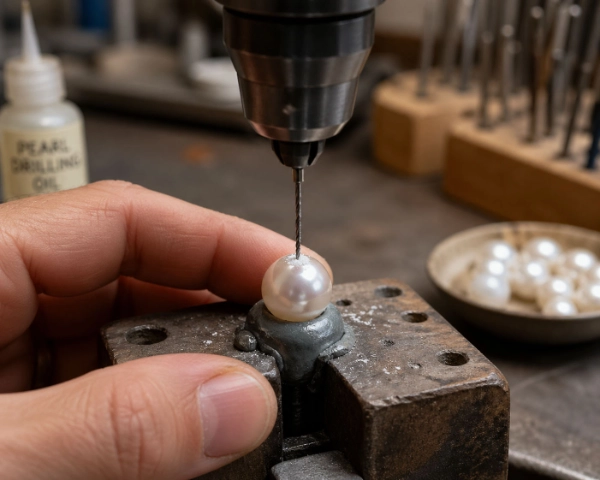
Visual proof is built into every commission. You see sketches at concept stage, CAD renderings before any metal is cast, and (for sculptural or complex pieces) a wax or resin model before the precious metal version is made. Drilling, peg alignment, setting depth and clearance are all set out before the pearl ever sits inside the metal, and the protective measures we use (low-speed drilling with diamond bits, two-part epoxy adhesives, cup-and-peg construction over prongs) are explained as part of the design conversation.
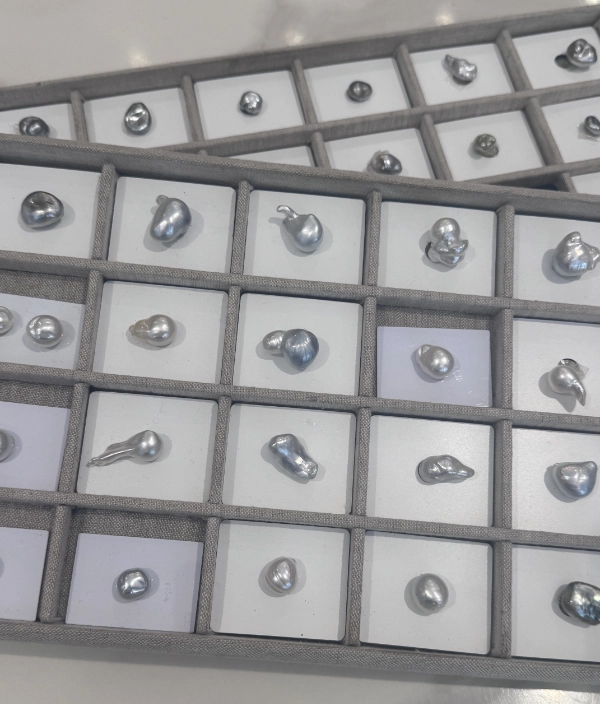
Stelios and the team have hand picked each pearl from sorting trays. These trays are then available to our clients to view and hand pick the perfect pearl for your creation.
How We Handle The Common Pearl Risks
Several issues come up repeatedly in the pearl jewellery market, and we have built our process specifically around addressing each of them.
We never present simulated, shell or imitation pearls as pearls. Every piece carries clear disclosure of pearl type, origin and grade, and we provide written documentation that most jewellery insurers accept directly.
Vague language is replaced with specifics. Where some marketing copy will use “premium pearls” without supporting detail, we walk through the actual lustre, surface character, nacre thickness and overtone of the pearl in front of you, with the certificate or supplier paperwork available on request.
Setting choice is engineered around the pearl, not around photographic appeal. Cup-and-peg constructions protect the nacre evenly. Where prong settings are used (occasionally for design reasons), we make sure the pressure is distributed correctly and that no harder accent stones can rub against the pearl surface.
Visual approval steps are part of every commission rather than offered as upgrades. You sign off on sketches, then on CAD, then on a wax model where the design calls for one. There is no point in the process where work is happening that you have not seen and approved.
Aftercare runs across the life of the piece. Free annual cleaning and inspection on every pearl piece we make. We also restring and inspect pearl pieces brought in from any other source, regardless of where they were originally purchased.
What We Cover In The First Consultation
The first appointment runs for about an hour at the studio in Mt Hawthorn, often over coffee, with no obligation at the end of it. We sit together with loose pearls, metal samples and a notebook in front of us. There is no script.
The conversation moves through the meaning behind the piece (a milestone gift, an heirloom reset, a wedding piece, a self-purchase marking something important), the styles and colour palette you are drawn toward, the pearl type and size range you have in mind, the metal you are leaning toward, whether diamonds or other accent stones will sit alongside the pearls, and the budget and timeline you are working with.
Bring photographs, the existing piece you want to rework, or simply a description of how you want the finished piece to feel. We have had clients arrive with their grandmother’s loose South Sea pearls in a velvet pouch that had been sitting in a drawer for forty years. The conversation that follows tends to be one of the more meaningful ones in the studio.
Step 1: Pearl Selection And Quality Assessment
Pearl selection is where pearl jewellery design genuinely begins. We assess pearls using the seven quality factors traditionally described as the seven virtues: size, shape, colour, lustre, surface, nacre quality and matching. The shorthand five S’s (Shine, Shape, Shade, Surface, Size) gives a similar reading. Shine is usually the most important because it is what makes a pearl look alive on the skin rather than flat against the metal.
We will also clarify origin and type. Cultured pearls are grown with human intervention in a controlled environment, with the bead nucleus inserted by a pearl technician and the nacre deposited by the oyster across two to three years. Natural pearls are found in the wild and are now extremely rare in the modern market.
For Australian South Sea pearls (the largest and most luminous of the cultured pearls, grown by the Pinctada maxima oyster off the WA coast from Broome north through the Kimberley), we work with WA suppliers we have known for years. Most of the loose pearls in the studio have been hand-picked from sorting trays in person rather than ordered from a catalogue, and matching a pair of South Sea studs can take weeks of waiting for the right second pearl rather than minutes.
Step 2: Define Your Style And Design Direction
Pearls work as classic, modern, minimal or bold pieces depending on the brief. This step locks in which direction the design moves.
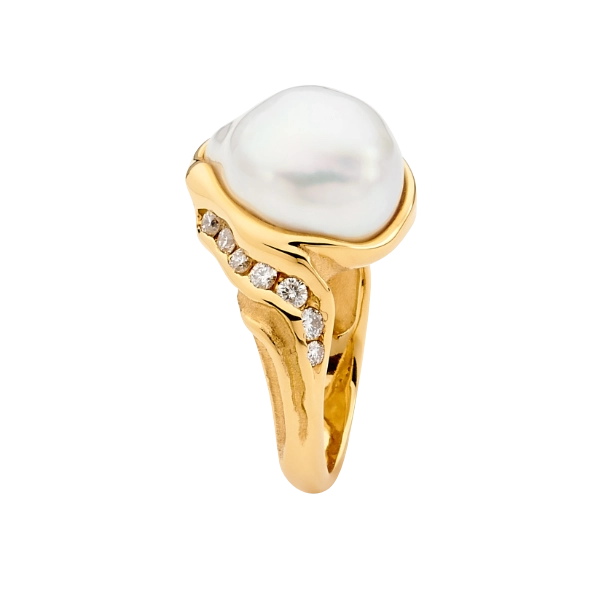
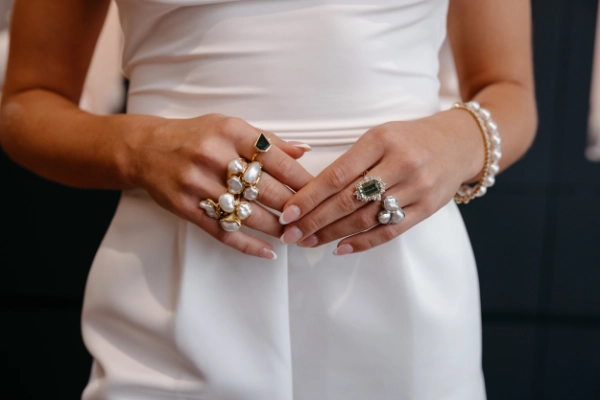
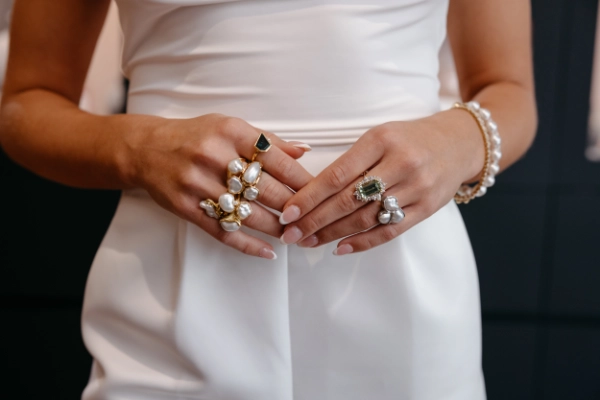
We confirm whether you want a timeless strand or a more contemporary piece, whether baroque and asymmetrical pearls suit your taste for organic shapes, whether the design pairs pearls with diamonds, sapphires, aquamarine or amber for contrast, and whether the piece is meant to feel formal, playful or quietly understated.
This is also where we decide which jewellery form fits the idea best: earrings, pendant, strand, bangle, ring or charm.
Step 3: Choose Pearl Type, Size, And Shade
Different pearl types create different moods.
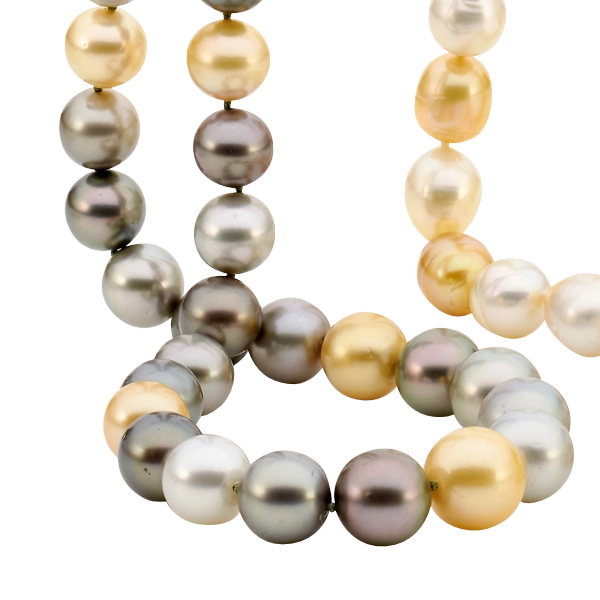
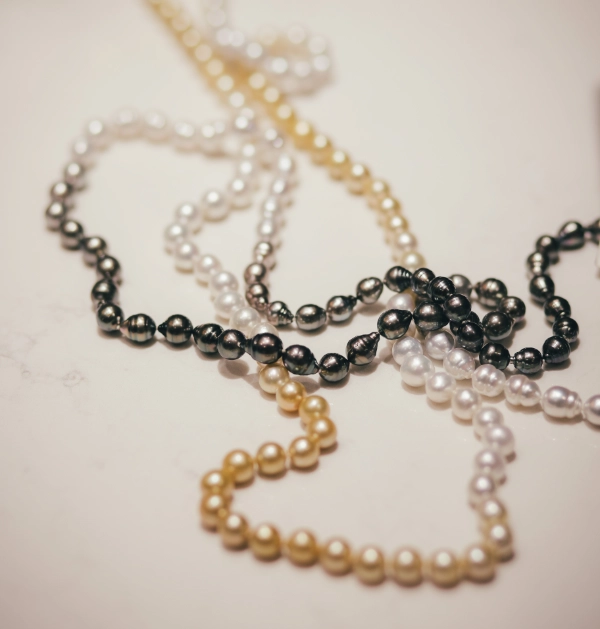
Akoya pearls suit classic bright-lustre looks at smaller sizes (6mm to 9mm typically). Australian South Sea pearls are the largest and most luminous (9mm to 14mm typically) and carry a satin glow that no other pearl matches. Tahitian pearls grown by the Pinctada margaritifera in French Polynesia produce the dark colours (peacock, charcoal, aubergine) that no other pearl type delivers. Freshwater pearls offer the widest variety in shape and the most accessible price point.
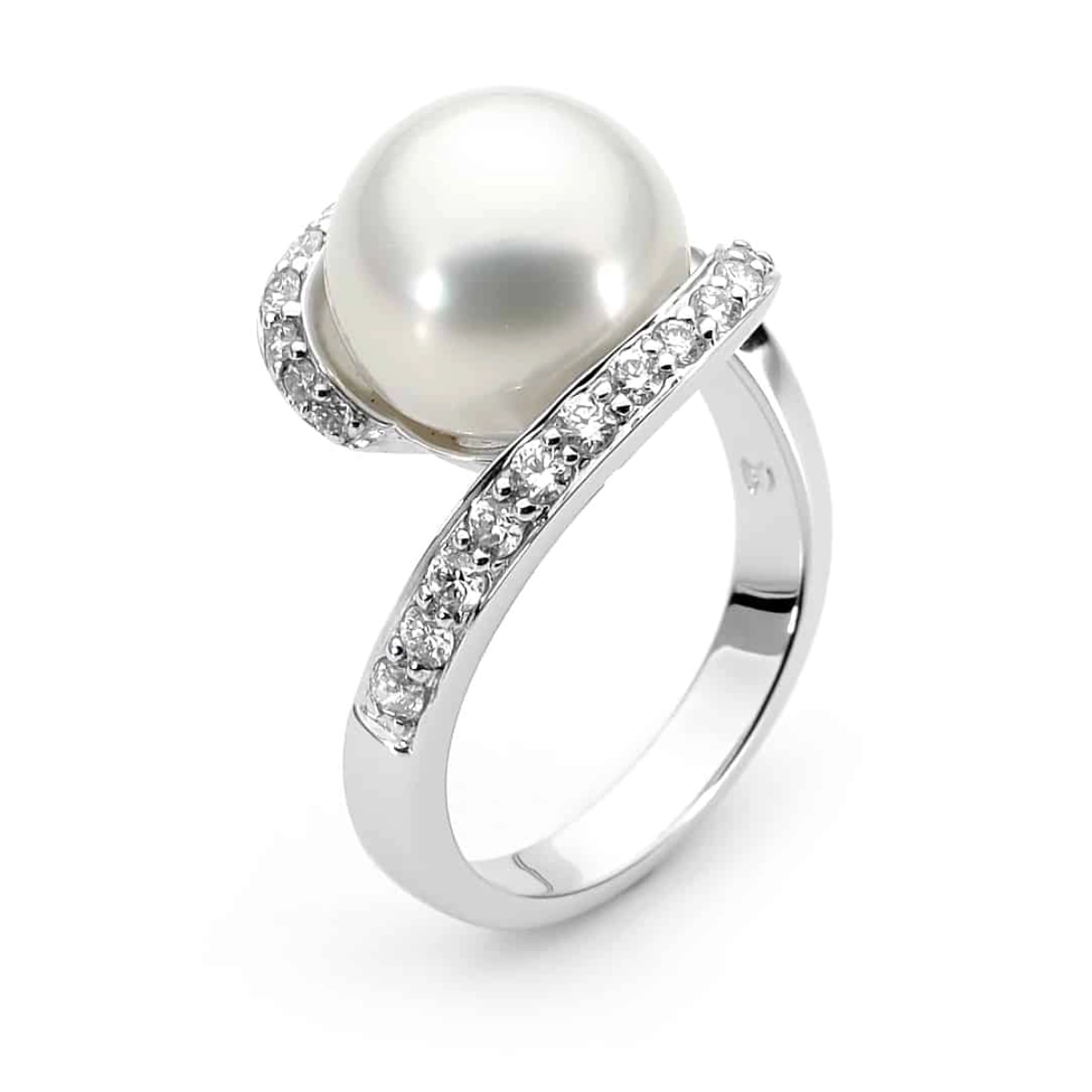
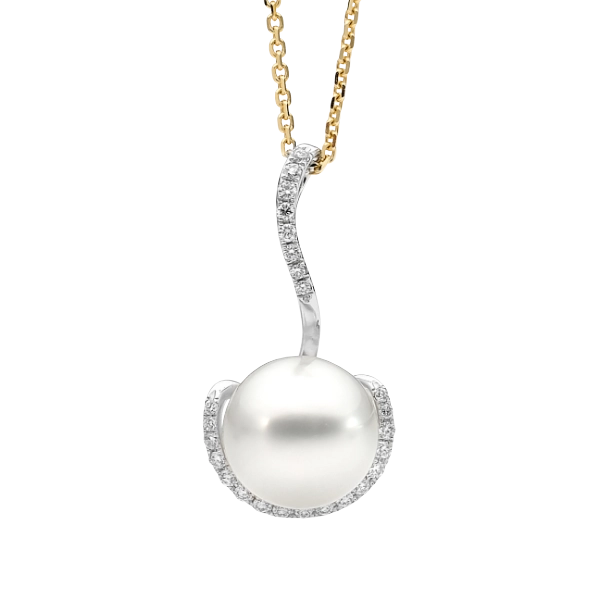
We select size, shade and overtone based on the wearer’s skin tone, existing jewellery and the piece’s purpose. For earrings, we factor in pearl weight so the post or hook holds the pearl correctly. For pendants, we look at how the pearl hangs, the balance between pearl and chain, and whether a hand-set diamond accent above the pearl will lift the design.
Step 4: Sketching And Proportion Planning
Hand sketches confirm the layout and proportional decisions before any 3D work. We map the focal point, the relationship between pearl size and metal scale, the silhouette from multiple angles, and the practical placement of the bail, clasp or earring finding.
Pearls highlight proportion more than most gems do. A slightly oversized bail, an awkward drop length, or a clasp that feels bulky can throw the entire piece off balance. Sketching catches these issues early when changes cost nothing.
Step 5: CAD Modelling And Approval
CAD converts the design into a precise 3D specification, especially for rings, earrings, pendants and any piece with a custom setting around the pearl.
The model documents cup dimensions that support the pearl evenly, peg alignment and depth (the peg sits inside the drilled hole and bears most of the structural load), metal thickness at stress points, and the small clearances that prevent the pearl rubbing against any harder surface.
Cup-and-peg settings usually protect pearls better than prong settings, which can create uneven pressure on the nacre. You review the CAD visuals, request changes, and approve the final plan before any metal is committed.
Step 6: Setting And Stringing Method Selection
Pearl jewellery is built in two main ways: setting or stringing.
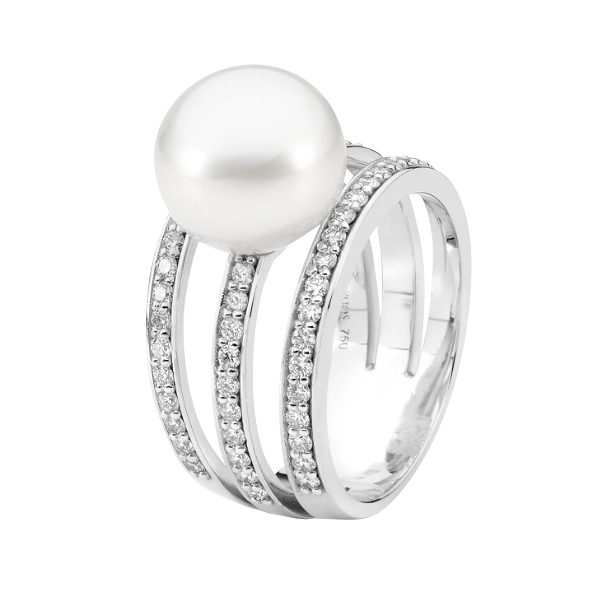
Pearl setting requires careful handling. Drilling is done at low speeds with diamond bits, often with cooling to reduce heat stress, because pearls can crack if pressed too hard or heated too quickly. Securing the pearl onto its peg uses high-quality two-part epoxy adhesives that remain stable across decades; super glue can become brittle and fail.
Pearl stringing for strands and bracelets uses silk thread for the traditional approach, with knots between each pearl. The knots prevent the pearls rubbing against each other and ensure that no more than one pearl is lost if the strand breaks. Stainless steel wire is used for some contemporary designs where structural rigidity is part of the look.
Step 7: Production And Craftsmanship
After approval, the design moves into production. The metal is fabricated, clasps and bails and custom settings are built, the pearls are drilled and fitted (or strung and knotted, depending on format), and the assembly is checked for alignment.
Handcrafted pearl jewellery carries something that mass-produced pearl pieces simply cannot replicate: the studio jeweller adjusts by eye and by touch as the piece comes together, with each pearl positioned by hand rather than by template. That tactile finishing work is what separates a true bespoke piece from one assembled from pre-cut components.
Step 8: Finishing, Polishing, And Quality Control
Finishing covers final polish on metal surfaces, setting checks (pearl secure but not pressured), alignment checks for matched pairs, and clasp testing for smooth closure and security. Pearls themselves are wiped gently and presented in a soft pouch ready for hand-over.
Final inspection covers consistency of finish, structural integrity, stone and pearl alignment, and the piece's match against the approved CAD specification.
Step 9: Care Guidance For Long-Term Beauty
Pearls reward consistent care across decades. The practical rule we share with every client is that pearls should be the last thing you put on and the first thing you take off, before perfume, sunscreen, hairspray or any chemical contact.
We also recommend wiping pearls gently with a soft cloth after each wear, storing them separately from harder jewellery, avoiding harsh chemicals and high temperatures, and bringing strands back to the studio for restringing every two to five years depending on how often they are worn. We restring pearl pieces from any source, regardless of where they were originally bought.
Notes From Our Studio
A client recently brought in a single 13mm cream Australian South Sea pearl her father had bought directly from a Broome grower in the 1980s. The pearl had sat in a drawer for almost forty years, untouched, and she wanted to wear it for her sixtieth birthday celebration. Isabelle hand-finished a yellow gold drop pendant with a small marquise diamond cap above the pearl. The client wore it the night of her birthday and called us the next week to say it had been the first time the pearl had ever been on her skin.
Most of the pearl pieces leaving our studio carry stories like that one. The pearl is rarely the most expensive thing in the studio, but it is often the piece that means the most.
Frequently Asked Questions
The simplest at-home test is the tooth test: gently rub the pearl on your upper front teeth. A real pearl feels slightly gritty because of the nacre's microscopic plate structure, while imitation pearls feel uniformly smooth. Real pearls also feel cool to the touch when first picked up. For certainty, we can assess pearls in person at the studio.
It depends on the look, budget and purpose. Australian South Sea pearls are the largest and most luminous; Tahitian pearls offer dark and dramatic colours; Akoya pearls suit crisp classic styling; freshwater pearls provide the most accessible price point and the widest shape variety.
Pearls can be worn often, but they are softer than diamonds and sapphires. Good design choices (protective settings, careful stringing, secure clasps) and simple care habits (off last, on first, regular wiping) make all the difference.
Yes. Pearls pair beautifully with diamonds, sapphires, aquamarines and other coloured stones, as long as the design prevents harder stones rubbing directly against the pearl surface. We plan this carefully in the setting and layout stage.
Six to ten weeks for most bespoke commissions. Simple strand customisation can be quicker; commissions involving sourcing matched pearl pairs from WA suppliers can run longer because matching takes time.
Begin Your Pearl Idea To Our Studio
If you are ready to begin a custom pearl piece, we welcome you in for the first consultation at our Mt Hawthorn design studio. Bring photographs, an honest sense of your budget, any inherited pearls you want to bring forward, and the moment you are buying or making the piece for. We will lay loose Australian South Sea pearls, Tahitian pearls and finished examples in front of you, and the rest of the conversation shapes itself from there.