
Necklaces And Bangles Design Process
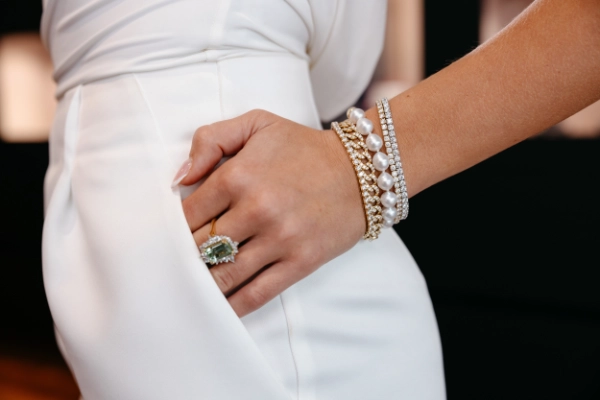
A necklace or bangle can look effortless on the wearer, but the work behind it is precise. Length, weight, balance, clasp strength, stone security and comfort all matter, particularly when you are commissioning a custom piece intended for daily wear or for marking a moment that matters.
At our Mt Hawthorn workshop in Perth, we run a guided design process for necklaces and bangles built around visible checkpoints rather than blind trust. Stelios Palioudakis trained as a goldsmith in Perth, reached the finals of the Australian Jewellery Awards earlier in his career, and started the studio in 2007. Long-standing bench jeweller Scott and the broader team carry roughly two centuries of combined experience between them, and notable commissions include the Miss Universe Australia crowns and brooches for the West Australian Symphony Orchestra. The pendants and bangles passing through the bench each year are made by the same hands.

What Great Necklace And Bangle Design Has To Deliver
A finished piece needs to land on three levels at once. It has to suit the wearer’s personal style: shape, metal colour, the overall mood of the piece. It has to function properly: a necklace needs the right length and weight to sit naturally on the body, a bangle needs the correct internal diameter and enough structural strength to handle daily knocks. And it has to last across years of wear, which depends on materials, finishing and setting technique rather than the photograph it produces on day one.
The hard part of design is making all three of these work together rather than trading them off against each other.
What We Provide On Process Clarity
Our process is set out plainly at the first consultation rather than left vague. You know what happens at each stage, what your role is at each checkpoint, when approvals are required, and what timeline to plan around. We use visual checkpoints (sketches, CAD renderings, and a wax or resin model where the design calls for one) so you can see and approve the work before any metal is cast.
Quality checks happen at multiple points across production. Metal purity is documented (18 carat gold at 75% pure, 950 platinum, 925 sterling silver), stones are sourced through suppliers who provide verifiable certification from GIA, IGI or AGS, and finished pieces are inspected for clasp security, hinge integrity and stone setting before they leave the studio.
How We Avoid The Common Veto Risks
Several issues come up regularly in the custom jewellery market, and we have built our process specifically around addressing each of them.
CAD review is built into every commission, so you see the model before any metal is cast. The same renderings you sign off on are what the bench team builds against, with no quiet substitutions between approval and final polish.
Pricing is set out at quote stage with the materials, the bench time, and any sourcing fees broken down clearly. The figure does not move on you mid-process unless the brief itself changes.
Metal purity and gemstone provenance are documented in writing. We will share certification, supplier paperwork and information for any piece on request.
Warranty and aftercare are spelled out at hand-over. Free annual cleaning and inspection.
What We Cover In The First Consultation
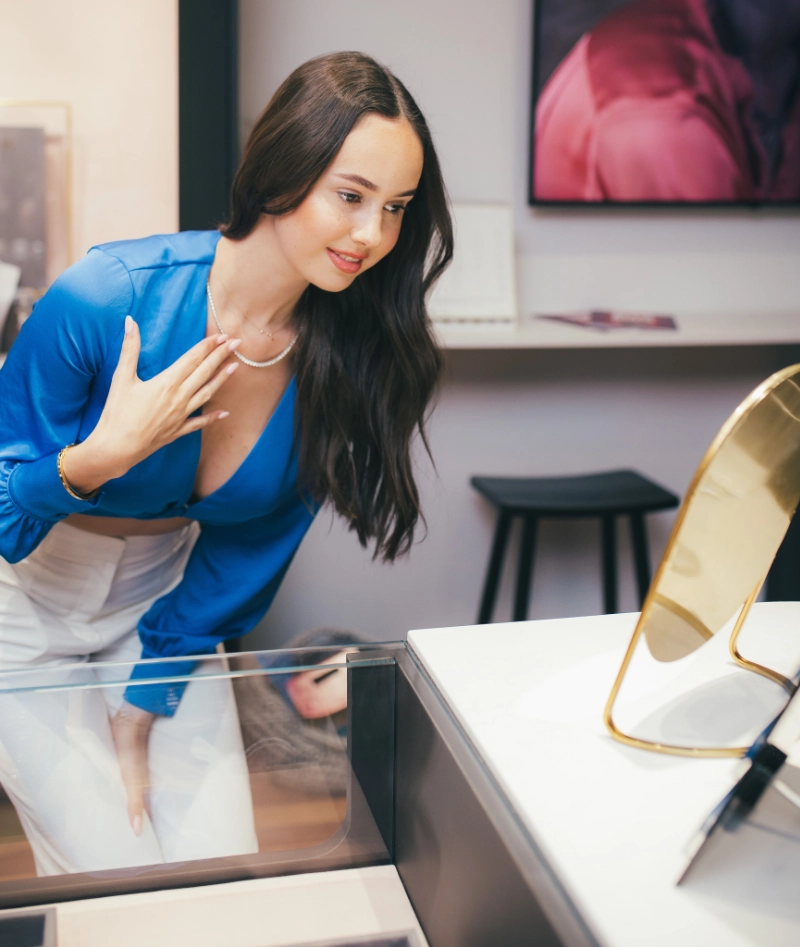
The first appointment runs for about an hour at the bench in Mt Hawthorn, often over coffee, with no obligation at the end of it. We sit together with stones, metal samples and a notebook, and the conversation moves through what you are creating and why (a milestone gift, a self-purchase, an heirloom reset, a piece commissioned for a wedding or anniversary), the precious metal you are leaning toward, the overall look you have in mind, whether stones will be the focal point, the practical considerations around how the piece will be worn, and the budget and timeline you are working with.
Bring whatever you have. Photos saved on your phone, fabric swatches, examples of pieces your partner already owns, or simply a description of how you want the piece to feel when they open the box. Half-formed instincts are easier to design around than most clients expect.
Step 1: Define The Design Concept And Focal Point
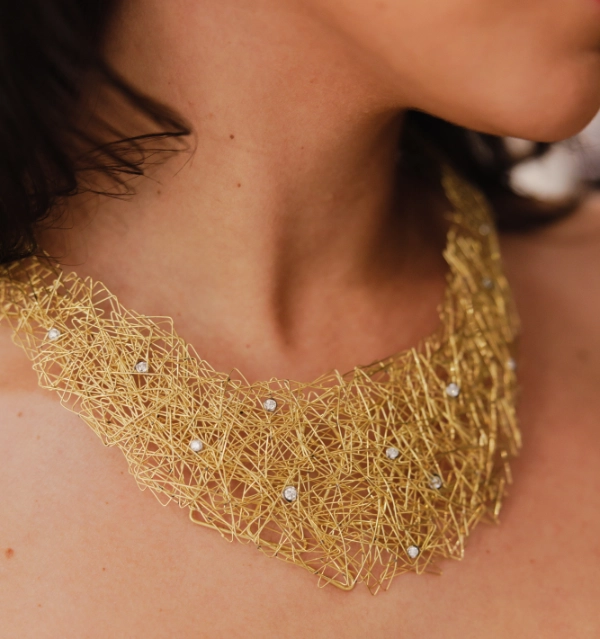
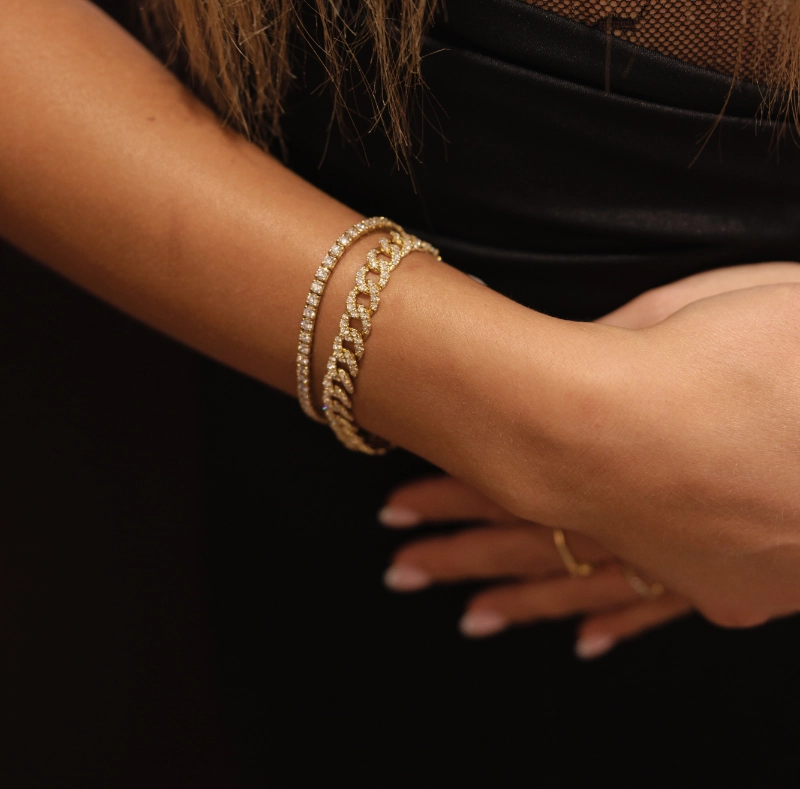
Every piece begins with the focal point that gives it personality. For necklaces, this might be a substantial pendant, a cluster of gemstones, a single Australian South Sea pearl, a hand-cut silver or gold disc, or a symbolic motif that carries personal meaning for the wearer. For bangles, it might be a sculptural shape, a hand-engraved pattern, a single set stone on the front face, or a hinge feature with hidden detail.
We will also confirm the design intent: whether you want a sleek everyday piece that disappears into the wardrobe, or something more substantial that marks a particular occasion. That decision shapes the design process and end result.
Step 2: Choose Materials That Match Wear And Style
The materials choice affects both the look and the way the piece behaves over time.
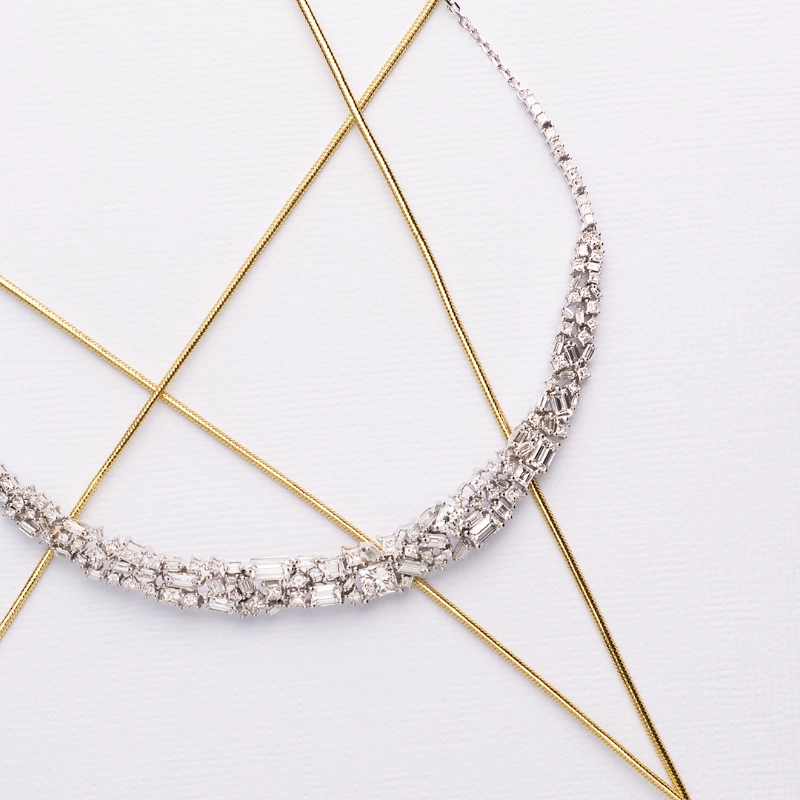
Most of our gold work is in 18 carat (75% pure gold alloyed with copper, silver or palladium for hardness), with 9 carat available for budget-conscious commissions and pieces intended for hard daily wear. Platinum is denser and harder than gold, holds its colour without rhodium plating, and runs roughly 25 to 40 per cent above 18 carat gold for an equivalent piece. Sterling silver suits accessible price points and certain styles, particularly larger sculptural bangles where the weight in gold would push the price beyond the brief.
For pearls, we source Australian South Sea pearls grown by the Pinctada maxima oyster off the Broome coast through long-standing WA suppliers, with smaller volumes of Tahitian pearls and Chinese freshwater pearls available depending on the design. For coloured gemstones, Australian sapphires from the Queensland and New South Wales fields offer strong domestic provenance, alongside imported Sri Lankan, Madagascan and Burmese material. For diamonds, GIA, IGI or AGS certified stones reach the bench before any setting work begins, including the rare Western Australian pink diamond inventory we work with through specialist dealers (the East Kimberley mine that supplied 90% of the world’s pink diamonds closed in 2020).
Step 3: Plan The Components And Dimensions
Necklaces and bangles diverge most clearly at this stage.
For necklaces, the technical conversation covers chain style and thickness, clasp type and strength, pendant size and weight balance, length and how it sits on the body relative to the wearer’s neckline preferences, and how the piece will move and catch light when worn. Comfort and weight matter especially for daily-wear pieces, where a chain that feels right at lunchtime is also still comfortable by 9 pm.
For bangles, sizing is the most critical decision. We measure the closed hand at its widest point with the thumb tucked into the palm, since the bangle needs to clear the knuckles before it can sit on the wrist. From there we plan thickness, profile, comfort edges, whether the bangle is solid, hinged or open-ended, and how the metal section will hold up against the small daily knocks that bangles experience more often than any other jewellery format.
Step 4: Sketches And Design Development
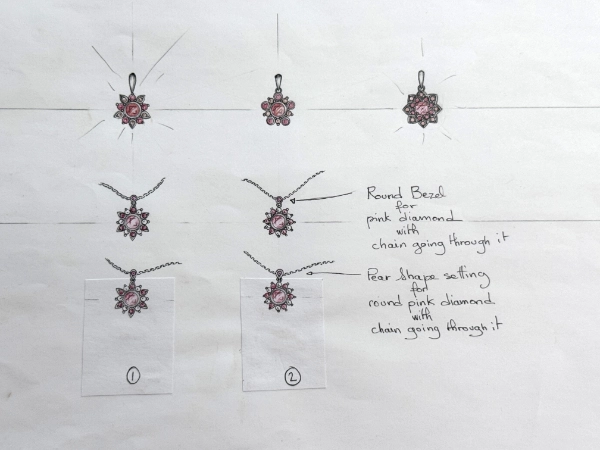
Once the brief is set, the design moves into sketches. Hand drawings confirm proportions, side stones, edge profiles, clasp or hinge positions, and stone placement. We refine the design from multiple angles because jewellery is three-dimensional and reads differently from above, from the side, and on the body.
Most pieces go through two or three sketch revisions before we move into CAD. The drawings are quick to produce and quick to change, which makes them the right place to settle proportional decisions.
Step 5: CAD Modelling And 3D Visualisation
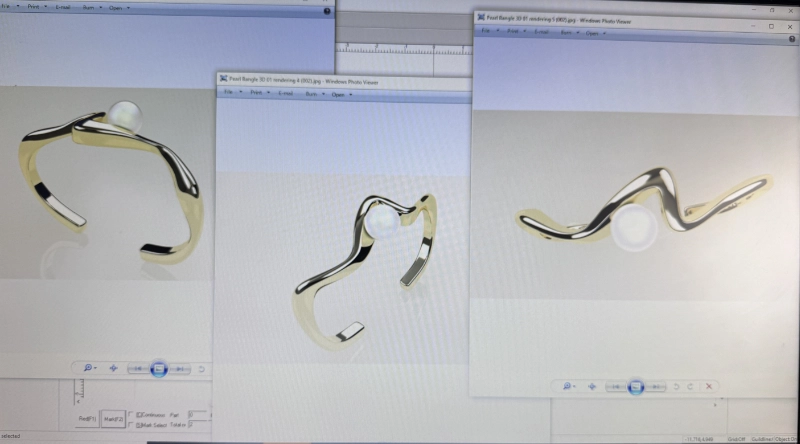
CAD converts the design into a precise 3D specification. The model documents exact measurements and tolerances, stone seats and settings, how components connect and move, structural thickness at stress points (especially important for bangles), and how the pendant balances against the chain on a necklace.
You receive renderings from multiple angles with a chance to make adjustments. If you want to soften a curve, change a setting style, scale up the focal point, or alter the chain weight, this is where it happens. The cost of changes at CAD stage is design time only; the cost of changes after metal has been cast is significantly higher.
Step 6: Wax Model And Prototype Approval
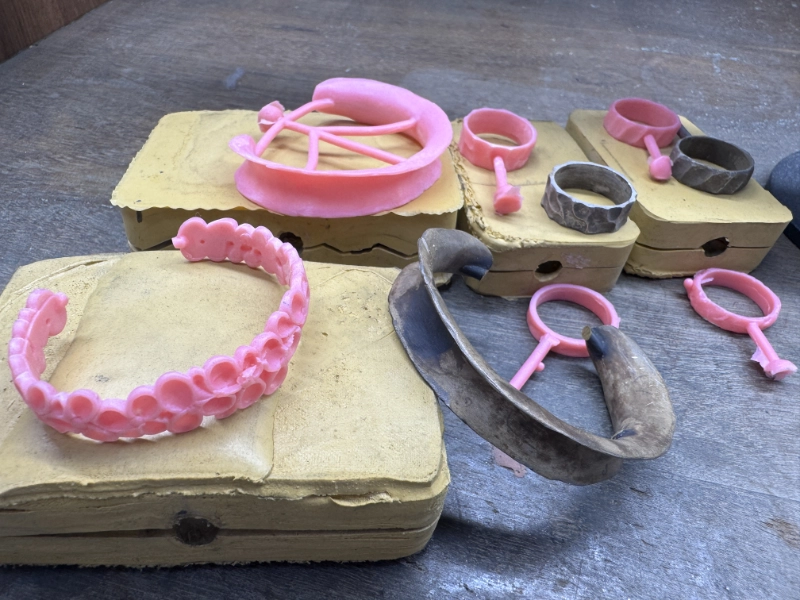
Some commissions benefit from a physical wax or resin model before final production. Sculptural bangles, complex pendants with depth and volume, multi-component necklaces and any piece where scale is hard to judge from a screen all sit in this category. The model lets you confirm size, proportion and the way the piece sits on the body before any precious metal is committed.
Wax carving and resin printing are part of the standard production set at the bench. The step adds a week or two to the timeline and saves significantly more later when revisions become structural rather than cosmetic.
Step 7: Casting, Fabrication, And Assembly
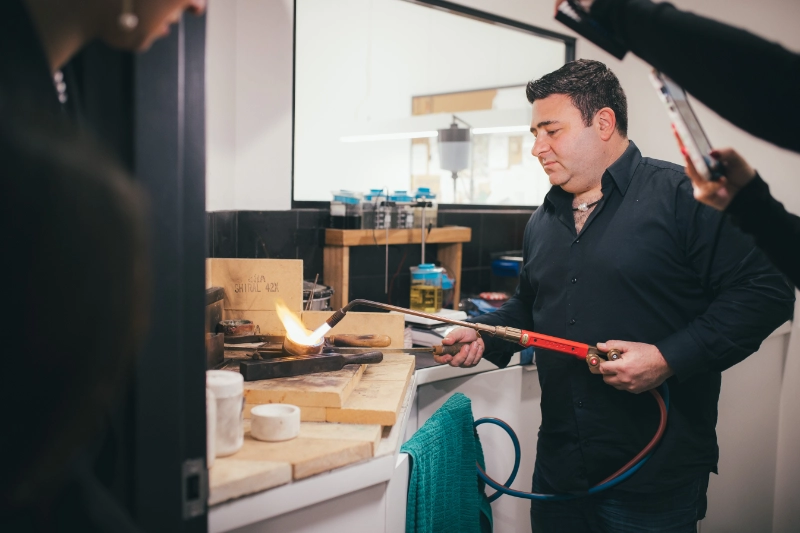
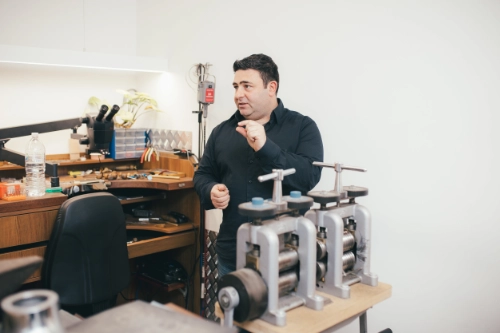
After approval, the design moves into making. Casting introduces molten metal into the mould for cast components (pendant bodies, bangle structures, settings), with the quality of the casting dependent on metal purity and mould precision. Fabrication and assembly cover the soldering, joining and structural work that holds multi-component necklaces together.
This is also the stage where hinges are tested for smooth opening and closing, clasps are tested for secure latching, and weight distribution across a finished necklace is balanced for comfort.
Step 8: Stone Setting And Detail Work
If the design includes stones, setting is where the piece gains its sparkle and character. Each setting style is chosen for the design intent and the wear profile rather than as a default. Bezel settings produce clean edges and strong protection, suited to pieces intended for hard daily wear. Pavé and bead-set surfaces deliver continuous sparkle from accent stones across larger surfaces. Claw settings expose the stone for maximum light return, suited to focal-point gemstones where the brilliance is the point. Channel and flush settings produce sleek profiles where the stones sit level with the metal surface.
Setting work at the bench is hand-finished. Each prong is tipped and stress-tested by hand before the stone goes in.
Step 9: Final Polish And Quality Checks
Finishing is functional as much as cosmetic. The piece is filed, sanded and polished to the chosen finish, which may run from mirror-bright through brushed satin to a hand-hammered or matte texture depending on the design.
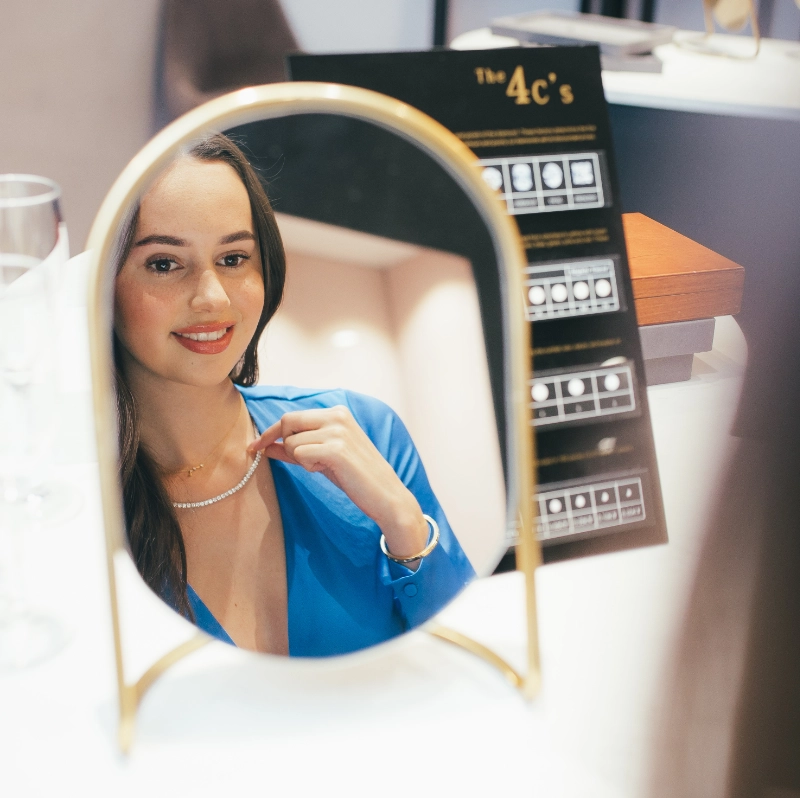
Bangle edges are smoothed for comfort. Necklace pendant surfaces are checked for clean light reflection and no snag points. Final inspection covers finish consistency, clasp security, stone alignment, fit and comfort against the approved CAD specification.
Notes From Our Studio
A client from Scarborough brought in a small heirloom sapphire that had been sitting unset since the 1970s. The stone was an oval blue Australian sapphire of around 1.5 carats, with a slightly chipped girdle that the original setting had hidden. We designed a new pendant with a hand-finished 18 carat yellow gold bezel that protected the chipped edge, sized the chain to the wearer’s preferred matinee length, and engraved the back of the bezel with the date the original ring had been bought. The pendant has been worn most days since.
A client from Greenwood commissioned a hinged bangle for her sixtieth birthday. She wanted something substantial but not flashy, with the option to add an inherited diamond she expected to receive from her mother later. We designed a 6mm-wide hinged 18 carat yellow gold bangle with a hidden box clasp, a flat front face, and a small bezel cup left empty on the front face for the future diamond. Isabelle hand-finished the surface in a soft brushed satin polish so that small wear marks would blend rather than show. The empty cup was filled two years later when the inherited diamond arrived.
Frequently Asked Questions
Six to ten weeks for most bespoke commissions. Pieces with complex hinges, multiple stones, or sourced material can extend the timeline. We plan backwards from any fixed gift or event date.
Yes. Heirloom resets are a regular part of our work. We assess the suitability of the original stones, design a new piece around them, and document the provenance for the new commission.
For most pieces, yes. CAD gives a precise plan, lets you make changes before any metal is cast, and reduces uncertainty across the build. Simpler stock-style pieces are sometimes built directly from sketches without a CAD step.
A wax or resin model is a physical prototype used to confirm size, shape and proportions before final casting. It is most useful for sculptural bangles, complex pendants, and any piece where scale is hard to judge from screen renderings alone.
Yes. Coordinating commissions are a regular part of our work, including matching metal, finish, stone colour and design language across rings, necklaces, bangles and earrings to build a coherent personal collection.
Begin Your Necklace Or Bangle Design
If you are ready to design a custom necklace or bangle, we welcome you in for the first consultation at our Mt Hawthorn workshop. Bring photographs, an honest sense of your budget, any inherited stones you want to use, and the moment you are buying the piece for. The rest, we shape together at the studio.