
Diamond Earring Design Process
Designing a pair of diamond earrings requires a different conversation from designing a single ring. With earrings, you are not selecting one stone but two that have to work together as a matched pair, holding the same colour, the same cut precision, the same face-up size, and reading uniformly under different lighting from morning office light through to evening dinner.
At our Mt Hawthorn design studio in Perth, we walk you through the diamond earring design process with that pairing challenge front of mind. Stelios Palioudakis started the studio in 2007 after completing his goldsmith apprenticeship in Perth and reaching the finals of the Australian Jewellery Awards. The studio team carries roughly two centuries of combined experience between them, including long-standing jeweller Andy and the broader hands behind notable past commissions such as the Miss Universe Australia crowns and brooches for the West Australian Symphony Orchestra. Diamond earring commissions run through the same studio.
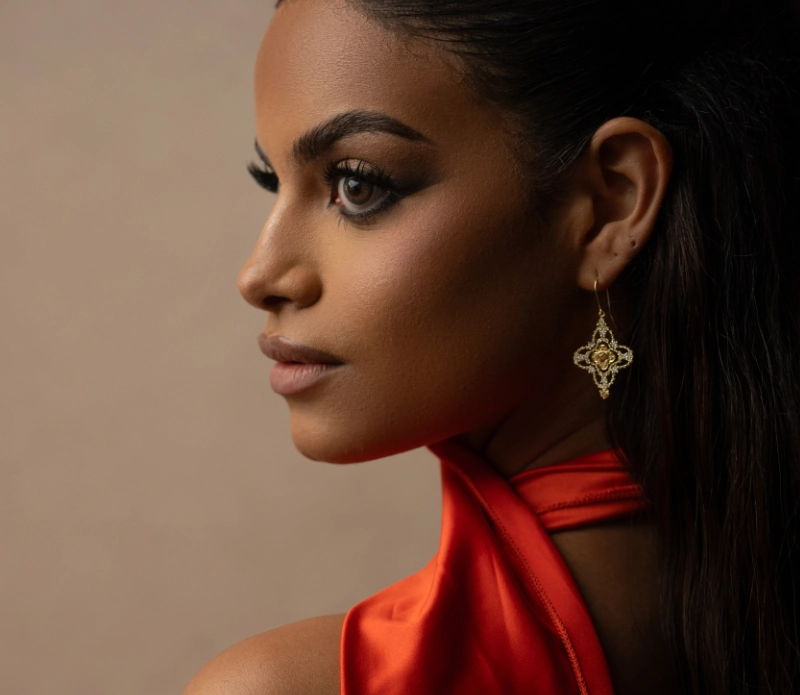
What Makes Diamond Earring Design Different
Earrings carry a unique design constraint that rings do not: symmetry. A single diamond can be visually striking, but earrings need symmetry in sparkle, size, and face-up appearance across the pair. Matching pairs require closely aligned cut performance, colour grade and clarity grade so neither side reads brighter or larger than the other. We typically see diamond pairs across our suppliers’ parcels for several weeks before the right matched set lands at the studio.
Comfort matters as much as appearance. The piece has to be light enough for long-term wear, especially when stones are larger or the design includes a halo or drop component. The goal across every commission is a balance between visual presence and the practical reality of wearing the earrings from breakfast through to bedtime.
What We Cover In The First Consultation
The first appointment runs for about an hour at the studio in Mt Hawthorn, often over coffee, with no obligation at the end of it. Diamond earring commissions tend to attract clients buying for a milestone (significant birthday, wedding gift, anniversary, self-purchase marking a major life moment), and the conversation moves at the pace that suits you.
In the consultation we cover the style direction (studs, hoops, drops, halo, three-stone, or two design styles in one wearable pair), your personal style and how the earrings will sit alongside your existing jewellery, your budget and what matters most within it (carat weight, cut performance, colour grade, design complexity), the diamond shape you are drawn toward, the practical considerations around comfort, weight and how the earrings sit on the ear, and the choice between push backs and screw backs for valuable studs.
If you have reference photos or an existing pair of earrings you love, bring them. The translation from inspiration to final design is significantly faster when we can see what you respond to.
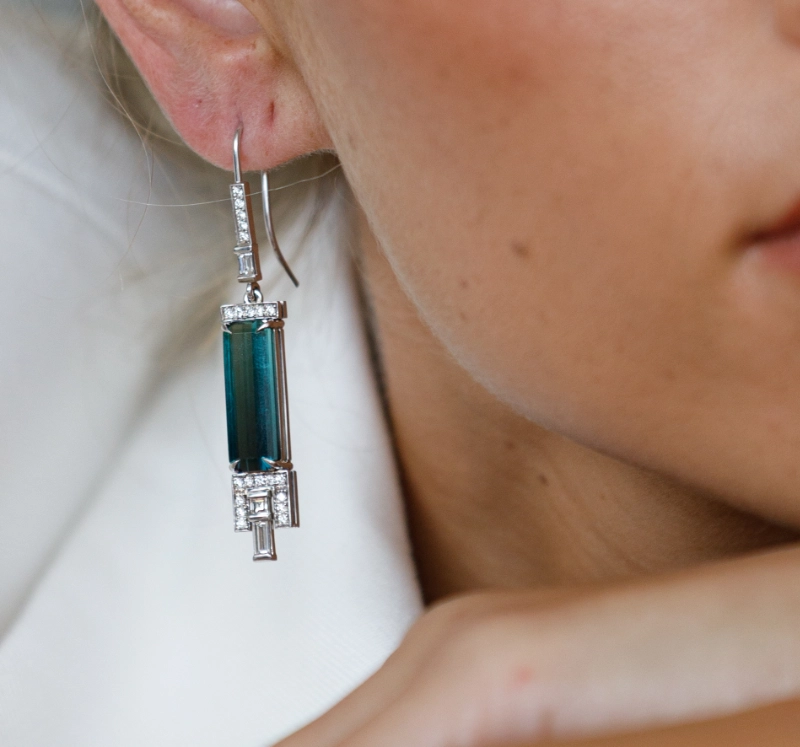
Step 1: Diamond Selection And Matching
Diamond selection drives everything else in earring design. We use the four Cs as the foundation: cut, colour, clarity and carat. For earring pairs, cut quality is usually the top priority because the stones are seen in motion at varying angles, and a pair where one diamond reads brighter than the other tells the eye something is off even when the wearer cannot articulate why.
Practical size guidance for earring commissions:
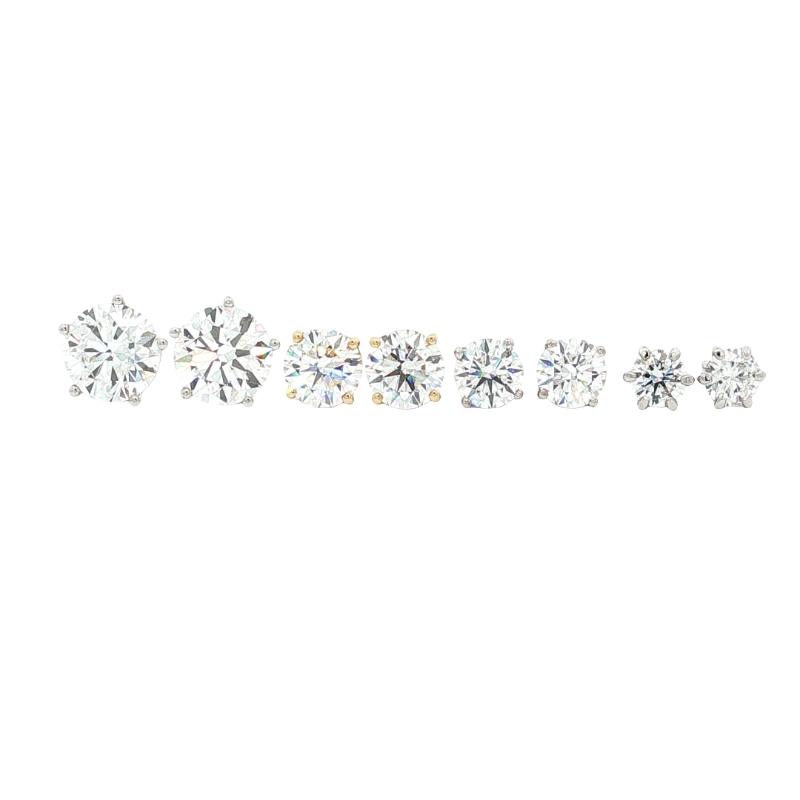
For daily-wear studs, the most reached-for range is 0.25 to 0.50 carat per ear. The earrings sit close to the lobe, hold their place under hair, and read clean across most outfits.
For more visible presence, 0.70 to 1.00 carat per ear moves the studs into clear statement territory while remaining practical for daily wear with secure backs.
Above 1.00 carat per ear, the earrings move into special-occasion or high-statement territory where comfort engineering and screw-back security become essential.
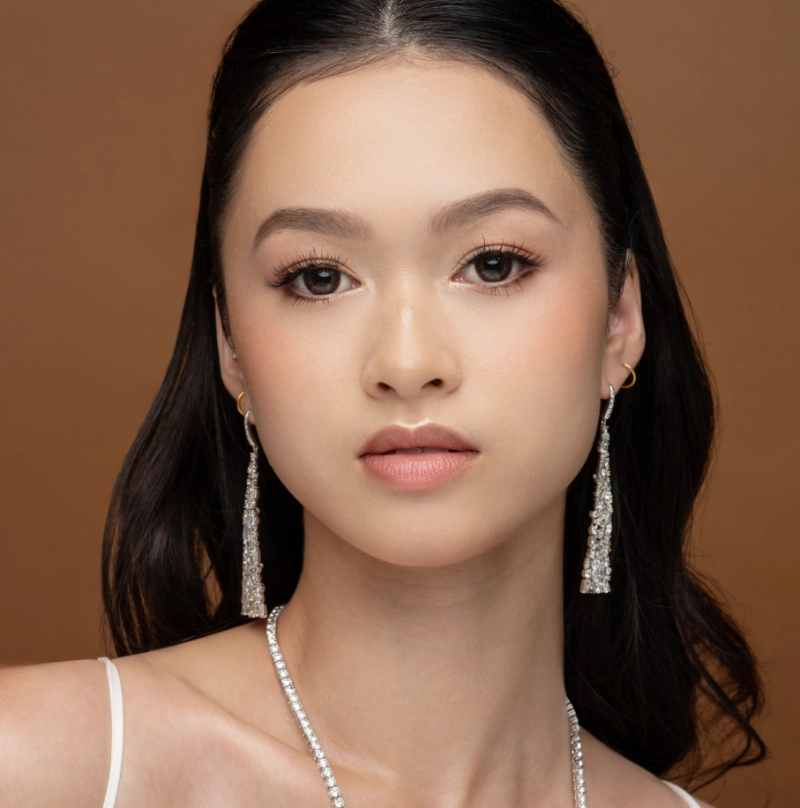
Step 2: Choosing The Right Diamond Shape
Diamond shape sets the tone of the whole piece.
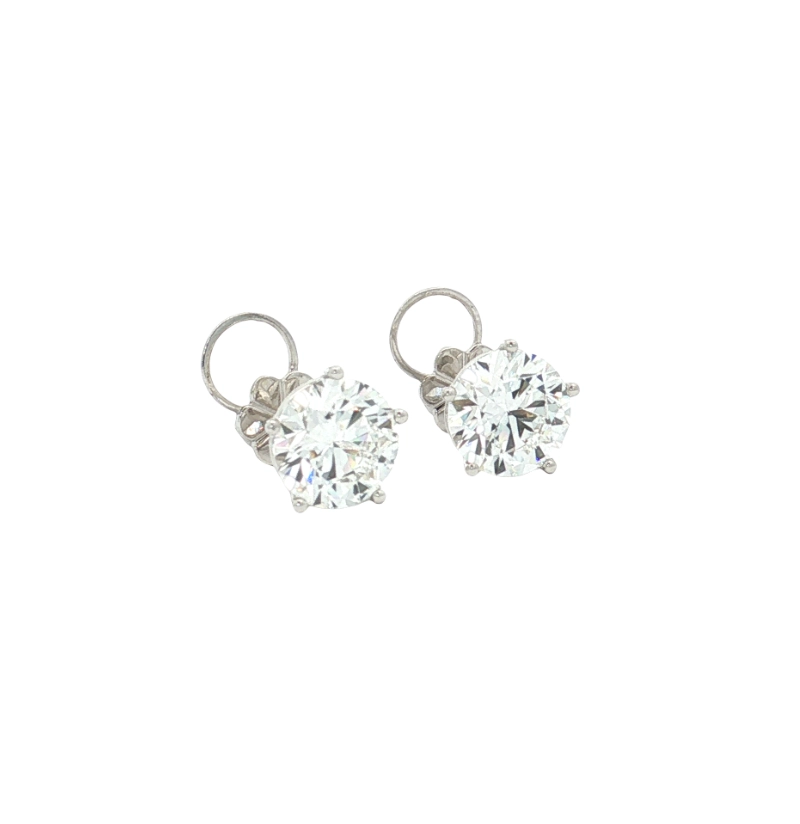
Round brilliant cut suits classic stud earring designs and remains the most popular shape for earrings as it is for engagement rings. The 57-facet cut delivers consistent sparkle from any viewing angle, which matters because earrings are seen from the side and from the front in roughly equal proportion.
Princess cut delivers a crisp, modern silhouette and works particularly well in studs where the geometric outline reads architectural rather than soft.
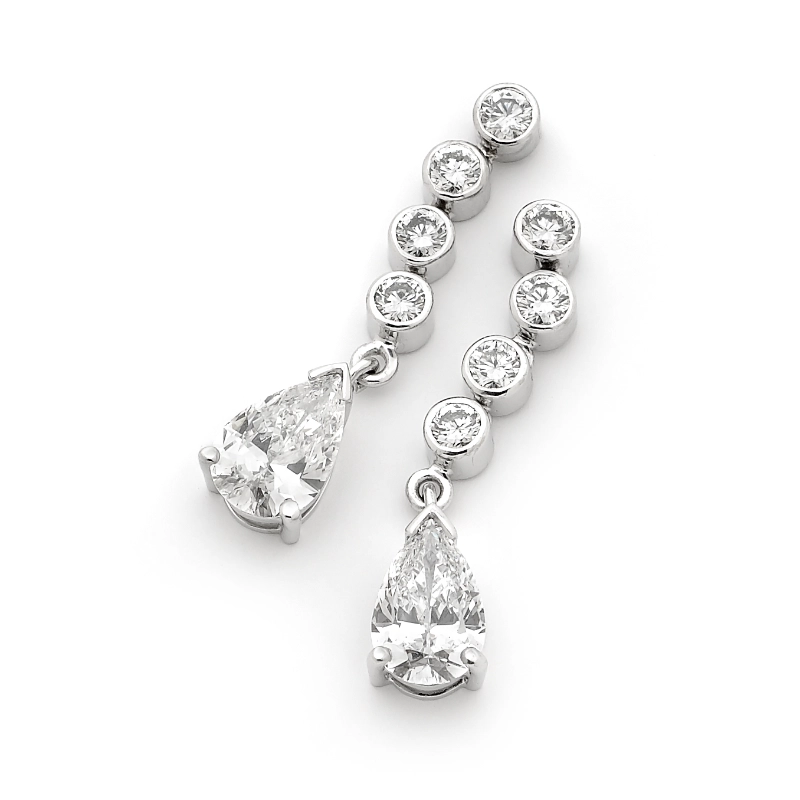
For drop earrings and statement pieces, oval, pear, marquise and emerald cuts all deliver distinct character. Pears and ovals are particularly popular for drops because the elongated shape carries the line of the earring downward visually.
Step 3: Selecting Precious Metals
Metal choice changes how diamonds read on the ear and how the earrings hold up over time.
White gold delivers a bright, clean finish that lets the diamonds dominate visually. The metal needs rhodium re-plating every two to four years to hold its bright finish.
Platinum sits as the most enduring of the four major options. It is naturally white, hypoallergenic, develops a soft patina rather than visible scratches, and runs roughly 25 to 40 per cent above 18 carat gold for an equivalent piece.
Yellow gold offers warmth that pairs particularly well with slightly lower colour grade diamonds (J or K), where the warm metal absorbs any faint tint in the stone.
Rose gold has become a popular metal for earrings over the past decade, particularly for clients who already wear rose gold rings or pendants.
Step 4: Picking The Setting Style
The setting defines the look and protects the stones.
Prong settings (sometimes called claw settings) suit traditional studs, using minimal metal and letting maximum light enter the diamond. Four-prong baskets show more of the stone; six-prong baskets offer more security on larger stones.
Bezel settings encase the diamond edge in a continuous metal rim, which protects the girdle from impact and reduces snag risk on hair, scarves and clothing. Bezel-set studs are the design we most often recommend for clients with active lifestyles or hospital shifts, where a snag-free profile matters daily.
Halo settings surround a smaller centre stone with a circle of accent diamonds, amplifying visible scale on the ear and intensifying perceived sparkle. Halo studs work particularly well for clients wanting visible presence at controlled budgets.
Pavé details added to drops, halos or hoops produce continuous fine sparkle from accent stones across the design.
Step 5: Sketching And CAD Modelling
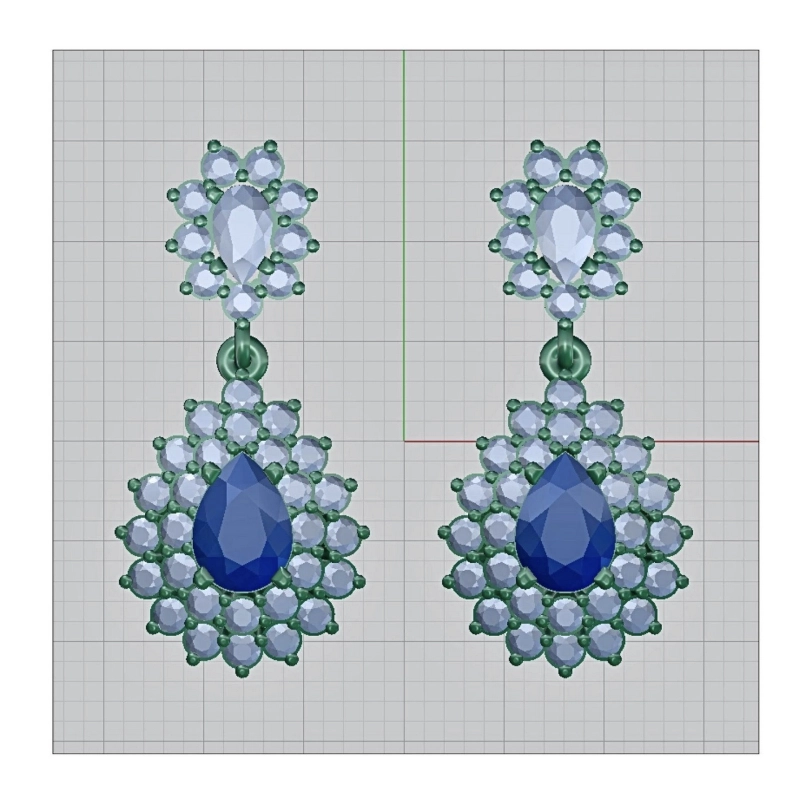
Once the brief is locked in, we move from idea to specification. Hand sketches confirm proportional decisions, then CAD modelling produces a precise 3D plan of both earrings as a matched pair.
CAD lets us balance weight so the earrings do not droop forward against the ear, confirm prong or bezel thickness for durability, ensure exact symmetry between left and right pieces, engineer comfort across the back of the lobe, and integrate the chosen post and back style into the design.
You review the CAD renderings from multiple angles and request changes before any metal is cast. The cost of changes at this stage is design time only.
Step 6: Metal Casting, Crafting And Stone Setting
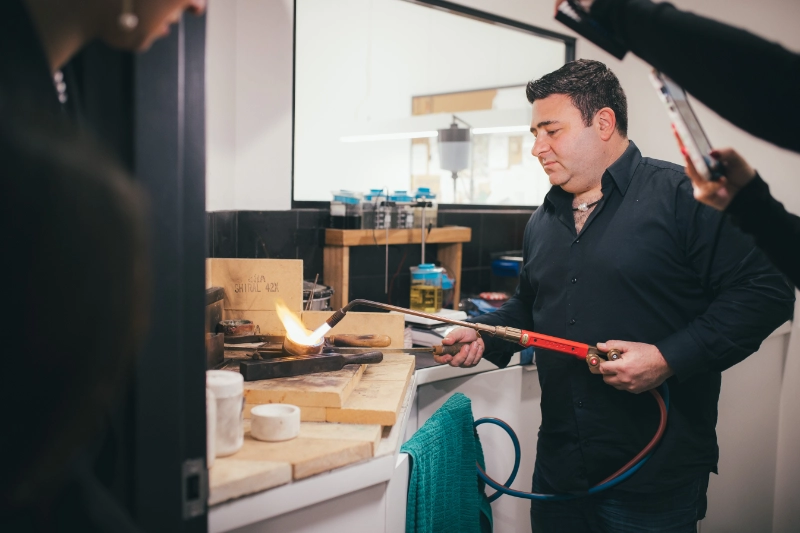
After approval, the production phase begins. Metal is cast or fabricated to the CAD specifications, the centre and accent diamonds are hand-set by our studio jewellers, and the pieces are checked for matched alignment between left and right throughout assembly.
Stone setting determines how securely the diamonds are held over years of wear. We focus on structural integrity, alignment between the pair (so the diamonds sit at the same angle on each ear), and clean finishing around each setting so no sharp edges remain.
Step 7: Final Polish And Quality Control
Before hand-over, each pair passes through final finishing and inspection: final polish to the chosen surface (mirror, satin, brushed), prong tipping and stress-testing, back security checks, comfort assessment on a sample wearer where possible, and final quality control across symmetry, sparkle alignment and finish consistency.
Backing Options That Matter
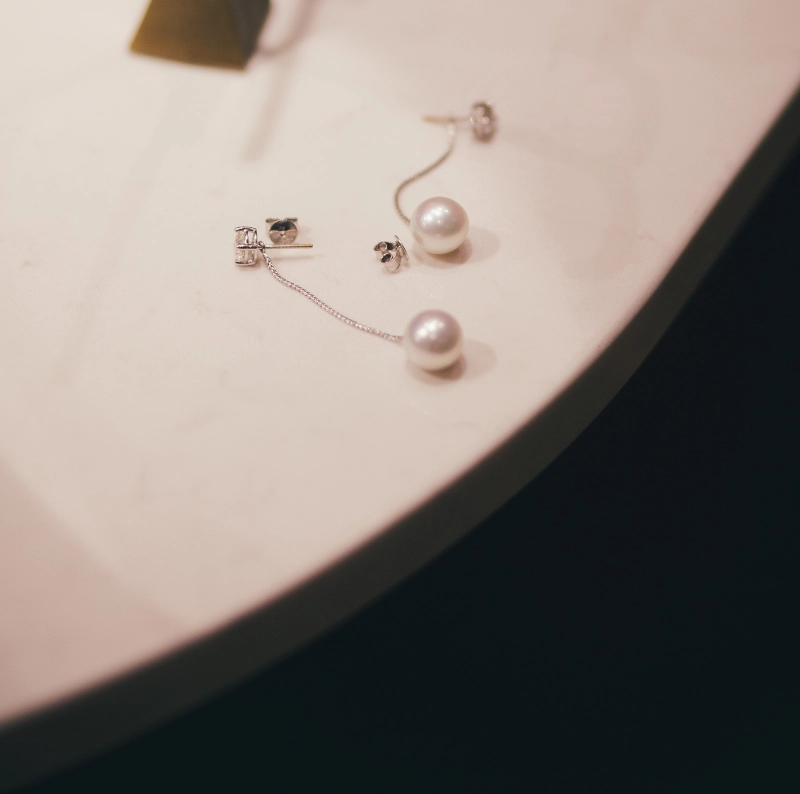
Backs are not afterthoughts, particularly for valuable studs. Push backs are convenient for daily wear and suit smaller carat weights where loss risk is lower. Screw backs are recommended for stones above 0.50 carat per ear because the threaded post cannot be accidentally dislodged by hair, clothing or normal movement. Some clients combine the two: screw backs for higher-value pieces, push backs for everyday studs.
We size and fit the back style to your lifestyle and the value of the diamonds before we settle on the design.
Care Tips To Keep The Diamonds Bright
Diamond earrings are durable but daily life dulls sparkle quickly. Skin oils, hair products, sunscreen, sweat and dust all build up on the underside of the diamond where the eye does not see it.
A weekly clean in warm water with a drop of mild detergent and a soft toothbrush keeps the stones bright. Soak the earrings briefly, brush gently around the setting, rinse and dry with a soft cloth. Store in a soft pouch with the pair together so neither earring goes missing.
Remove diamond earrings before swimming, showering or sleeping. Annual professional cleaning at the studio (free for clients of the studio) addresses prong wear, polish refinishing and any structural concerns at the setting level.
Notes From The Studio
A client from Carine commissioned a pair of 0.40 carat round brilliant studs as a fortieth birthday gift to herself. The brief was clean and practical: studs she could wear from morning hospital shifts through to evening dinners without worry. We selected two GIA-certified F colour, VS1, Excellent cut diamonds matched across cut precision and crown angle. The diamonds were set in low-profile platinum bezels with screw backs, finished to a soft satin polish that hid any small surface marks across years of wear. She wore them on her birthday and has not taken them off for daily wear since.
A client from Doubleview commissioned halo drop earrings for his wife’s fiftieth wedding anniversary. The centre stones were a matched pair of 0.50 carat oval diamonds at G colour, VS1, surrounded by sixteen small round brilliant diamonds in a tear-shaped halo, suspended from diamond-set bails on 18 carat white gold posts. Build time was nine weeks, with three of those spent waiting for the second oval to land at our supplier. The piece was hand-set by Mike and presented at the anniversary dinner.
Frequently Asked Questions
Six to ten weeks for most custom commissions, depending on stone matching time. Pair matching for larger or higher-grade stones can extend the timeline because we wait for the right second diamond rather than substituting a near-match.
Bezel settings suit daily wear best because they protect the diamond edge and create a snag-free profile. Prong settings deliver more sparkle but can catch on hair and clothing depending on the design.
For most daily-wear briefs, 0.25 to 0.50 carat per ear sits comfortably on the lobe and reads polished without dominating the face. Above 0.70 carat per ear moves into more visible statement territory.
Screw backs for studs above 0.50 carat per ear or any stone you would be reluctant to lose. Push backs for smaller everyday pieces where convenience matters more than maximum security.
Warm water, mild detergent and a soft toothbrush at home for weekly cleaning. Annual professional ultrasonic cleaning at the studio for deeper restoration. Avoid harsh chemicals, ultrasonic cleaners with damaged stones, and steam cleaners on pieces with thin prong work.
Match Your Diamond Pair At Our Studio
If you are ready to commission a pair of diamond earrings, we welcome you in for a private consultation at our Mt Hawthorn design studio. We will pull diamond pairs at the colour and clarity grades you are weighing, walk through the certificates, and let you see the matched stones laid out on dark velvet under bench lighting before any design decisions are locked in.