
Pink Diamond Jewellery Design Process
A natural pink diamond is one of the rarest objects you will ever hold. The mine in the East Kimberley region of Western Australia that produced roughly 90 per cent of the world’s pink diamond supply for over three decades closed for the last time in November 2020, and every certified Australian pink diamond now in the market is part of a finite remaining inventory. Designing jewellery around one of these stones means the stone itself sets most of the parameters; the design has to honour what the diamond is, not the other way around.
At our Mt Hawthorn design studio in Perth, we have been working with Western Australian pink diamonds since Stelios Palioudakis started the studio in 2007, after completing his goldsmith apprenticeship in Perth and reaching the finals of the Australian Jewellery Awards. The studio team carries roughly two centuries of combined experience between them, including long-standing jeweller Scott and the broader hands behind notable past commissions such as the Miss Universe Australia crowns and brooches for the West Australian Symphony Orchestra. Our supplier relationships with the WA pink diamond specialist trade run back over a decade, which matters in a category where stones are now traded between fewer than a dozen serious dealers nationally.
What Makes Pink Diamonds Different
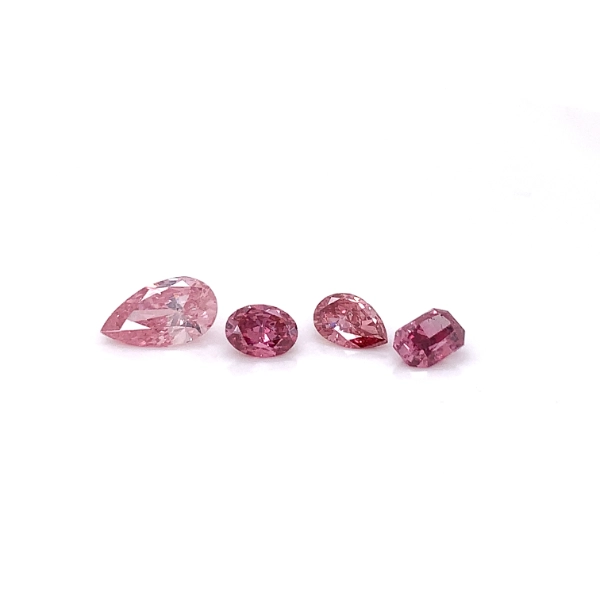
Pink diamonds are valued differently from white diamonds. With colourless stones, the conversation centres on cut, brilliance and clarity. With pink diamonds, the conversation is almost entirely about the colour itself: hue, tone, saturation, and how evenly the colour distributes across the stone.
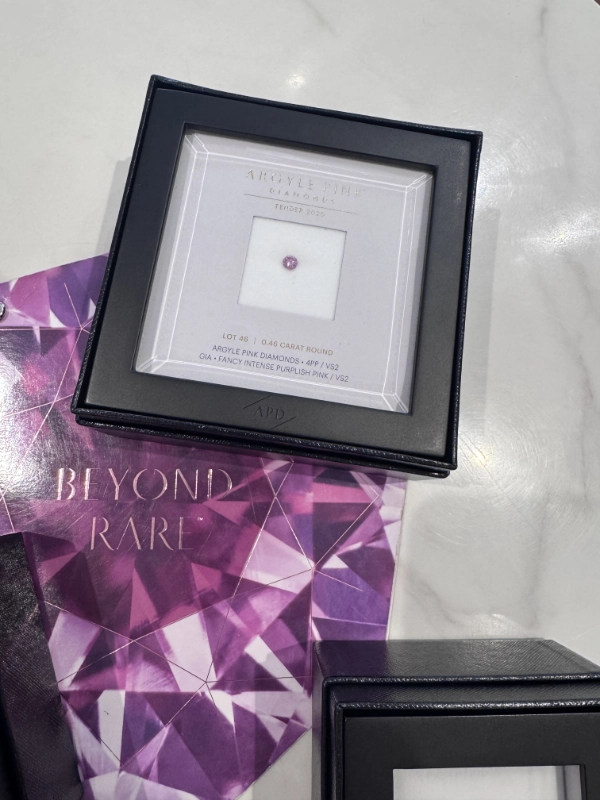
The grading reflects this. Where a white diamond might be Excellent cut, F colour, VS1 clarity, a pink diamond’s certificate reads more like Fancy Intense Purplish Pink or Fancy Vivid Pink, with the secondary modifiers (purplish, orangey, brownish) sitting alongside the primary colour grade. Inclusions are often more acceptable than they would be in a colourless diamond of the same size, because the colour is what the eye is reading.
Prices reflect rarity rather than just quality. A 0.5 carat Fancy Vivid Pink can sit at hundreds of thousands of Australian dollars; a Fancy Intense Pink of the same size may sit in the high tens of thousands; Fancy Light Pink stones are accessible by comparison. The market sits on a curve where small increases in saturation drive disproportionate increases in price.
What We Provide On Stone Verification And Sourcing
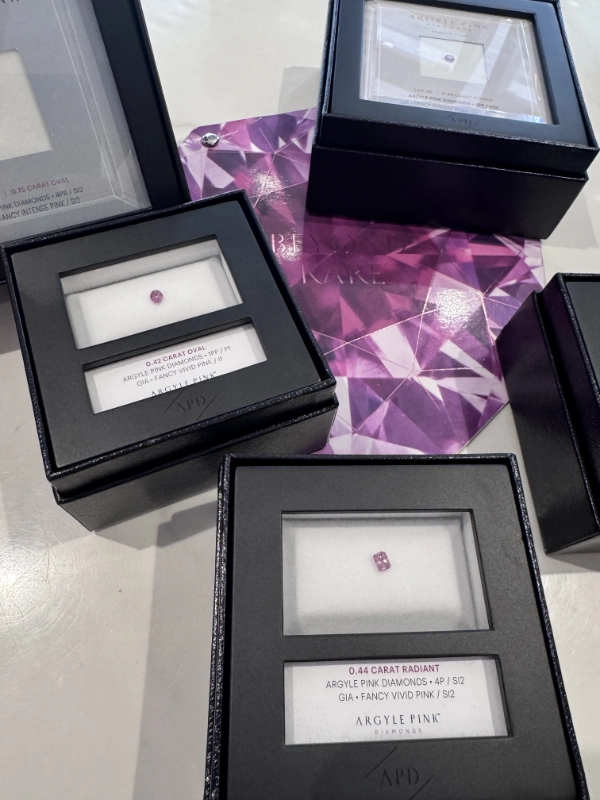
Every pink diamond that reaches our studio is independently graded by a recognised laboratory, almost always the Gemological Institute of America (GIA). The certificate documents hue, tone, saturation, carat weight, clarity and any colour modifiers, and we walk through the report in detail before any design work begins. Treated diamonds (where the colour has been induced through irradiation rather than occurring naturally) and lab grown pink diamonds are clearly disclosed as separate categories with their own price points; we never present them as natural Australian material.
Stones are viewed in multiple lighting conditions because pink diamonds shift visibly under different light sources. We assess each stone under warm indoor light, cool studio light, and natural daylight from the window in the studio, so you see the full range of how the colour will read across the wearer’s day. The face-up colour impression matters more than the certificate’s headline grade for most clients, and that judgement only happens reliably in person.
How We Handle The Common Pink Diamond Risks
Pink diamond commissions carry several risks that we have built our process specifically to address.
Provenance is documented at every stage. We share GIA certificates, supplier paperwork and (where available) original mine source documentation for every stone before any deposit is taken.
Lighting sensitivity is addressed by viewing loose stones in person across multiple environments. We do not rely on photography alone for colour judgement, because pink diamonds simply cannot be assessed accurately from a screen.
Setting work is engineered to protect the stone and to amplify the colour rather than fight it. White metals add contrast, rose gold deepens the pink, yellow gold warms the overall palette. Each metal interacts with the stone’s hue in a specific way, and we test the combination at the studio before locking the design.
Aftercare runs across the life of the piece. Free annual cleaning and inspection on every pink diamond piece we make, and full valuation documentation for insurance are all included rather than charged extra.
What We Cover In The Private Consultation
The first consultation runs for about an hour at the studio in Mt Hawthorn, often over coffee, with no obligation at the end of it. Pink diamond commissions tend to attract clients who have been thinking about the piece for months or years before they walk in, and the conversation is rarely rushed.
We move through the meaning behind the piece (an engagement ring, a milestone anniversary, a bespoke heirloom for a daughter, a personal investment piece), the style direction you are drawn toward, the hue and saturation you want from the stone, the carat weight band you are working within, the metal preference, and the budget parameters that will let us source realistically.
If you have reference images, an existing piece you want to rework, or a written description of how you want the piece to feel, bring them. The clients who walk in with a folder of inspiration tend to leave the first consultation with the design direction already taking shape.
Step 1: Sourcing And Selecting The Right Pink Diamond
Stone selection drives everything else. We source loose stones based on your colour goals and the design direction agreed at the first consultation, working through specialist Australian dealers who hold remaining East Kimberley inventory and through GIA-certified international sources for non-Australian pink material.
The stones are presented in person at the studio, on dark velvet under multiple light sources, with the certificates open alongside. The face-up colour impression is what we ask you to focus on; the grade on paper is the second reading rather than the first. Cut decisions on pink diamonds are made to maximise colour saturation rather than chase pure brilliance, which is why pink diamonds are often cut to slightly different proportions than colourless stones of the same shape.
Pink diamonds form through structural deformation in the carbon crystal lattice during the diamond’s slow journey toward the earth’s surface, with the deformation absorbing certain wavelengths of light and producing the pink colour. The exact mechanism is still studied by gemologists; what matters at the studio is that the colour is permanent, stable, and unrelated to any treatment.
Step 2: Choosing The Cut And Shape
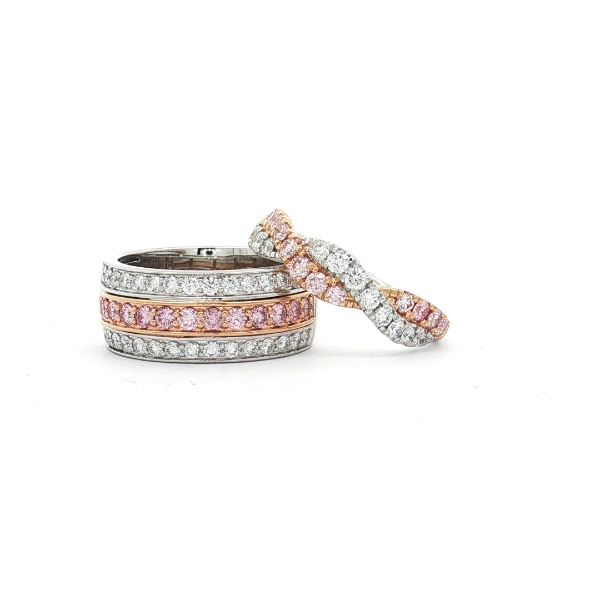
Cut works as a design tool with pink diamonds. The most popular shapes for pink diamond commissions in our studio are oval, pear, cushion, radiant and emerald cuts, each producing a different reading of the colour.
Ovals and cushions tend to read as soft and romantic. Radiants and emeralds read more architectural and modern. Pears and marquises elongate the colour across a longer face, which can intensify the saturation visually. We match shape to the wearer’s hand, the design intent, and (importantly) the stone itself; some pink rough cuts more honestly into one shape than another, and the stone’s character determines what is possible.
Step 3: Designing The Setting Around The Stone
The right setting frames the colour and protects the stone from impact. Three approaches dominate the pink diamond commissions we build.
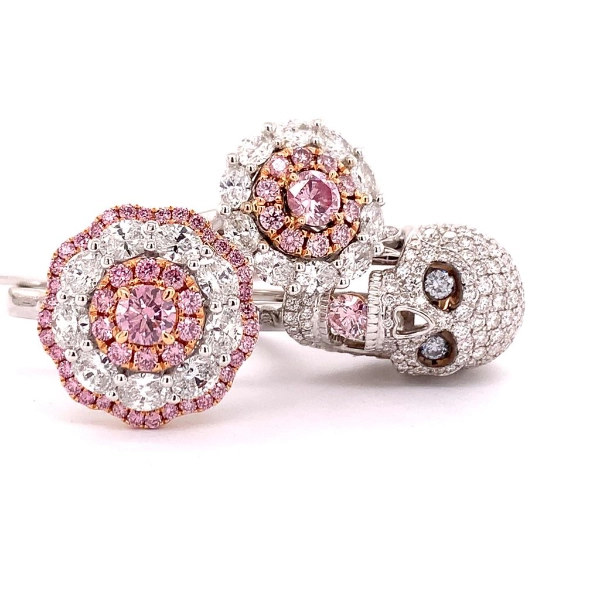
Halo settings with white diamond accents around the centre stone amplify the apparent size of the pink and intensify its perceived saturation through colour contrast. Most of the famous pink diamond engagement rings worn publicly use halo settings for exactly this reason.
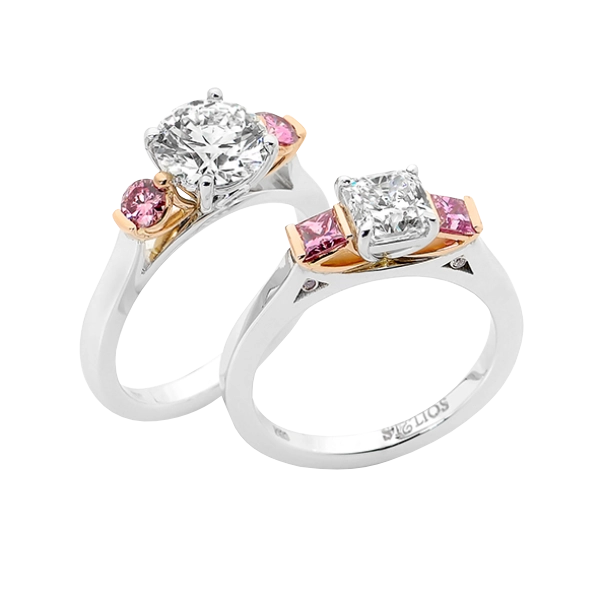
Solitaire and three stone settings let the pink stand alone or sit alongside white diamond side stones, suiting clients who want the pink to read as the unambiguous focal point.
Vintage-inspired settings with hand-engraved galleries, milgrain edges and pierced filigree work add character to commissions where the stone’s softness pairs with romantic styling rather than modern minimalism.
Step 4: Selecting Metal That Supports The Hue
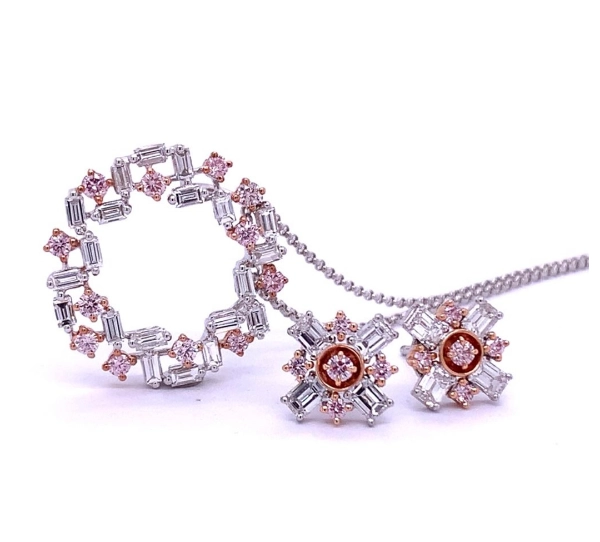
Metal choice changes how the pink reads on the wearer’s skin. White gold and platinum produce the strongest visual contrast and amplify the pink saturation through colour opposition. Yellow gold integrates the warmth of the metal with warmer pinks, suiting stones with secondary orangey or peach tones. Rose gold has become particularly popular for pink diamond engagement rings over the past decade because the metal echoes the centre stone’s colour, producing a unified pink palette.
There is no single correct answer. We test the stone against samples of all four metal options at the studio before recommending a direction.
Step 5: Hand Sketches And CAD Modelling
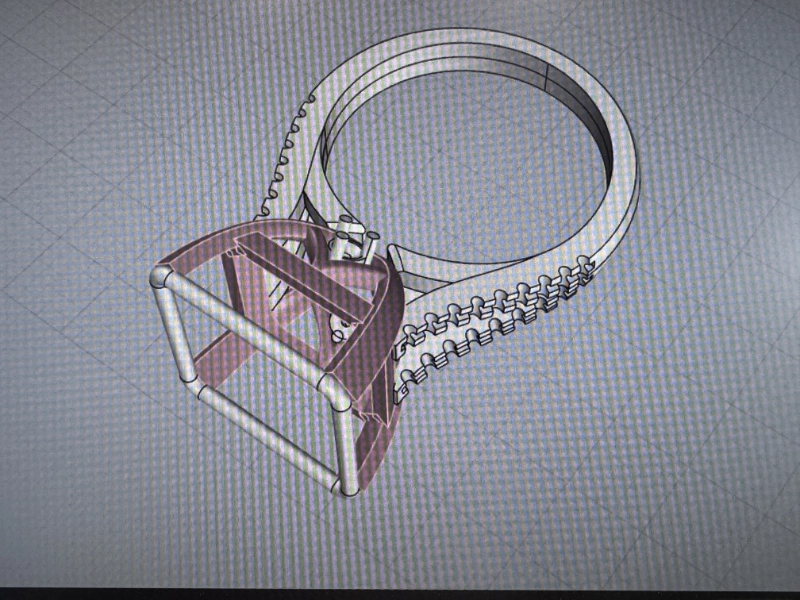
Once the stone and concept are locked in, hand sketches confirm the proportional decisions and CAD modelling translates the design into a precise 3D specification. CAD covers prong placement, halo spacing, basket height, comfort under the band, and the small clearances around the centre stone that prevent any pressure point from forming on the pink.
You review the CAD renderings from multiple angles and request changes. The cost of changes at this stage is design time only.
Step 6: Crafting And Setting
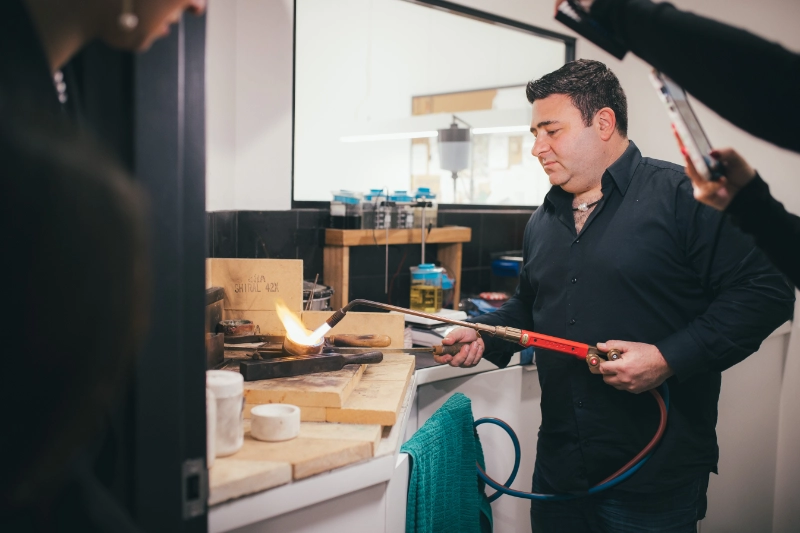
After approval, the design moves into production. Metal is fabricated, the centre stone is hand-set with attention to alignment, security and the way light enters and leaves the pink, and the piece is hand-finished to the chosen polish. Setting work on pink diamonds requires particular care because the stones are valuable and irreplaceable; the setter works under magnification with the stone fully visible at every stage.
Step 7: Final Inspection, Valuation And Care
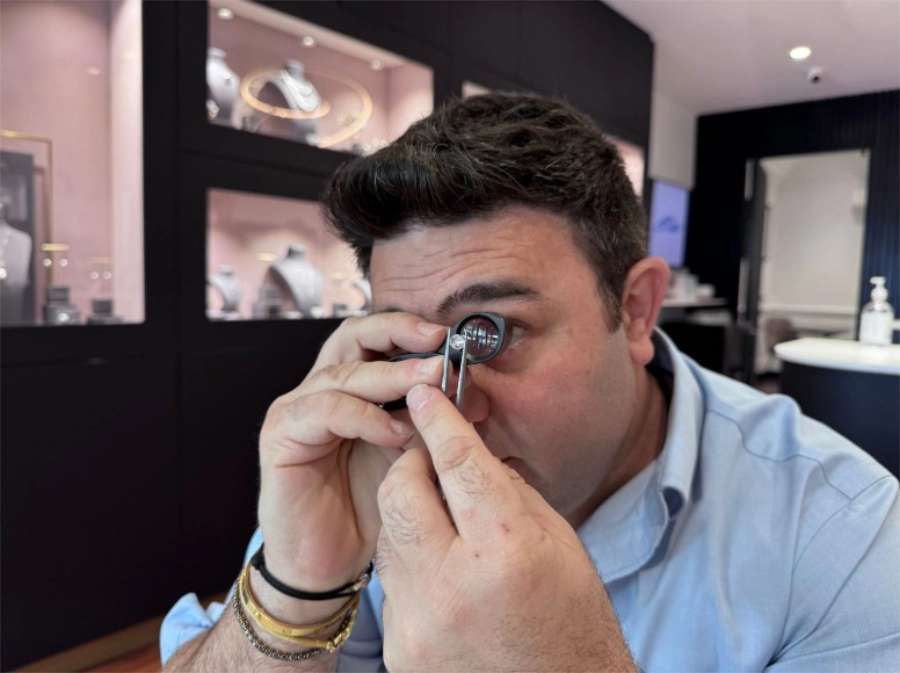
Before hand-over, the finished piece is inspected for setting integrity, symmetry, finish quality and overall presentation against the approved CAD specification. We provide full valuation documentation that most jewellery insurers accept directly, advise on insurance specifically suited to investment-grade pieces, and walk through the care routine.
Notes From The Studio
A client recently brought in a 0.42 carat Fancy Intense Pink that had been bought as a loose stone several years earlier and never set. She had been waiting for the right moment, and her sixtieth birthday felt like it. We designed a hand-finished platinum halo with eighteen small white diamonds surrounding the centre stone, sized the band to match her existing eternity ring, and engraved the year inside the shank. When she put it on, she was quiet for a long time before she said anything. Most pink diamond hand-overs in the studio carry that kind of weight, regardless of carat size. The stones are rare, the moments tend to be rare too.
Frequently Asked Questions
Australian pink diamonds have appreciated significantly since the East Kimberley mine closed in 2020, and the supply is now finite. Whether they remain a strong investment depends on which grade you buy, market conditions, and how long you hold. We can walk through the trade-offs honestly with each client. We are jewellers rather than investment advisers, so the conversation focuses on what we can verify rather than future predictions.
Natural pink diamonds are exceptionally rare and priced accordingly. Lab grown pink diamonds are produced under controlled conditions and sit at a small fraction of natural prices. They are visually similar in person, with subtle differences a trained eye can identify under magnification. The right choice depends on whether long-term value, provenance and rarity matter to you, or whether the visual impact at a controlled budget is the brief.
Yes, sometimes significantly. The colour shifts under warm versus cool light, and the saturation can read stronger or weaker depending on the environment. We always view stones in multiple lighting conditions at the studio before any decision.
It depends on your style and the stone. Halos amplify saturation through contrast. Solitaires let the pink stand alone. Vintage-inspired settings add character. We match setting style to stone shape, hue and the wearer’s lifestyle.
Yes. Pink diamond engagement rings work in all four major metals: white gold and platinum for cool contrast, yellow gold for warmth, rose gold for tonal harmony. We test the combination at the studio before locking the design.
Begin Your Pink Diamond Conversation
If you are ready to commission a pink diamond piece, we welcome you in for a private consultation at our Mt Hawthorn design studio. The supply of certified Western Australian pink diamonds is finite, and the right stone for your brief may take time to source; the earlier the conversation begins, the more options we can lay in front of you.